What process causes the gas ejected by the dying star to glow brightly?
Answer
Ultraviolet radiation from the exposed white dwarf ionizing the gas
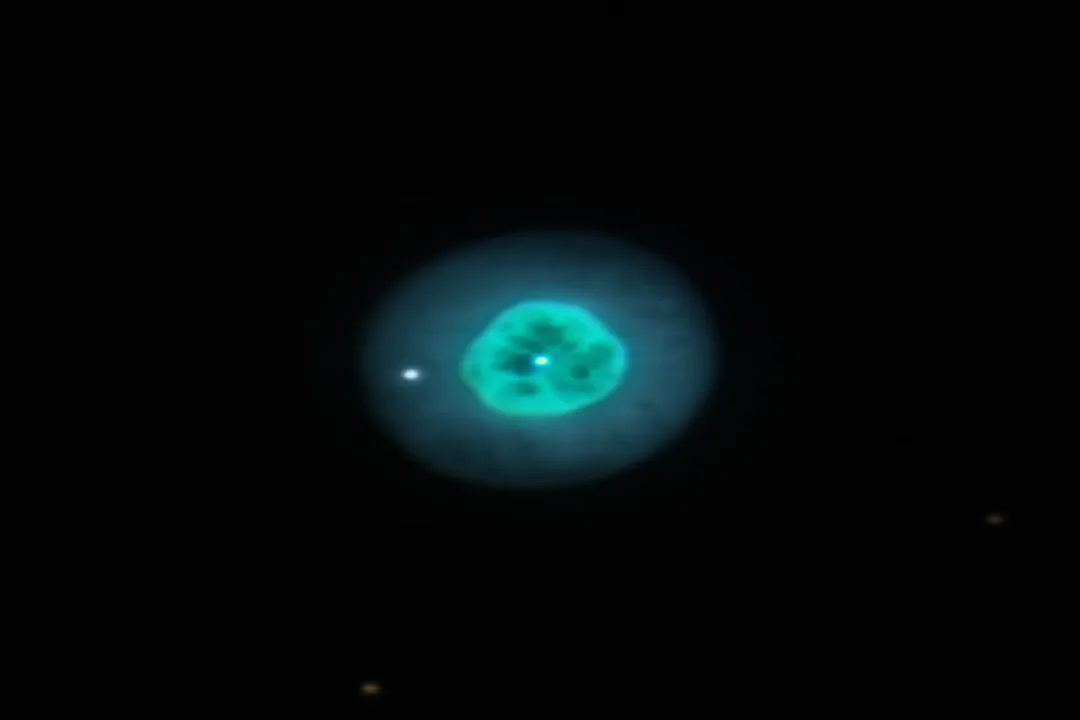
The intense ultraviolet radiation emitted by the hot, exposed white dwarf ionizes the previously ejected gas, causing it to glow.
#Videos
JWST Shows Planetary Nebulae Are Way Weirder Than We Thought
Related Questions
Which mass category of stars primarily leads to the formation of planetary nebulae?Why is the term 'planetary nebula' scientifically inaccurate regarding planets?What stellar remnant remains after a star sheds its outer layers to form a planetary nebula?How long is the active, luminous phase of a planetary nebula estimated to last?What process causes the gas ejected by the dying star to glow brightly?What is the approximate estimated count of planetary nebulae present in the Milky Way galaxy at any given time?What factor contributes most to the rarity of observing planetary nebulae at any instant?What often influences the complex, non-spherical shapes observed in planetary nebulae?In which region of the Milky Way are planetary nebulae predominantly found?How long does the hydrogen fusion phase last for a star like our Sun on the main sequence?What characteristic allows planetary nebulae to serve as 'standardizable candles' when studying distant galaxies?