What is the largest planetary nebula?
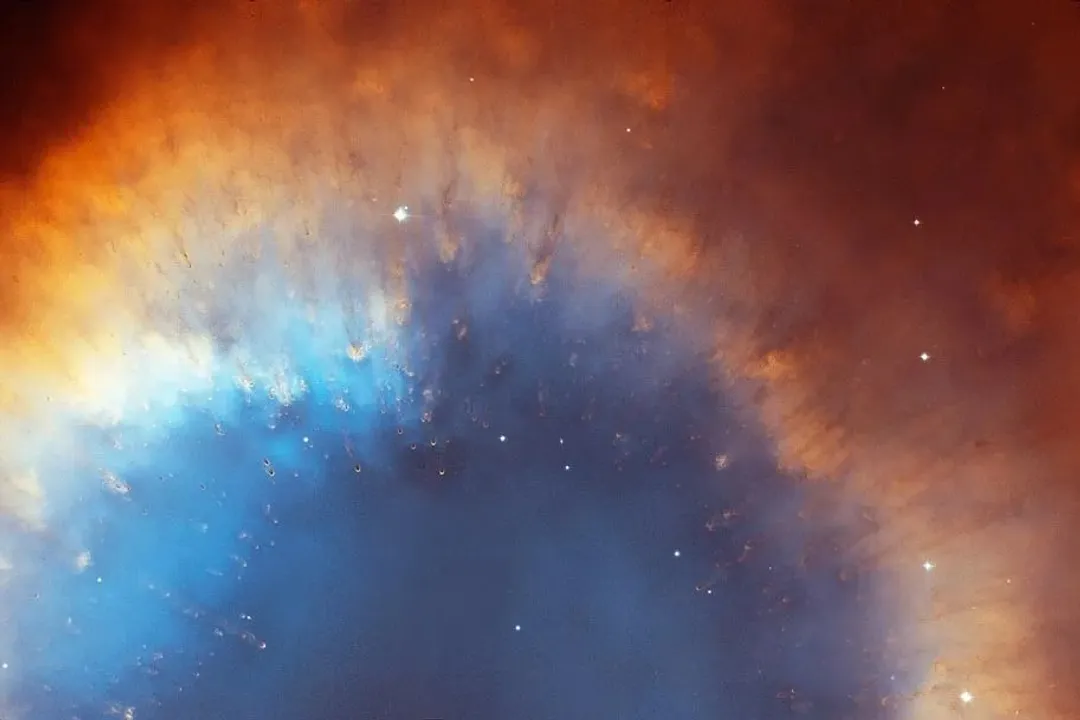
The name "planetary nebula" is one of the most misleading labels in astronomy. Despite the moniker, these objects have absolutely nothing to do with planets. The name originated in the 18th century when early astronomers, observing through telescopes with limited resolution, thought the round, fuzzy shapes resembled the gas giant planets of our solar system. [4] In reality, they are the beautiful, ghostly remains of low-to-intermediate-mass stars that have reached the end of their lives. [5]
When a star like our Sun exhausts its nuclear fuel, it cannot collapse into a black hole or explode as a supernova. Instead, it sheds its outer layers into space, creating an expanding shell of ionized gas. [5] The core, left behind, shrinks to become a white dwarf, radiating intense ultraviolet light that illuminates the discarded gas. [4] As this process continues, the nebula expands, eventually dissipating into the interstellar medium.
# The Largest Candidate
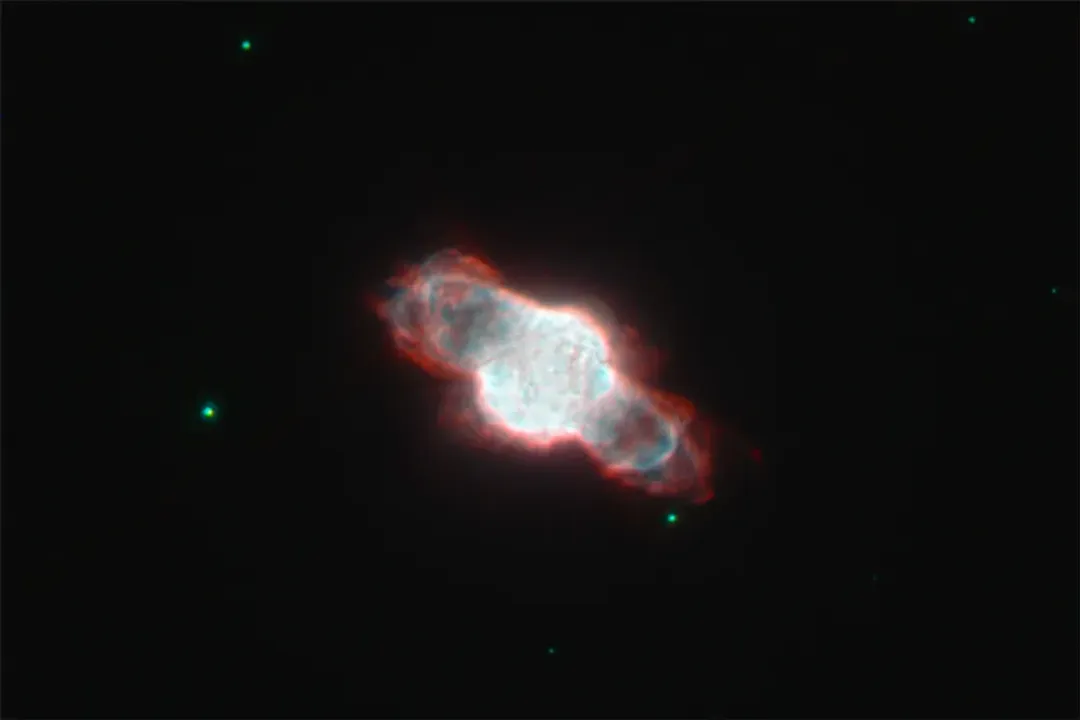
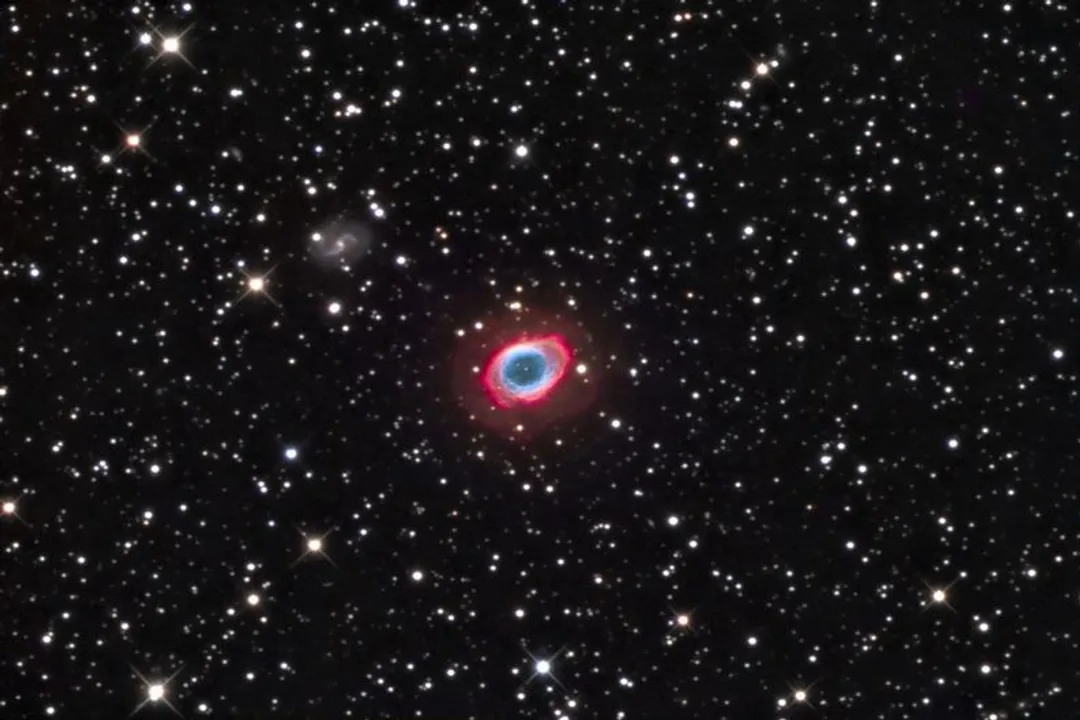
When discussing the largest planetary nebula, researchers often point to Sh2-216. [2] Located in the constellation Perseus, this object is frequently cited as the closest and, consequently, the largest planetary nebula in the sky in terms of angular size. [2] Because it is relatively nearby, it occupies a significant patch of the night sky, much larger than more famous examples like the Ring Nebula or the Dumbbell Nebula. [9]
While Sh2-216 is prominent, determining the "largest" is not as simple as pointing a telescope and measuring width. The classification depends heavily on whether one is measuring the apparent size—how big it looks from Earth—or the physical size—its actual diameter in light-years.
# Size Measurements
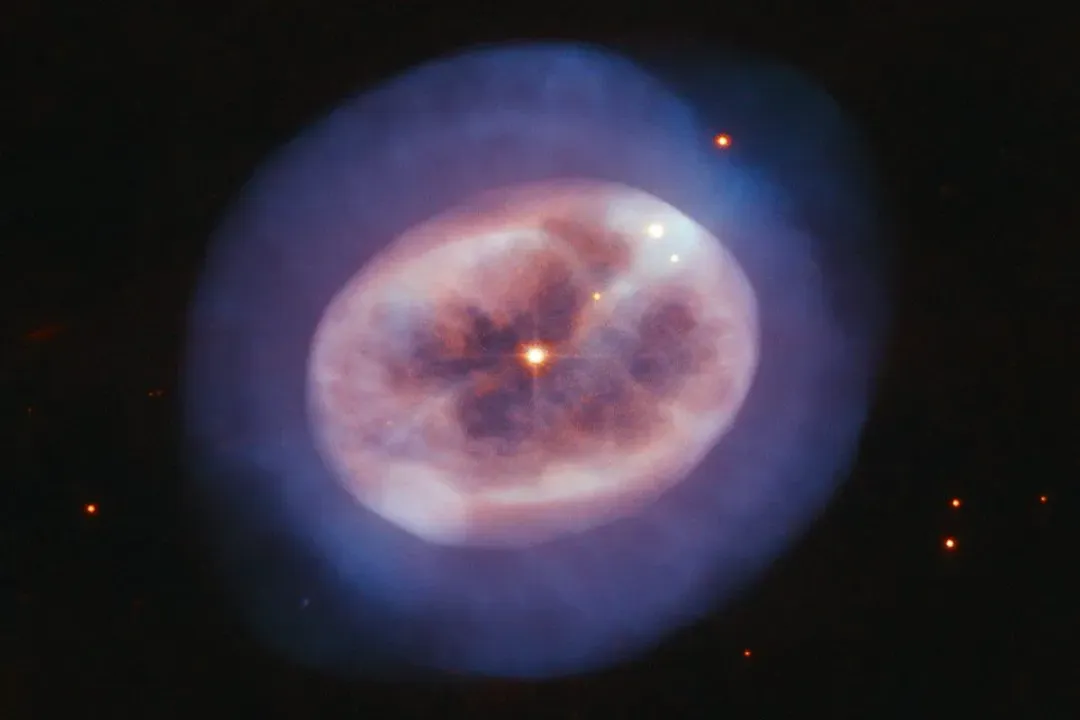
The distinction between apparent and physical size is vital in astronomy. An object that is massive in diameter but extremely far away will appear as a tiny point of light. Conversely, a modest-sized nebula that is practically in our galactic backyard will appear massive.
# Data Comparison
| Object | Type | Nature of Size |
|---|---|---|
| Sh2-216 | Planetary Nebula | Large angular size due to proximity [2] |
| KA LMC 1 | Planetary Nebula | Large physical size, located in LMC [7] |
| Tarantula Nebula | H II Region | Huge, but not a planetary nebula [8] |
As shown, categorization can shift depending on the metric used. KA LMC 1, for instance, is a massive planetary nebula located in the Large Magellanic Cloud. [7] While it spans a huge physical volume, its distance from Earth makes it appear significantly smaller to our instruments than Sh2-216.
# Common Misunderstandings
One frequent error in amateur astronomy circles is confusing planetary nebulae with other types of nebulae. The Tarantula Nebula, for example, is famous for its immense scale. [8] It is one of the largest and most luminous regions of ionized gas in our local group of galaxies. However, it is not a planetary nebula. [8] It is an H II region—a massive stellar nursery where new stars are actively forming, rather than the graveyard of a dying star.
Confusing these two is easy because both appear bright, colorful, and gaseous through long-exposure photography. The fundamental difference lies in their physical origin. A planetary nebula marks the death of a star, [5] whereas H II regions like the Tarantula represent the chaotic, energetic birth of thousands of stars at once. [8]
# The Boundary Problem
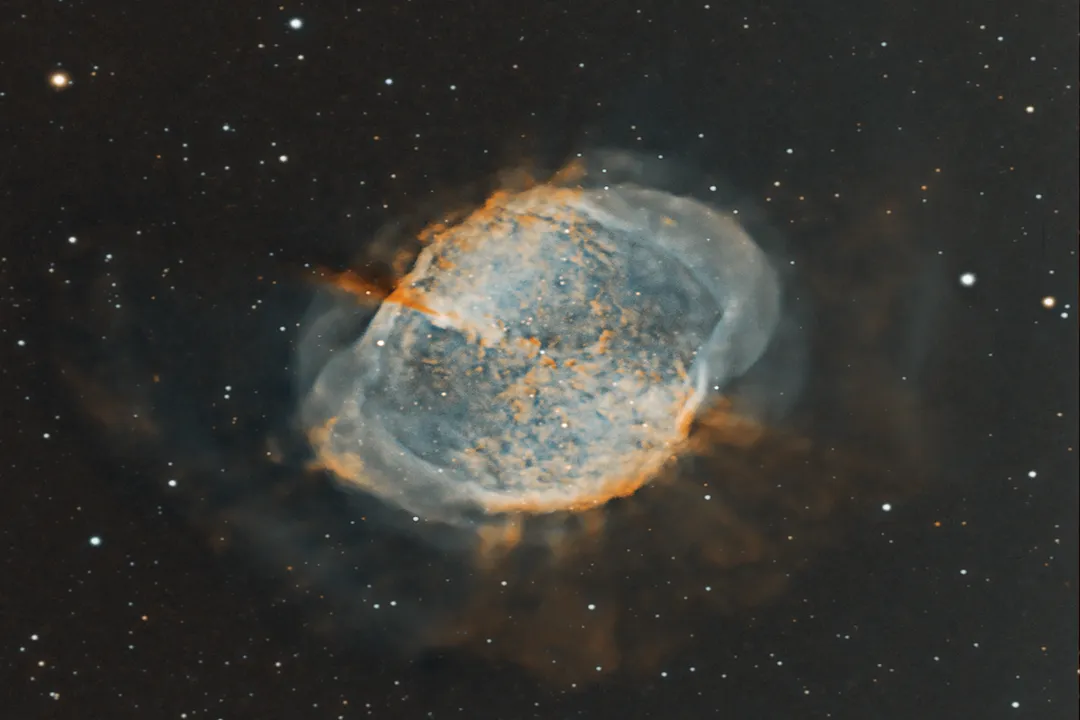
A significant challenge in determining the "largest" nebula involves the definition of an edge. Planetary nebulae do not have crisp, well-defined boundaries like a billiard ball. They are clouds of gas that become increasingly diffuse as they expand into the vacuum of space. [5]
Because of this, different imaging techniques and filters can drastically alter the perceived size of a nebula. When using narrowband filters—which isolate specific wavelengths of light emitted by ionized elements like hydrogen, oxygen, or sulfur—astronomers can often "see" much further into the faint, outer halo of the nebula than the human eye or standard cameras could detect. Consequently, some nebulae once thought to be small have been revealed to have massive, faint outer shells when observed with more sensitive equipment. This means our "list" of largest nebulae is always subject to change as imaging technology improves.
# Practical Observation
For those interested in finding these objects, remember that most planetary nebulae, including the largest ones, are quite dim. While their size might be large, their surface brightness is often very low because that material is spread out over such a vast area. [9]
- Dark Skies: You cannot observe large, diffuse planetary nebulae from light-polluted cities. High-contrast, dark skies are essential. [9]
- O-III Filters: These filters are often necessary to see the structure of a planetary nebula. They block out most light pollution and starlight, allowing the specific light emitted by the ionized oxygen in the nebula to pass through. [9]
- Low Magnification: Because these objects are often physically large, using high magnification can actually make them harder to see. A wide-field eyepiece allows you to see the entire structure against the background of space.
# Sh2-216 Characteristics
Sh2-216 is unique not just for its size, but for its age. As a planetary nebula expands, it interacts with the interstellar medium. Over thousands of years, this interaction causes the nebula to lose its perfect symmetry and eventually fade. Sh2-216 is an evolved, old planetary nebula. [2] It has expanded significantly, and its interaction with the surrounding interstellar gas has distorted its shape. This aging process is a natural part of the life cycle of every planetary nebula. Eventually, all of them—including the largest ones—will disperse entirely, leaving behind only the central white dwarf to fade over billions of years.
# Distant Giants
While Sh2-216 holds the title for the largest in terms of angular size in our local neighborhood, the search for the "largest" overall often shifts to other galaxies like the Large Magellanic Cloud. [7] These extragalactic nebulae can be physically enormous, but we are limited by the inverse-square law, which dictates that the intensity of light diminishes as the distance increases.
When we look at KA LMC 1, we are seeing a massive structure in another galaxy. [7] Comparing it to Sh2-216 is a reminder that in astronomy, the "largest" object is almost always a contest between how close an object is to us versus how physically vast it is.
# Analyzing Morphology
Beyond size, astronomers look at the morphology of these nebulae to understand the death of the star. Planetary nebulae come in a variety of shapes: bipolar, spherical, or irregular. [6] The shape is determined by the star's rotation, the presence of a binary companion, or magnetic fields.
A large, irregular nebula like Sh2-216 provides a look at what happens when a star dies in a complex environment. The surrounding density of the interstellar medium forces the expansion to slow in certain directions, resulting in the non-spherical shapes we observe. This is why many planetary nebulae do not look like the perfect "rings" seen in textbooks.
# Nebula Identification
To verify whether a nebula you are looking at is a planetary nebula or something else, look for a central star. This is the white dwarf remnant. In an H II region like the Tarantula, you will often see many young, bright blue stars scattered throughout the gas, rather than one single, dying star at the center. [8]
If you are using a star chart or a database like those maintained by the SEDS (Students for the Exploration and Development of Space) or NASA, check the classification. [10][3] Planetary nebulae are specifically labeled as "PN." If it is labeled as an H II region, an emission nebula, or a reflection nebula, it is a different class of object entirely, regardless of its visual size. [10]
# Summary of Findings
The quest for the largest planetary nebula highlights the nuance required in astronomical measurement. If you define "largest" by what you can see in the night sky from Earth, Sh2-216 is a leading candidate due to its proximity. [2] If you define it by physical diameter, the candidates change to remote objects in other galaxies, such as KA LMC 1. [7]
Understanding these objects requires looking past their artistic beauty. They are finite, temporary monuments to the end of a star's life. While they appear static in our human timeframe, they are dynamic, expanding, and fading structures that illustrate the recycling of matter in the universe. The gas blown off by these stars contains heavy elements—carbon, nitrogen, and oxygen—that were forged in the star's core. When these nebulae dissipate, this enriched material enriches the interstellar medium, providing the raw ingredients for the next generation of stars and planets. Thus, while the "largest" planetary nebula might hold our interest for its scale, every planetary nebula, regardless of size, plays a role in the chemical evolution of our galaxy.
Related Questions
#Citations
List of largest nebulae - Wikipedia
Sh2-216: The largest Planetary Nebula (60 hours) - Reddit
Caldwell 63 - NASA Science
Planetary nebula guide | BBC Sky at Night Magazine
Planetary Nebulae - JIM KALER
2MASS Atlas Image Gallery: Planetary Nebulae - IPAC/Caltech
Astronomers Discover New Planetary Nebula in Large Magellanic ...
5 amazing planetary nebulae: how to find the hourglass, the ring of ...
Planetary Nebulae - SEDS Messier Database