What chemical impact do planetary nebulae have on the galaxy?
Answer
They enrich the interstellar medium with heavy elements like carbon, nitrogen, and oxygen.
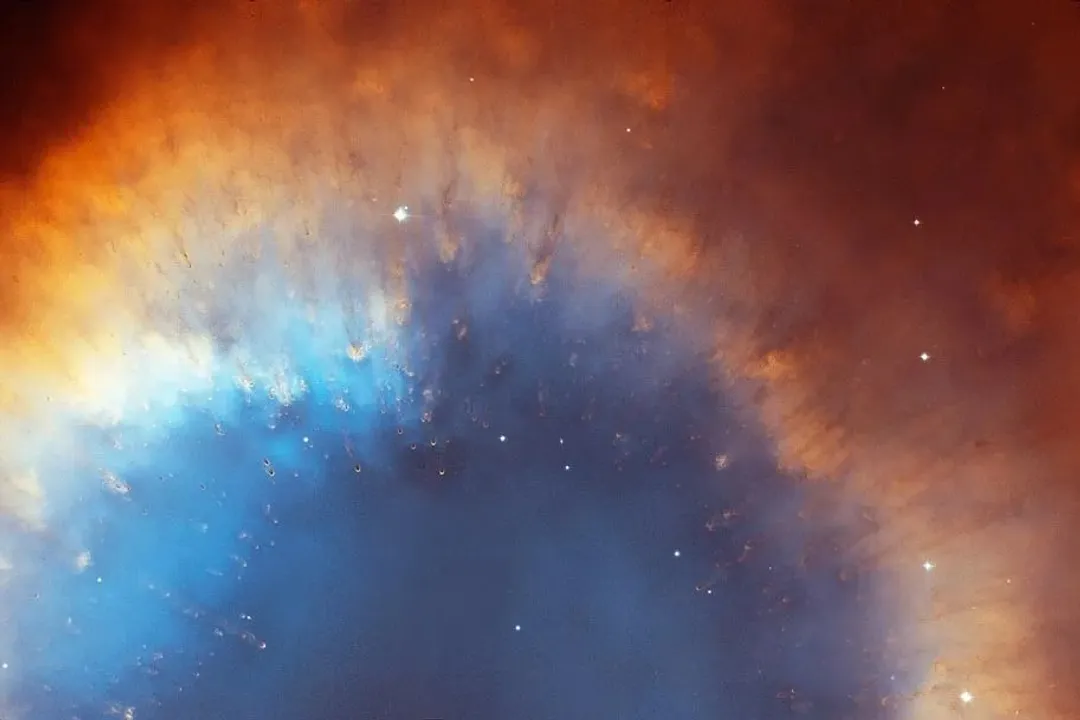
During the life of a star, nuclear fusion creates heavy elements such as carbon, nitrogen, and oxygen within the core. When a low-to-intermediate-mass star dies and creates a planetary nebula, these forged elements are shed into space along with the gas. As the nebula dissipates, this enriched material mixes with the interstellar medium. This process is crucial because it provides the raw materials—the heavy elements—necessary for the formation of future generations of stars and planets.
Related Questions
Why is the term planetary nebula considered misleading in modern astronomy?What makes Sh2-216 a notable example among planetary nebulae in the night sky?How does a planetary nebula fundamentally differ from an H II region like the Tarantula Nebula?What is the primary difference between apparent size and physical size in nebula observation?What is the role of the central white dwarf in the life of a planetary nebula?Why are O-III filters useful when observing planetary nebulae?What factors influence the non-spherical, irregular shapes observed in many planetary nebulae?Why is KA LMC 1 often referenced when discussing the largest planetary nebulae?Why is it challenging to define the exact outer boundary of a planetary nebula?What chemical impact do planetary nebulae have on the galaxy?