How does a planetary nebula fundamentally differ from an H II region like the Tarantula Nebula?
Answer
Planetary nebulae mark the death of a single star, whereas H II regions are nurseries where new stars are forming.
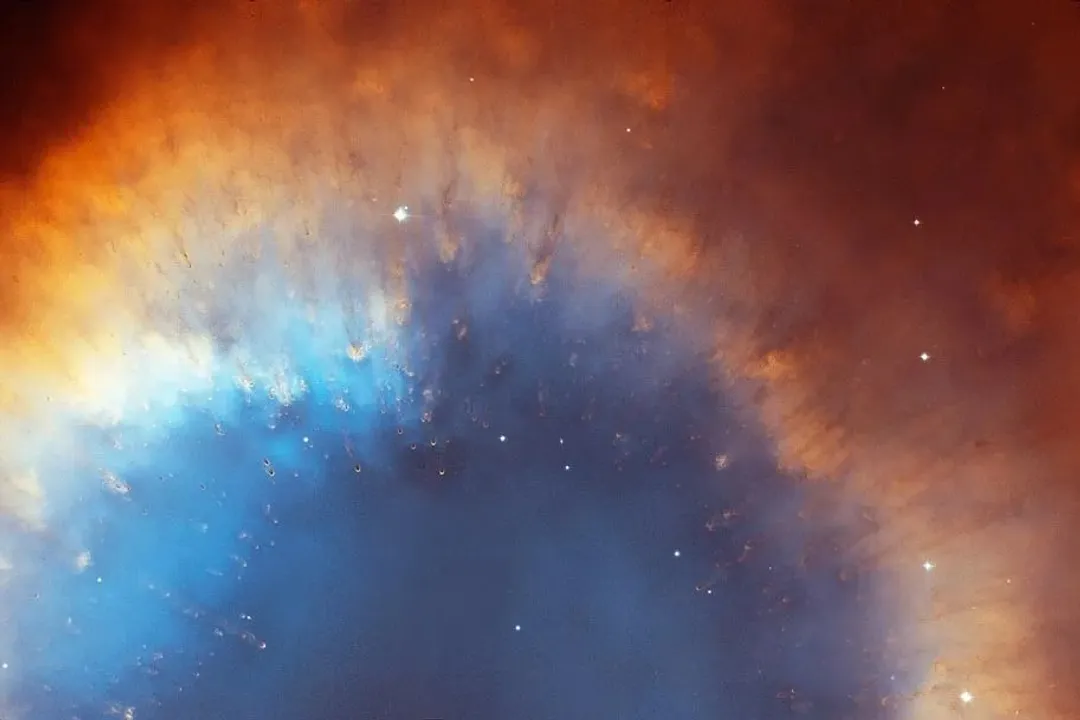
The fundamental distinction lies in the stellar lifecycle stage. A planetary nebula occurs when a star reaches the end of its life, sheds its outer layers, and leaves behind a white dwarf. In contrast, an H II region, such as the Tarantula Nebula, is a massive, energetic site of star formation. These regions contain many young, bright stars and are characterized by the chaotic birth of thousands of stars simultaneously, rather than the remnants of a single dying star.
Related Questions
Why is the term planetary nebula considered misleading in modern astronomy?What makes Sh2-216 a notable example among planetary nebulae in the night sky?How does a planetary nebula fundamentally differ from an H II region like the Tarantula Nebula?What is the primary difference between apparent size and physical size in nebula observation?What is the role of the central white dwarf in the life of a planetary nebula?Why are O-III filters useful when observing planetary nebulae?What factors influence the non-spherical, irregular shapes observed in many planetary nebulae?Why is KA LMC 1 often referenced when discussing the largest planetary nebulae?Why is it challenging to define the exact outer boundary of a planetary nebula?What chemical impact do planetary nebulae have on the galaxy?