Why is Mars geologically inactive compared to Io or Enceladus?
Answer
Mars lacks the massive gravitational driver required to keep its interior churning.
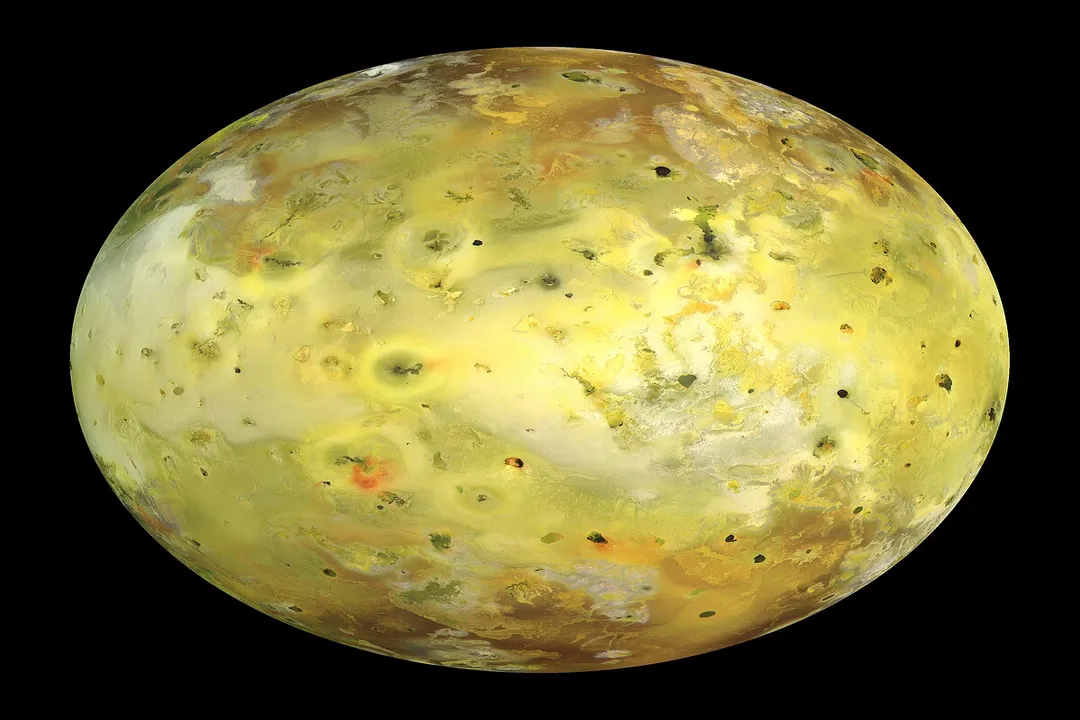
The comparison between Mars and the smaller Jovian/Saturnian moons highlights the primacy of orbital mechanics over absolute mass in dictating ongoing geology. Mars is larger than Io and Enceladus, yet its major tectonic activity has ceased because its core has cooled sufficiently. Crucially, Mars is not locked in a system where a giant planet exerts the powerful, varying gravitational stresses necessary to continuously flex and heat its interior. The small moons possess this critical external power plant derived from their host planet's gravity, a driver Mars simply lacks.
Related Questions
What is the continuous external energy source powering geological activity on small moons?How is internal heat generated in large terrestrial bodies like Earth or Mars?What orbital characteristic is essential for tidal heating to generate substantial friction?What specifically drives the extreme silicate volcanism observed on Jupiter's moon Io?What is the physical manifestation of tidal friction within a tidally heated moon's interior?What feature on Saturn's moon Enceladus is a direct result of tidal heating maintaining subsurface liquid water?Why is Mars geologically inactive compared to Io or Enceladus?What specific interaction dictates the precise timing and magnitude of tidal flexing experienced by Io?What is the geological status of Callisto relative to Io within the Jovian system?How does the rate of tidal energy deposition relate to a moon's geological state?What process prevents smaller moons from maintaining internal heat over eons, unlike Earth?