What process prevents smaller moons from maintaining internal heat over eons, unlike Earth?
Answer
Their high surface area to volume ratio causes rapid heat loss to space.
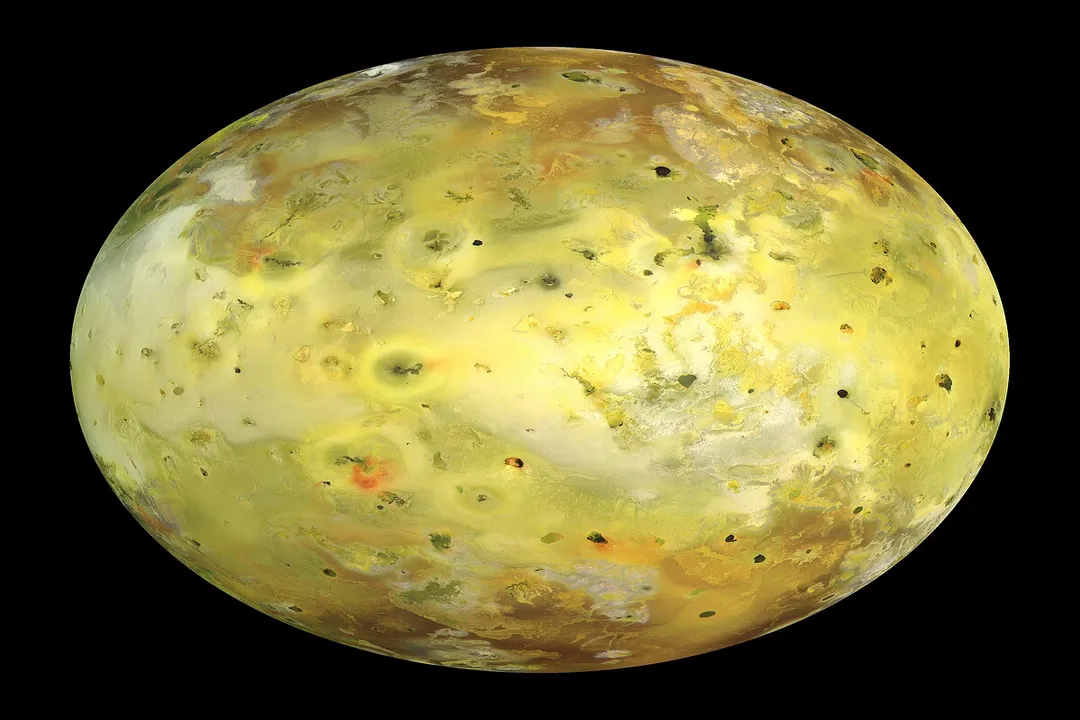
The fundamental physical challenge faced by small celestial bodies attempting to maintain geological heat over billions of years relates to their geometry. Smaller objects possess a high surface area relative to their total volume. This high ratio means that any internal heat generated, whether from formation or radioactive decay, can escape or radiate away into space much more quickly compared to massive worlds like Earth. This rapid thermal dissipation is why, absent an external energy source, moons like Io or Enceladus would have ceased activity long ago, resembling the geologically dead state of Mars.
Related Questions
What is the continuous external energy source powering geological activity on small moons?How is internal heat generated in large terrestrial bodies like Earth or Mars?What orbital characteristic is essential for tidal heating to generate substantial friction?What specifically drives the extreme silicate volcanism observed on Jupiter's moon Io?What is the physical manifestation of tidal friction within a tidally heated moon's interior?What feature on Saturn's moon Enceladus is a direct result of tidal heating maintaining subsurface liquid water?Why is Mars geologically inactive compared to Io or Enceladus?What specific interaction dictates the precise timing and magnitude of tidal flexing experienced by Io?What is the geological status of Callisto relative to Io within the Jovian system?How does the rate of tidal energy deposition relate to a moon's geological state?What process prevents smaller moons from maintaining internal heat over eons, unlike Earth?