What specifically drives the extreme silicate volcanism observed on Jupiter's moon Io?
Answer
Intense flexing caused by Jupiter subjecting Io’s interior to enormous stress.
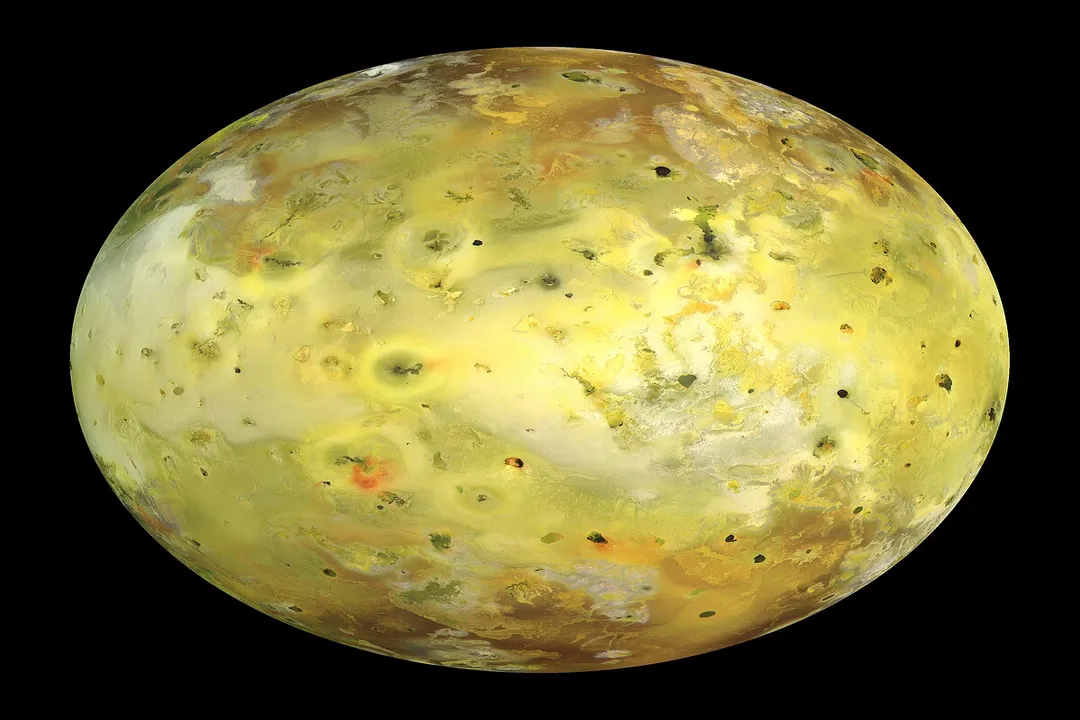
Io serves as the prime example of tidal heating leading to extreme geological processes. The moon is subjected to immense and powerful tidal stress due to its close proximity and orbital relationship with Jupiter. This intense flexing heats the mantle to temperatures high enough to sustain continuous silicate volcanism. This activity is so vigorous that the lava flows and sulfur plumes manifest as constant resurfacing, leading to the entire surface renewing itself on a relatively short geological timescale, estimated to be every few million years. This constant internal furnace requires the massive, dynamic energy input provided by Jupiter's tidal forces.
Related Questions
What is the continuous external energy source powering geological activity on small moons?How is internal heat generated in large terrestrial bodies like Earth or Mars?What orbital characteristic is essential for tidal heating to generate substantial friction?What specifically drives the extreme silicate volcanism observed on Jupiter's moon Io?What is the physical manifestation of tidal friction within a tidally heated moon's interior?What feature on Saturn's moon Enceladus is a direct result of tidal heating maintaining subsurface liquid water?Why is Mars geologically inactive compared to Io or Enceladus?What specific interaction dictates the precise timing and magnitude of tidal flexing experienced by Io?What is the geological status of Callisto relative to Io within the Jovian system?How does the rate of tidal energy deposition relate to a moon's geological state?What process prevents smaller moons from maintaining internal heat over eons, unlike Earth?