Why does the formation of iron in a massive star core lead to a supernova?
Answer
Fusing iron consumes energy instead of releasing it.
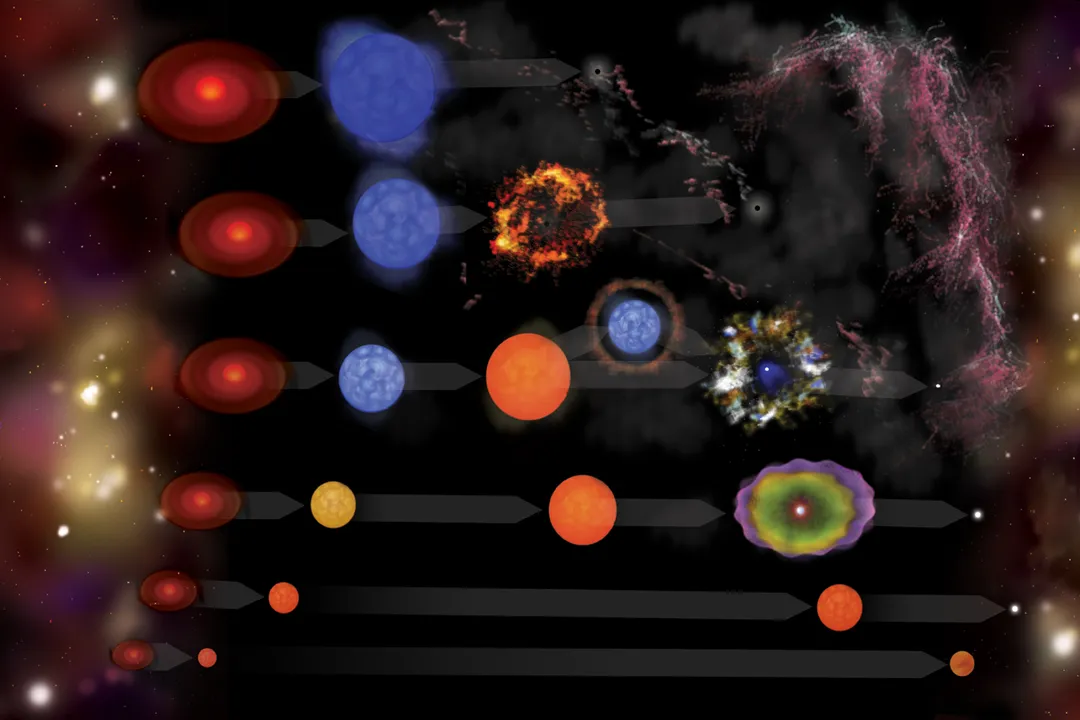
In massive stars, elements are fused sequentially as the core collapses. Once iron is created, the fusion process shifts from energy-producing to energy-consuming. Because the star no longer generates the outward pressure needed to fight against gravity, the core collapses instantly. This collapse triggers a rebound of the outer layers, resulting in a violent supernova explosion.
#Videos
What Is Stellar Evolution? | Facts About The Lifecycles of ...
Related Questions
What is the primary elemental composition of a nebula where stars originate?What creates the heat in a protostar before nuclear fusion begins?What represents the balance between gravity and outward fusion pressure in a star?Why do massive stars exhibit shorter lifespans compared to low-mass red dwarfs?What occurs to a star when it exhausts the hydrogen in its core?Why does the formation of iron in a massive star core lead to a supernova?What defines the physical state of a black hole?What physical process creates a neutron star from a massive star remnant?Where did the heavy elements like iron and calcium in human bodies originate?Why have scientists not observed any red dwarf stars dying?