What component must ignite in the core to mark the true beginning of a star's active life?
Answer
Sustained nuclear fusion reactions
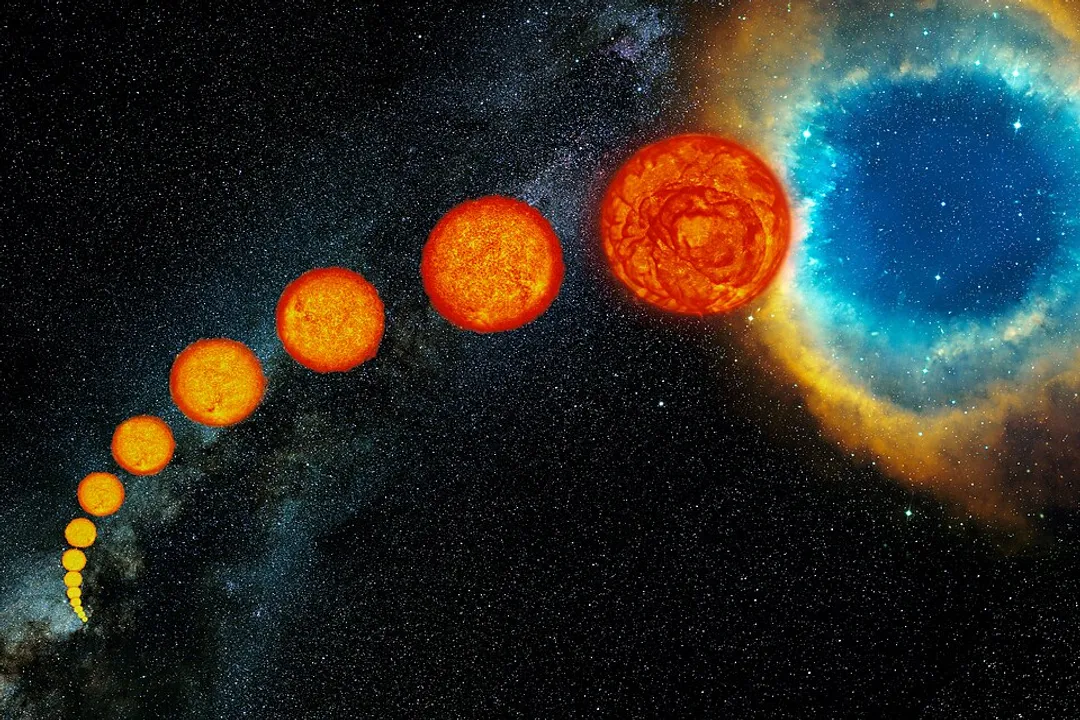
The true start of a star's stable life occurs when the core temperature and pressure are high enough to ignite sustained nuclear fusion, balancing the inward pull of gravity.
Related Questions
What component must ignite in the core to mark the true beginning of a star's active life?How long can the main sequence lifetimes of red dwarfs potentially extend?What structure remains at the center after a low-mass star gently expels its outer layers forming a planetary nebula?What element's fusion stops energy generation, triggering the catastrophic core collapse in massive stars?What mass limit must the residual core of a dying massive star exceed to form a black hole?Approximately what mass ratio defines the boundary used to distinguish high-mass stars from low-to-intermediate mass stars regarding final evolution?What is the approximate period of the Sun's recurring surface magnetic activity cycle?What two factors primarily dictate the unidirectional transformation of a star's stellar cycle?Into what theoretical object will a white dwarf eventually cool and fade over immense timescales?What explosive event characterizes the dramatic end of stars significantly more massive than the Sun?How is the overall process of stellar evolution viewed across cosmic time, despite an individual star's life being a one-way trip?