What is the contentious third requirement for a celestial body to be defined as a planet by the IAU?
Answer
It must have "cleared the neighborhood around its orbit".
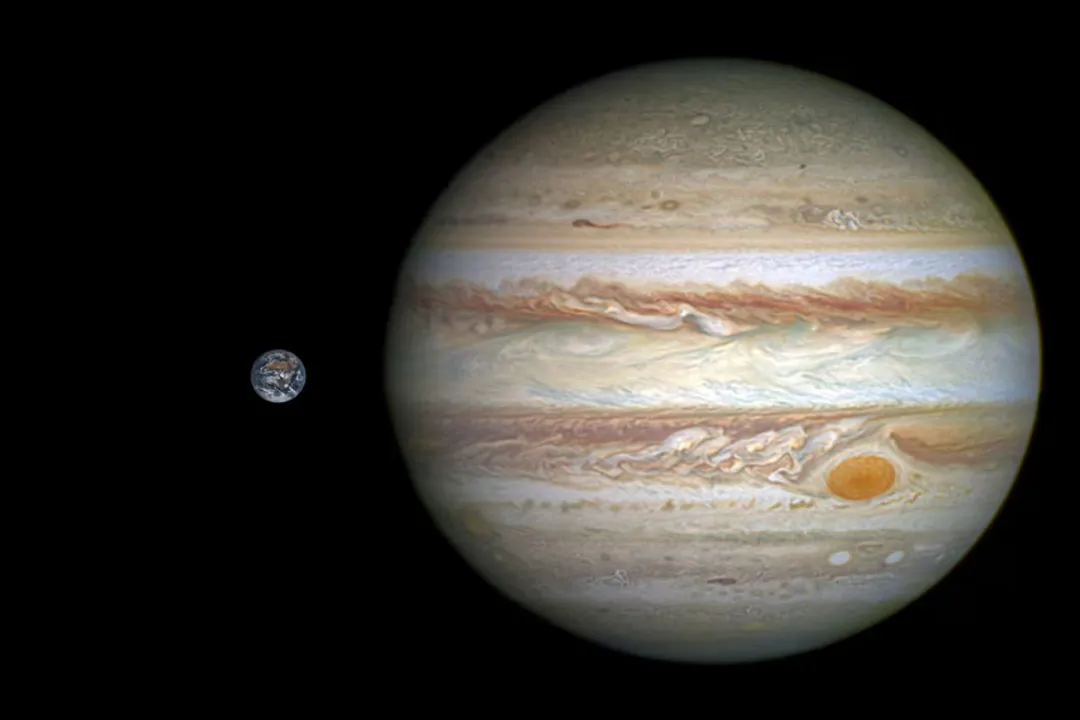
The current scientific consensus established by the International Astronomical Union (IAU) in 2006 outlines three necessary and sufficient conditions for planetary classification. The first two relate to orbiting the Sun and achieving hydrostatic equilibrium (a nearly round shape). The third condition, which proved most controversial during the reclassification discussions, mandates that the object must have achieved orbital hegemony by gravitationally dominating its orbital zone, meaning it has effectively swept up or ejected the majority of other sizable objects sharing its pathway over solar system history.
#Videos
Clearing the neighbourhood - YouTube
Related Questions
What is the contentious third requirement for a celestial body to be defined as a planet by the IAU?Which quantitative measure did Steven Soter develop to numerically assess orbital dominance?What is the minimum Planetary Discriminant (Hp) value required for an object to meet the orbital clearing criterion for planetary status?Why does Pluto fail the orbital clearing requirement according to its location in the solar system?What does the term hydrostatic equilibrium imply about a celestial object's physical shape?How significantly does Earth's Planetary Discriminant (Hp) value exceed the minimum threshold of 100?What kind of material does the IAU definition of "debris" refer to, as opposed to space junk in LEO?Despite having cleared its orbit, what specific groups of asteroids does Jupiter share its orbital path with?What is the primary condition regarding primary stellar association for an object to be classified as a planet?What concept best frames the historical process of "clearing the neighborhood" rather than a single instantaneous event?