Has cleared its orbit of debris meaning?
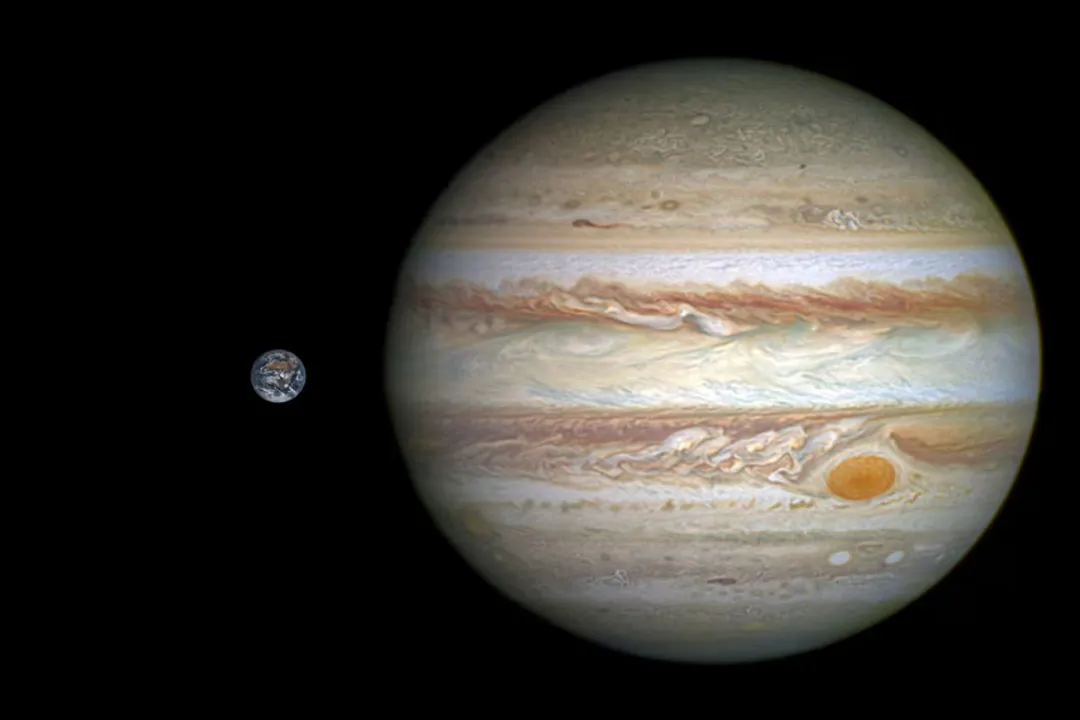
The phrase "cleared its orbit of debris" often appears in discussions surrounding astronomy, particularly following the major reclassification of Pluto in 2006. When astronomers speak of a body having successfully cleared its orbital neighborhood, they are referring to a specific, mathematically defined criterion established by the International Astronomical Union (IAU) to distinguish a full-fledged planet from a dwarf planet or a smaller solar system object. [4][5][9] This concept is not primarily concerned with the small pieces of human-made junk currently orbiting Earth, but rather with the natural population of objects that shared the celestial pathway during the solar system's formation. [1][4]
# Planetary Definition
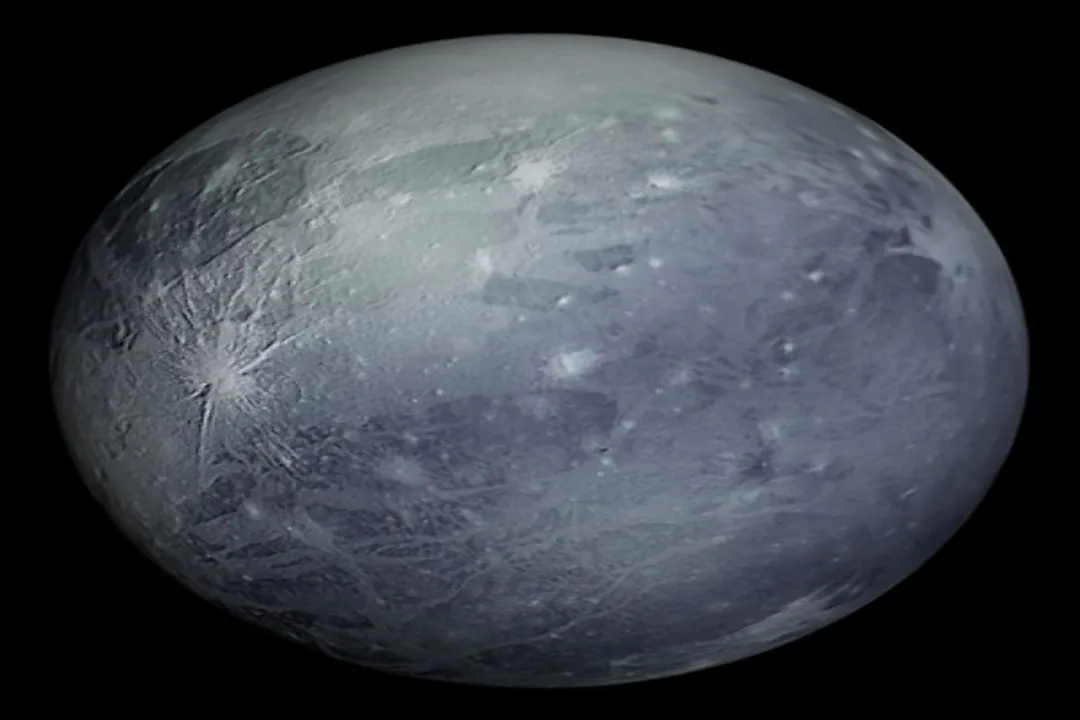
The current scientific consensus defines a planet based on three necessary and sufficient conditions established in 2006. [5] First, the object must be in orbit around the Sun, not around another planet. [5][6] Second, the object must possess sufficient mass so that its own gravity has pulled it into a state of hydrostatic equilibrium, meaning it has assumed a nearly round shape. [5][6] The third, and most contentious, requirement is that it must have "cleared the neighborhood around its orbit". [4][5][9]
# Orbital Hegemony
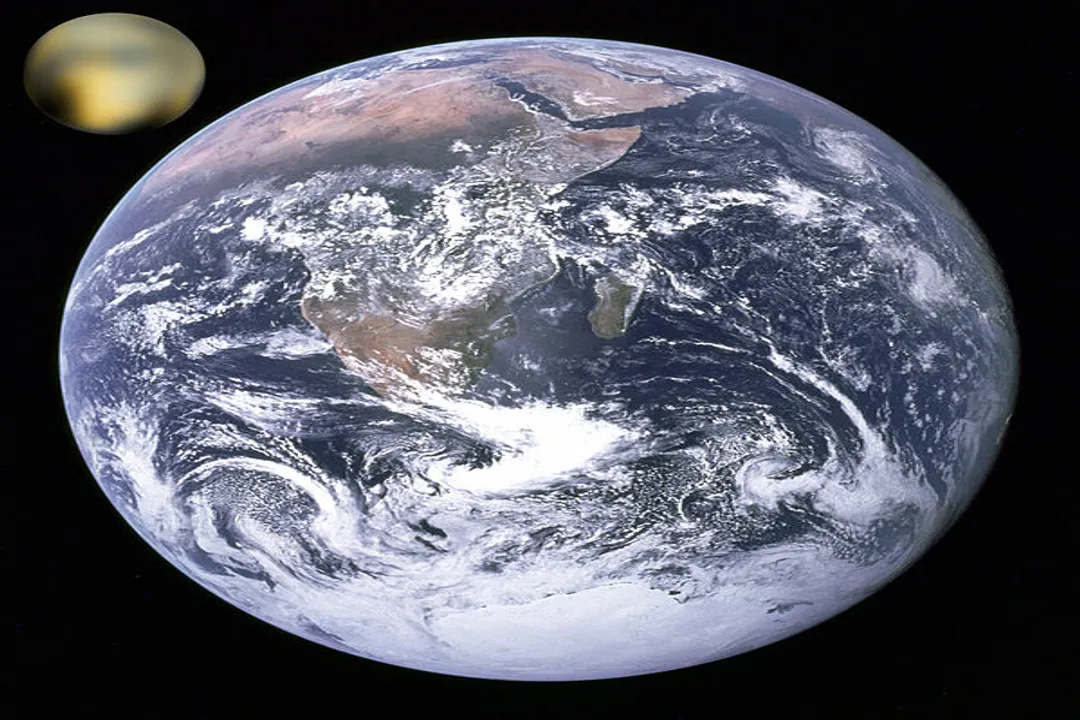
To "clear the neighborhood" means that the celestial body has become the gravitationally dominant object in its orbital zone. [1][4][5] Over the vast timescale of the solar system’s history, a true planet, due to its sheer mass, either sweeps up or gravitationally ejects most of the smaller material that shares its path. [1][2][5] If an object orbits a star but shares its orbital path with a significant number of other sizable bodies that are not satellites (moons) or Lagrange point companions, it has not met this dominance requirement. [1] Pluto, for instance, resides within the crowded Kuiper Belt, an immense ring of icy bodies beyond Neptune, indicating it has not gravitationally corralled the majority of objects in its vicinity. [3][6]

# The Calculation
Understanding how astronomers determine if this dominance has been achieved requires looking past simple observation to a specific mathematical tool. Astronomer Steven Soter developed a quantitative measure called the Planetary Discriminant () to put the subjective idea of "clearing" into concrete numbers. [3] This calculation compares the mass of the orbiting body to the total mass of all other objects sharing its orbital zone. [3]
The threshold for planetary status based on this metric is surprisingly high. An object is considered to have cleared its orbit if its Planetary Discriminant value is greater than 100. [3]
# Comparing Orbits
The calculated values vividly illustrate the difference between the eight recognized planets and the dwarf planets like Pluto. [3]
| Celestial Body | Planetary Discriminant () | Status |
|---|---|---|
| Earth | million | Planet |
| Jupiter | Planet | |
| Neptune | Planet | |
| Mars | Planet | |
| Pluto | Dwarf Planet |
As the table shows, the gas giants and the terrestrial planets possess values far exceeding the minimum requirement of 100. [3] Earth's value is over a million, indicating it has vacuumed up or flung away virtually everything else in its path over billions of years. [3] Conversely, Pluto’s tiny value demonstrates it is merely one of many significant objects in its orbital region. [3]
This threshold of 100 is vital because it acknowledges that no orbit is perfectly empty. Even Earth’s orbit contains some asteroids, and Jupiter shares its path with the Trojan and Greek asteroids clustered near its Lagrange points. [3] The key insight here is that the test isn't about achieving absolute zero debris; it’s about achieving overwhelming mass superiority. A planet’s gravity must be so immense that the collective mass of every other object in its orbital band is insignificant when weighed against the planet itself, a ratio reflected by that result. [3]
# Debris Distinctions
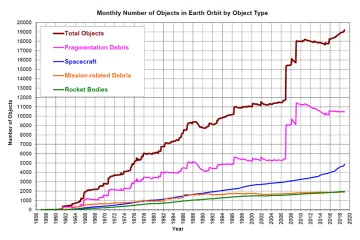
It is easy to confuse the IAU’s "debris" with the modern concern over "space debris," the defunct satellites and rocket fragments littering Low Earth Orbit (LEO). [1][4] While the two are distinct, the term debris in the planetary definition refers to the residual planetesimals and asteroids from the solar system’s accretion period. [4] The fact that Earth, Mars, and Jupiter have cleared their orbits implies that, gravitationally speaking, they are the masters of their domains concerning their original material constituents. [4]
However, the ongoing discovery of large, uncataloged bodies in the outer solar system keeps the definition from feeling entirely static. The sheer number of objects larger than the Moon residing in the Kuiper Belt complicates the notion of a "cleared" zone, prompting ongoing debate among planetary scientists. [3] One perspective to consider is that "cleared" might be better framed as achieved gravitational maturity. A planet is one that has had sufficient time and mass to gravitationally organize its orbital zone, even if the process isn't perfectly instantaneous or results in the stable capture of a few lingering bodies. [3] This suggests that clearing the neighborhood is less about a single event and more about the cumulative, historical effect of a massive body dominating its orbital lane over eons.
#Videos
Clearing the neighbourhood - YouTube
Related Questions
#Citations
Need help understanding the "cleared orbital neighborhood ... - Reddit
What does it mean for a planet to 'clear the neighborhood' around its ...
Mea culpa: Planet definitions and Earth clearing its orbit
Have Earth, Mars and Jupiter and Neptune not cleared their orbits of ...
In 2006, the IAU defined a planet as a celestial body that orbits the ...
Pluto: Facts - NASA Science
Clearing the neighbourhood - YouTube
Brain Post: Pluto… Why It's No Longer a Planet - SnowBrains
Why is Pluto no longer a planet? - The Library of Congress