cycles articles

What component must ignite in the core to mark the true beginning of a star's active life?
How long can the main sequence lifetimes of red dwarfs potentially extend?
What structure remains at the center after a low-mass star gently expels its outer layers forming a planetary nebula?
What element's fusion stops energy generation, triggering the catastrophic core collapse in massive stars?
What mass limit must the residual core of a dying massive star exceed to form a black hole?
Approximately what mass ratio defines the boundary used to distinguish high-mass stars from low-to-intermediate mass stars regarding final evolution?
What is the approximate period of the Sun's recurring surface magnetic activity cycle?
What two factors primarily dictate the unidirectional transformation of a star's stellar cycle?
Into what theoretical object will a white dwarf eventually cool and fade over immense timescales?
What explosive event characterizes the dramatic end of stars significantly more massive than the Sun?
How is the overall process of stellar evolution viewed across cosmic time, despite an individual star's life being a one-way trip?
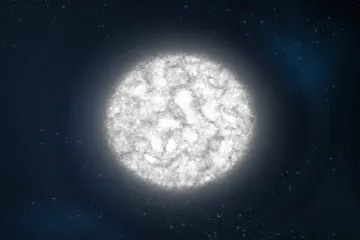
What are nebulae commonly referred to as in the context of star formation?
What term describes a ball of gas and dust that is gathering mass but has not yet begun nuclear fusion?
What physical process allows a star to reach the main sequence phase?
How does a star's mass affect its lifespan during the main sequence?
What will a star similar in size to the Sun become after it runs out of hydrogen?
What is the glowing shell of gas created by a medium-sized star at the end of its life?
What does a White Dwarf eventually become after cooling down for billions of years?
What colossal event occurs when a high-mass star collapses because it can no longer generate energy?
What is formed when the remaining core of a high-mass star is too massive for a neutron star to support?
Which elements are ejected back into space when stars die to help form new stars and planets?
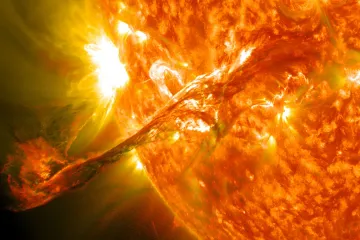
What process defines the longest phase of a star's evolution on the main sequence?
What percentage of the Sun's entire lifespan is spent on the main sequence?
Approximately what core temperature must be reached for a star to officially join the main sequence via nuclear fusion?
What dynamic stalemate maintains a star on the main sequence?
What are the two types of outward pressure generated by core fusion?
What is the technical term for the state where outward pressure exactly matches inward gravitational pressure?
In stars similar to or smaller than the Sun, which component of outward pressure is usually dominant?
What factor is the single most important determinant of a star's position on the main sequence and how long it stays there?
How does increased mass affect a star's required energy expenditure to maintain equilibrium?
What signals the transition out of the main sequence phase for a star?