What property of a star controls its evolution?
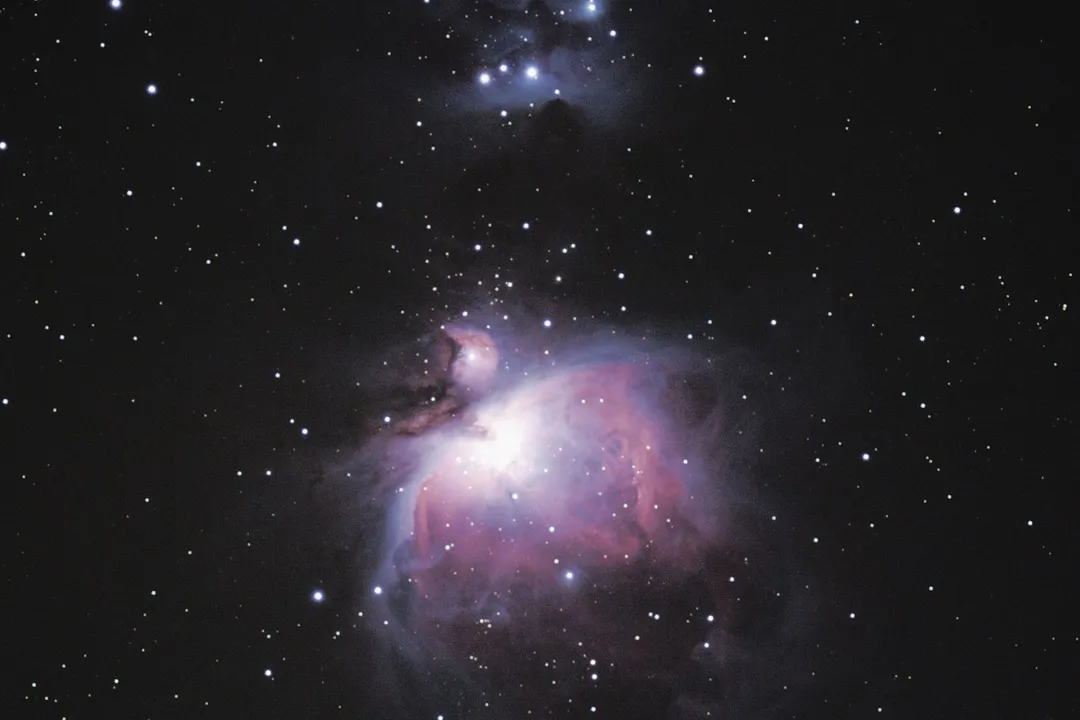
The cosmic clock governing a star's entire existence, from its fiery birth in a molecular cloud to its eventual demise as a stellar remnant, is primarily dictated by a single, fundamental attribute: its initial mass. [1][5][9] While we observe stars displaying a variety of characteristics—luminosity, temperature, color, and size—these are often the symptoms or intermediate results of the evolutionary path already set in motion by how much material aggregated during the star's formation. [1][9] This initial mass determines the pressure and temperature within the stellar core, which in turn dictates the nuclear fusion reactions that power the star and, crucially, how long those reactions can be sustained. [1][9]
# Mass Dictates Destiny
The sheer quantity of matter a protostar accumulates at the beginning is the master switch for its entire life cycle. [1][9] More massive stars possess stronger gravitational forces pressing inward, requiring much higher internal pressures and temperatures to maintain hydrostatic equilibrium—the balance between gravity pulling in and thermal/radiation pressure pushing out. [1][2] To achieve this balance, massive stars must burn their nuclear fuel, primarily hydrogen, at an exponentially faster rate than their less massive counterparts. [1][5]
This furious energy production translates directly into a dramatically shorter existence. A low-mass star, like our Sun, is expected to reside on the main sequence for billions of years, perhaps around ten billion years. [2][9] In stark contrast, a star perhaps ten times the mass of the Sun might exhaust its core hydrogen in only tens of millions of years. [1][9]
This difference in lifespan, dictated solely by mass, is perhaps the most staggering consequence. Consider a comparative look at the main-sequence endurance, which is the longest phase of a star's life:
| Star Mass (Solar Masses) | Approximate Main Sequence Lifetime (Years) | Core Fusion Rate Analogy |
|---|---|---|
| (Low Mass) | Billion | A slow, steady candle flame |
| (Sun-like) | Billion | A dependable household lamp |
| (Massive) | Million | A powerful, short-lived arc light |
| (Very Massive) | Million | A spectacular, brief flare |
It strikes one that a star starting with just a few times the Sun’s mass will experience a life that is a mere fraction of our own solar lifetime, a cosmic sprint rather than a marathon. [1] The ability to fuse heavier elements later in life is also wholly dependent on this initial mass; only stars significantly more massive than the Sun can achieve the core conditions necessary to fuse elements beyond carbon and oxygen, leading to fundamentally different end-stages. [1][5][9]
# Composition Factors
While mass sets the primary evolutionary track, the star’s initial chemical makeup—its metallicity—plays a secondary, yet important, role in the details of its evolution. [1][9] In astronomy, "metals" refer to any element heavier than hydrogen and helium. [1] Stars formed more recently in the universe tend to have higher metallicity because they condensed from gas clouds enriched by the remnants of previous generations of stars. [1][9]
Higher metallicity stars often have slightly different internal structures and opacity characteristics compared to metal-poor stars of the same mass. [1] This difference can subtly affect the rate of energy transport and the precise size and luminosity the star achieves on the main sequence, though it rarely alters the final outcome category (e.g., white dwarf vs. supernova). [1][9] Stars with very low metallicity, like the theoretical Population III stars, are thought to have burned hotter and lived slightly shorter lives than their solar-composition counterparts. [1] It is a fine-tuning knob on an engine whose power is set by the mass input.
# Main Sequence Lifespan
The main sequence is the stage where a star fuses hydrogen into helium in its core, a process that can account for about ninety percent of a star's active life. [2][9] Stellar evolution during this phase is characterized by a gradual increase in luminosity and size as the helium ash builds up in the core, forcing the core temperature to rise to maintain the necessary fusion rate. [2]
The relationship between mass and lifetime is not linear; it follows a power law. An increase in mass leads to a disproportionately larger increase in the fusion rate. [1] For example, if a star is times the mass of the Sun, its lifetime is roughly proportional to or . [1] This steep dependence means even small variations in the initial mass budget have profound long-term consequences.
# Post-Main Sequence Changes
Once the hydrogen fuel in the core is exhausted, the star leaves the main sequence, and its evolution accelerates dramatically, again dictated by its mass. [1][5][9]
# Low-Mass Evolution
Stars with masses up to about $0.4$ to $0.5$ times the mass of the Sun (the theoretical lower limit for hydrogen fusion) evolve very slowly, often ending as faint red dwarfs that may never become hot enough to ignite helium fusion, potentially shining for trillions of years. [1]
For stars like the Sun ( to about ), the end of core hydrogen burning leads to the Red Giant Branch (RGB) phase. [1][9] The core contracts and heats up while the outer layers expand immensely. [2][9] After the core ignites helium fusion (the helium flash in lower-mass stars), the star moves through subsequent phases, eventually expelling its outer layers to form a beautiful planetary nebula. [1][5] The core remaining behind is a dense, hot white dwarf, which slowly cools over eons. [1][5]
# Massive Star Paths
Stars born above about $8$ solar masses follow a much more dramatic and swift path. [1][9] They do not simply become red giants; they swell into Red Supergiants. [1] Because their cores are so much hotter and denser, they can ignite fusion of progressively heavier elements—carbon, neon, oxygen, silicon—in successive shells around the core. [1][5] This process ends when the core is converted to iron, an element whose fusion consumes energy rather than releasing it. [1][5]
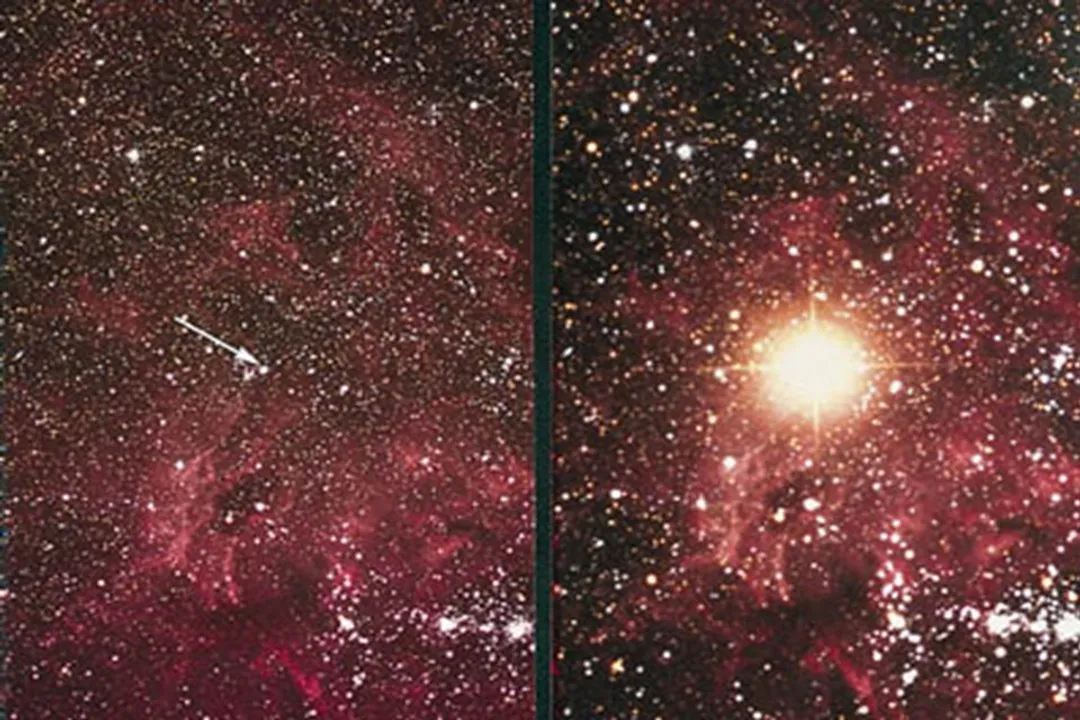
When iron accumulates, hydrostatic equilibrium collapses almost instantaneously, leading to a catastrophic Type II supernova explosion. [1][5] This explosion briefly outshines entire galaxies and is the universe's primary mechanism for synthesizing elements heavier than iron. [5] The remnant left behind is either a neutron star or, if the initial mass was very high (perhaps above ), a black hole. [1][5]
The distinction between the white dwarf remnant and the neutron star/black hole remnant is one of the starkest evolutionary divergences controlled by that initial mass parameter. The dividing line, somewhere around , represents the minimum threshold required to create the internal pressure necessary to overcome electron degeneracy pressure and trigger the core collapse that leads to a neutron star or black hole. [1][5]

# Temperature and Luminosity
While mass is the primary driver, the properties we observe, such as surface temperature and total luminosity, are direct manifestations of the star's evolutionary stage, which is determined by its mass and age. [4][7]
Surface temperature correlates with the star's color. Hotter stars appear blue or white, while cooler stars appear orange or red. [4][7] Luminosity, the total energy output, is related to both temperature and the star's surface area (radius). [4] The Hertzsprung-Russell (H-R) diagram plots these two observable properties against each other, and different evolutionary stages for stars of a specific mass trace predictable tracks across this diagram. [2]
A young, massive star starts on the main sequence at the upper left (hot and luminous). As it ages and expands into a supergiant, it moves dramatically toward the right (cooler surface temperature) while maintaining or increasing its luminosity due to a massive increase in radius. [2][9] This predictable charting of observable properties confirms that they are consequences, not controllers, of the underlying mass-driven evolution.
# Stellar Formation Link
It is important to recognize that the initial mass is set during the star's formation within a collapsing molecular cloud. [5][6] Gravity causes the cloud fragment to collapse until the core becomes hot and dense enough to initiate fusion. [5] The amount of gas and dust that the forming protostar manages to accrete before the intense radiation and stellar winds from the forming star blow away the surrounding material sets that final, destiny-defining mass. [5][6] If a star accretes mass slowly, it lives longer; if it accretes rapidly, it becomes a massive, short-lived star.
An interesting scenario involves binary star systems, which often complicate the simple mass-evolution narrative. If two stars are close enough, mass transfer can occur from one star to its companion once one star expands into a giant. [1] This transfer effectively alters the remaining mass of the primary star and adds to the mass of the secondary star, dramatically changing the subsequent evolutionary track for both components in ways that defy simple single-star models. [1] In this context, the current mass distribution, altered by accretion, becomes the immediate controller of the next stage, though the original mass set the stage for the expansion that enabled the transfer in the first place.
# Understanding the Scale of Change
To truly appreciate the power of initial mass, we must consider how small variations near the boundaries translate into entirely different cosmic finales. Imagine two stars forming side-by-side, one with and the other with . [1] The first star will proceed along the path toward becoming a planetary nebula surrounding a white dwarf. The second, perhaps only a fraction of a percent more massive, will fuse silicon into iron, collapse, and end its life in a supernova, leaving behind a neutron star or a black hole. [1][5]
This narrow mass threshold near demonstrates that the property controlling evolution is not just how much mass, but whether that mass exceeds certain critical thresholds required to ignite fusion of heavier nuclei necessary to prevent gravitational collapse. [1] For astronomers studying distant galaxies, inferring the rate of massive star formation—and thus the rate of heavy element production—relies heavily on observing the products of these high-mass, short-lived stars. [5] The entire chemical enrichment history of the universe hinges on the precise accretion physics governing this initial mass determination.
# Fusion Stages
The entire sequence of fusion reactions a star undergoes is dictated by its mass, which determines the core temperatures it can achieve. [1] The deeper a star burns, the heavier the element it can fuse.
- Hydrogen Burning (Main Sequence): The foundational energy source. [2][9]
- Helium Burning (Red Giant/Horizontal Branch): Ignited when core hydrogen is depleted, producing carbon and oxygen. [1][9]
- Advanced Burning Stages (Massive Stars only): Carbon, neon, oxygen, and silicon burning occur sequentially, building up an iron core. [1][5]
This staircase of thermonuclear reactions cannot be climbed without the crushing weight of high initial mass to generate the necessary temperatures at each step. [1] Therefore, the property that controls the number of steps a star takes on this fusion ladder is, again, its initial mass.
Related Questions
#Citations
Stellar evolution - Wikipedia
Stellar Evolution - | The Schools' Observatory
Star Basics - NASA Science
Chapter 12: Properties of Stars - Teach Astronomy
How do stars and planets form and evolve? | Center for Astrophysics
Stellar evolution | McGraw Hill's AccessScience
D.2 Stellar characteristics and stellar evolution Flashcards - Quizlet
Stellar evolution | Astronomy explained - SCNAT knowledge
Stellar Evolution | COSMOS