What are the five physical properties of stars?
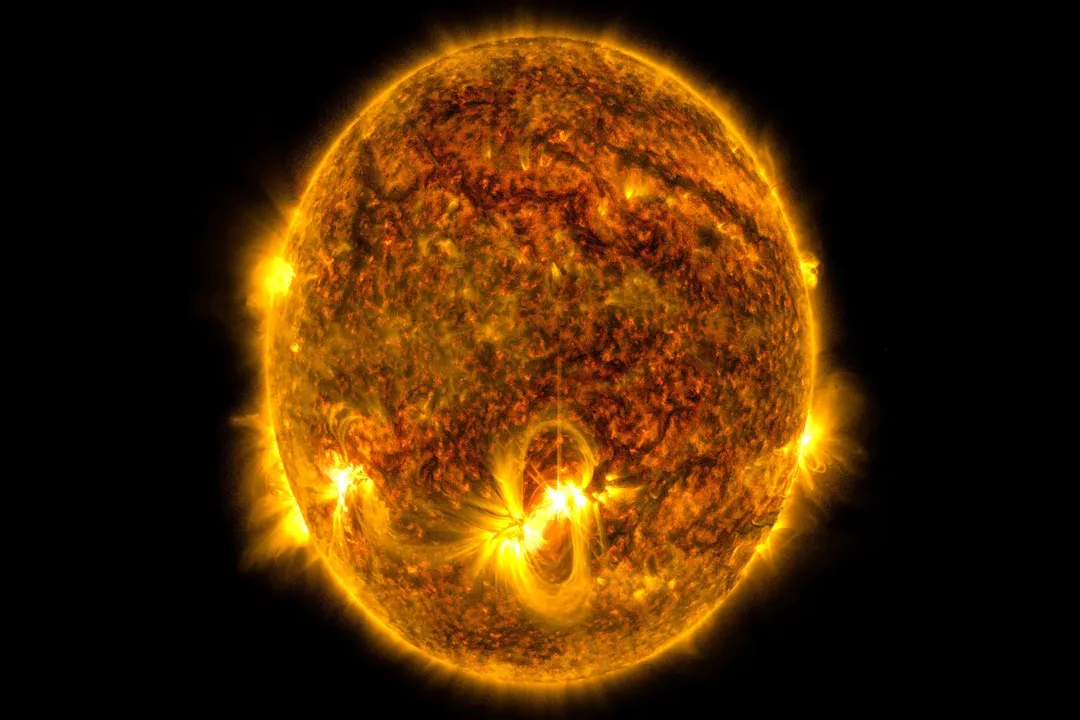
Imagine trying to classify something millions of light-years away, something so enormous that our entire solar system could fit inside its outer atmosphere. The way astronomers manage this incredible task is by breaking down the nature of stars into a handful of core, measurable characteristics—the fundamental physical properties that define what a star is and how it will behave. [1][6] While the specific count can sometimes vary depending on how properties are grouped, generally, five key physical characteristics allow us to map the cosmos: mass, surface temperature, luminosity, physical size (radius), and chemical composition. [4][7][9] Understanding these five factors unlocks nearly everything we know about stellar evolution and the universe's energy budget. [6]
# Stellar Mass
Of all the physical properties, mass is arguably the most critical because it acts as the master control switch for a star’s entire life cycle. [1][7] A star’s initial mass dictates how hot it will burn, how much energy it will produce, and, most dramatically, how long it will live. [4] Stars with significantly more mass burn through their nuclear fuel reserves much faster than their smaller counterparts. [1]
The relationship between mass and lifetime is inverse and extreme. Consider that the Sun has a relatively modest lifespan of about ten billion years. [6] A star just a few times the Sun’s mass might only last a few hundred million years, racing through its fuel in a spectacular, short blaze. Conversely, a very low-mass star, like a red dwarf, can sip its hydrogen fuel so slowly that its expected lifetime can stretch into the trillions of years—far longer than the current age of the universe. [1][7] This scaling relationship means that even a small percentage difference in initial mass translates into vastly different outcomes for the star’s final state, whether it collapses into a white dwarf, a neutron star, or a black hole. [4] Because mass is so foundational, its measurement, often derived indirectly by observing a star's gravitational effects on a companion in a binary system, is a primary goal in astrophysics. [1][7]
# Surface Heat
The temperature of a star’s surface dictates its color, offering a direct visual clue to its internal energy generation. [9] This relationship is remarkably consistent: hotter stars emit light predominantly at shorter wavelengths, making them appear blue or white, while cooler stars peak at longer wavelengths, giving them a reddish hue. [1][2] This color-temperature connection is fundamental to stellar classification. [7] For instance, very hot stars can have surface temperatures exceeding $30,000$ Kelvin, while the coolest stars settle below $3,500$ Kelvin. [1] The Sun, a medium-sized star, has a surface temperature around $5,800$ Kelvin, placing it firmly in the yellow-white category. [6]
When astronomers use spectroscopy—splitting the starlight into a spectrum—they can map out the absorption lines created by various elements in the star's atmosphere. [4] The pattern and strength of these lines are heavily dependent on the gas temperature. A star that is too cool won't excite the atoms enough to create certain spectral features, and a star that is too hot might strip the electrons from the atoms entirely, leading to different spectral signatures. [7] This is how we assign spectral classes, often represented by letters like O, B, A, F, G, K, and M, which move sequentially from hottest (O) to coolest (M). [1][9]
# Energy Output
Luminosity refers to the total amount of energy a star radiates into space every second; it is the star’s intrinsic power rating. [7] This property should not be confused with apparent brightness, which is how bright the star looks to us on Earth, as that is heavily dependent on the star's distance. [9] A very dim star nearby can appear brighter than an extremely luminous star that happens to be millions of light-years away. [4] Astronomers calculate luminosity by measuring the apparent brightness and then mathematically accounting for the known distance to the star. [9]
Luminosity is intrinsically tied to both mass and temperature. [1] A star’s mass determines the rate of its nuclear fusion, which directly establishes its power output (luminosity). [7] Furthermore, because temperature dictates the star’s color, and the area from which the energy radiates (its surface area, or radius) also plays a role, the relationship is often expressed through the Stefan-Boltzmann Law, relating energy flux, area, and temperature. [4] This interplay is central to the Hertzsprung-Russell (H-R) Diagram, which plots luminosity against temperature to group stars by their evolutionary stage. [9] If you were tracking a variable star, changes in its light output over time—its variability—would be a direct measurement of changes in its luminosity, provided its distance remains constant. [8]
# Physical Size
The radius, or physical size, of a star is another measurable property, though it is often inferred from luminosity and temperature data rather than being measured directly. [4][7] As mentioned when discussing luminosity, a star’s total energy output depends on both its surface temperature and the total surface area available to radiate that energy. [9] If two stars have the same surface temperature, the larger one must be more luminous simply because it has more surface area emitting photons. [4]
The sheer scale differences among stars are staggering. If we take our Sun, with a radius of approximately $696,000$ kilometers, as our baseline, we can see the extreme variations in stellar evolution. [6] At the lower end are white dwarfs, the dense, leftover cores of Sun-like stars, which can be only the size of Earth—a tiny fraction of the Sun’s radius. [1] On the opposite end are supergiants, which can expand so much that if one replaced the Sun, its surface would engulf the orbits of Mercury, Venus, Earth, and possibly Mars. [1][2] For example, if we conceptually placed the largest known supergiants where the Sun sits, the difference in volume between a white dwarf and a supergiant is analogous to comparing a pea to a football stadium; the surface area difference is the true driver of the luminosity contrast in these extreme cases. [4]

# Chemical Makeup
The chemical composition reveals what a star is made of, primarily hydrogen and helium, with trace amounts of heavier elements. [4][7] Astronomers determine this composition by analyzing the star's spectrum. [4] Every element absorbs light at a specific, unique pattern of wavelengths when it is in a cooler state relative to the light source behind it. When we observe a star, the pattern of dark lines (absorption lines) superimposed on its continuous spectrum acts like a chemical fingerprint. [4][7]
While most stars are predominantly hydrogen (around $70%$ to $75%$ by mass) and helium (around $24%$ to $28%$), the proportion of "metals"—astronomers’ term for any element heavier than helium—is what truly differentiates stars and reveals their age and origin. [4][7] Stars born early in the universe, known as Population II stars, have very low metallicity because they formed before many heavy elements were forged in prior generations of supernovae. Conversely, younger stars, like our Sun (a Population I star), contain a higher percentage of elements like carbon, oxygen, iron, and silicon because they condensed from gas clouds enriched by earlier stellar deaths. [4] Studying the metallicity allows us to build a timeline of chemical enrichment throughout the galaxy. [7]
To summarize these five properties and see how they relate, we often categorize stars based on these interrelated measurements. For instance, an astronomer knows that if a star is both extremely massive and extremely hot, it will necessarily possess an extraordinarily high luminosity and exist only for a very short period of time, a predictable sequence dictated by the physics governing its core fusion. [1][7] This comprehensive set of physical data points allows us to place any star accurately within the broader context of stellar evolution, regardless of how far away it is located. [6]
Related Questions
#Citations
The Properties of Stars
Stars and Their Properties - How Stars Work | HowStuffWorks
ERTHSCI-A Unit 2 Lesson 3 | Quick Check / Interactive | Star Types
Physical Properties of Stars – Astronomy and Astrophysics
SC.8.E.5.5 - Describe and classify specific physical properties of stars
Star Basics - NASA Science
phy213 - the observed properties of stars - vik dhillon
[PDF] Chapter 2: The Nature of Stars - aavso
Chapter 12: Properties of Stars - Teach Astronomy