What is the correct order for stellar evolution?
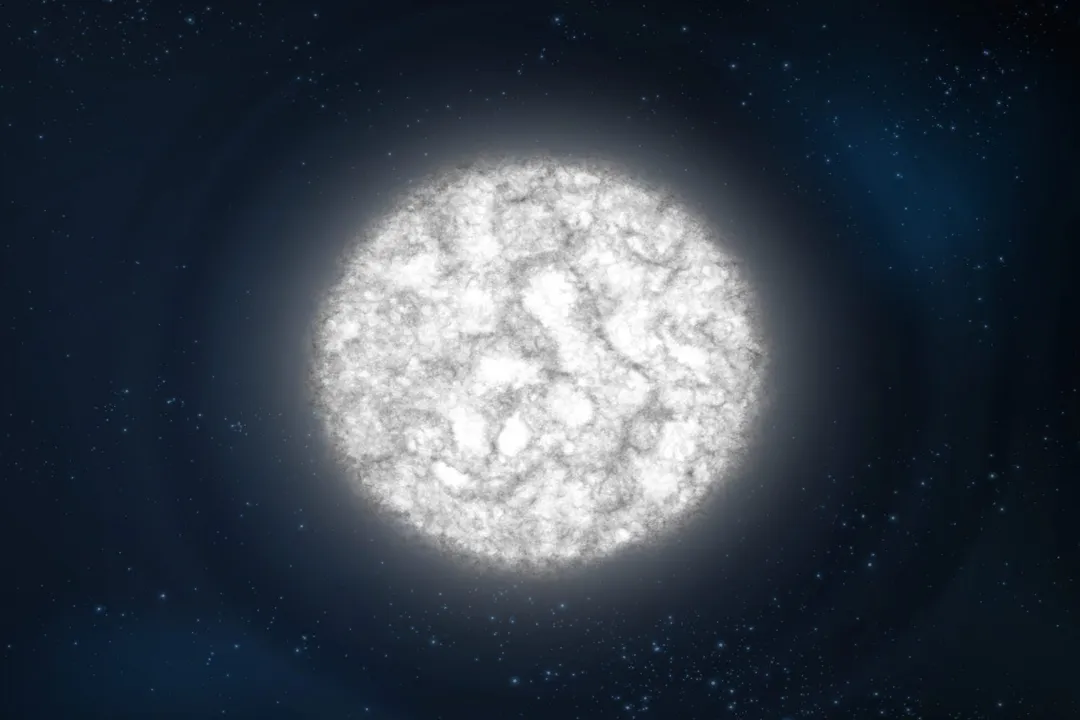
Stars seem like unchanging monuments in the night sky, but they are dynamic objects engaged in a constant internal struggle. Every star is a battleground where the crushing force of gravity fights against the outward pressure generated by nuclear fusion [1][2]. This delicate balance, known as hydrostatic equilibrium, dictates the life cycle of a star from its chaotic beginning to its eventual demise [3][6]. Understanding the sequence of stellar evolution requires looking at how mass acts as the primary dial that controls the speed and intensity of these processes.
# Stellar Birth
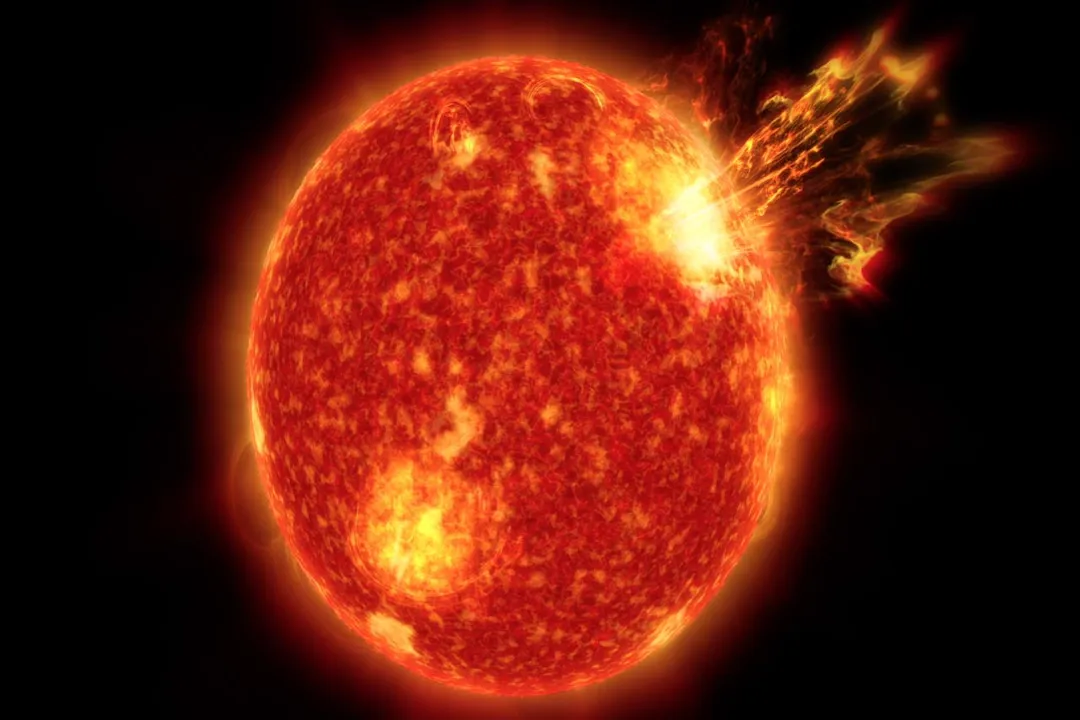
Every star begins inside a giant molecular cloud, often referred to as a nebula. These regions are cold, dense gatherings of gas—mostly hydrogen—and interstellar dust [5][7]. Left alone, these clouds remain stable, but a nearby event, such as a shockwave from a supernova or a collision with another cloud, can disturb them [2]. This disturbance causes localized regions within the nebula to collapse under their own gravity [3][8].
As a region collapses, it begins to fragment into smaller, denser clumps. The gravitational energy from the collapse is converted into heat, causing the center of the clump to grow hotter and denser [6][8]. At this early stage, the object is not yet a star, but rather a core of accumulating material that is slowly gathering more mass from its surroundings [5].
# The Protostar
The accumulation phase creates a protostar. During this time, the object is shrouded in a cocoon of dust and gas, which often makes it invisible in visible light but detectable through infrared observations because of the heat generated by its contraction [2][8]. As the protostar continues to collapse, the temperature at its core rises significantly [6].
The protostar phase is purely gravitational; there is no nuclear fusion occurring yet. It continues to shrink and heat up until the core temperature hits approximately 10 million degrees Celsius [3][5]. At this critical threshold, the density and temperature are sufficient to initiate the fusion of hydrogen nuclei into helium [7]. When this happens, the outward radiation pressure finally balances the inward pull of gravity, and the star achieves hydrostatic equilibrium, marking its entry into the main sequence [1][3].
# Main Sequence
The main sequence is the longest and most stable phase of a star's life. During this period, the star remains at a constant size and temperature, sustained by the steady conversion of hydrogen into helium in its core [2][4]. The duration of this phase is strictly dependent on the star's initial mass [6].
It might seem intuitive to assume that larger stars, having more fuel, would live longer. However, the opposite is true. Massive stars burn their hydrogen fuel at a ferocious rate to maintain the high pressures needed to prevent their greater gravity from collapsing them [1][7]. A small star, such as a red dwarf, burns its fuel slowly and can remain on the main sequence for trillions of years [5]. Conversely, a star ten times the mass of the Sun might consume its fuel and exit the main sequence in only a few million years [6].
| Star Mass (relative to Sun) | Estimated Main Sequence Lifetime |
|---|---|
| 0.1 | ~ 6-10 Trillion years |
| 1.0 | ~ 10 Billion years |
| 10.0 | ~ 20-30 Million years |
| 60.0 | ~ 3 Million years |
This relationship highlights why massive stars are so rare—they simply do not stick around long enough to be common [1][8].
# Mass Divergence
Once a star exhausts its hydrogen supply, it moves off the main sequence. The path it takes depends entirely on its initial mass [3][6]. This divergence creates vastly different outcomes.
For stars with masses similar to our Sun, the core contracts as hydrogen runs out, heating up and triggering the fusion of hydrogen in a shell surrounding the core [8]. This causes the outer layers of the star to expand significantly and cool, transforming the star into a red giant [2]. Eventually, the core becomes hot enough to fuse helium into carbon and oxygen [5].
High-mass stars—those much heavier than the Sun—undergo a more dramatic evolution. They expand to become red supergiants, and their internal temperatures allow them to fuse increasingly heavier elements, such as neon, magnesium, and silicon, until they produce iron in their cores [6][7]. This is the end of the line for fusion, as fusing iron consumes energy rather than releasing it, leading to a catastrophic collapse [1].
# Stellar Death
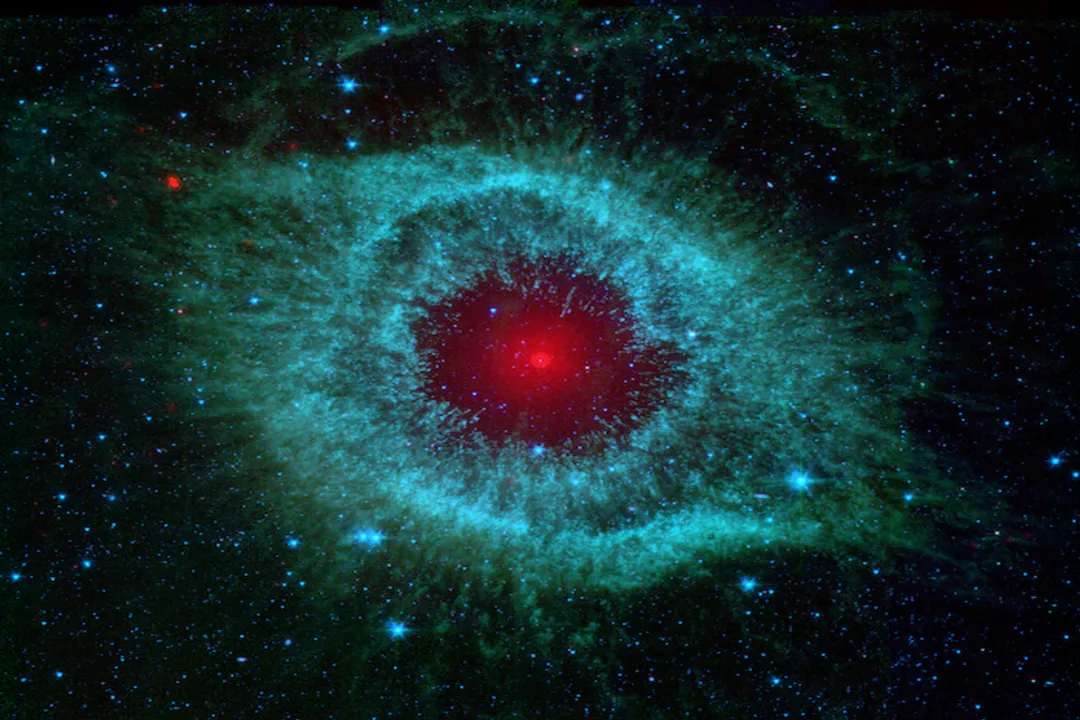
The death of a star is as dramatic as its birth. Low-to-medium mass stars, like our Sun, cannot reach the temperatures required to fuse carbon. Instead, they shed their outer layers, creating a shell of expanding gas known as a planetary nebula [2][4]. The remaining core, composed mostly of carbon and oxygen, is left behind as a white dwarf—a dense, Earth-sized object that slowly cools over billions of years [3][5].
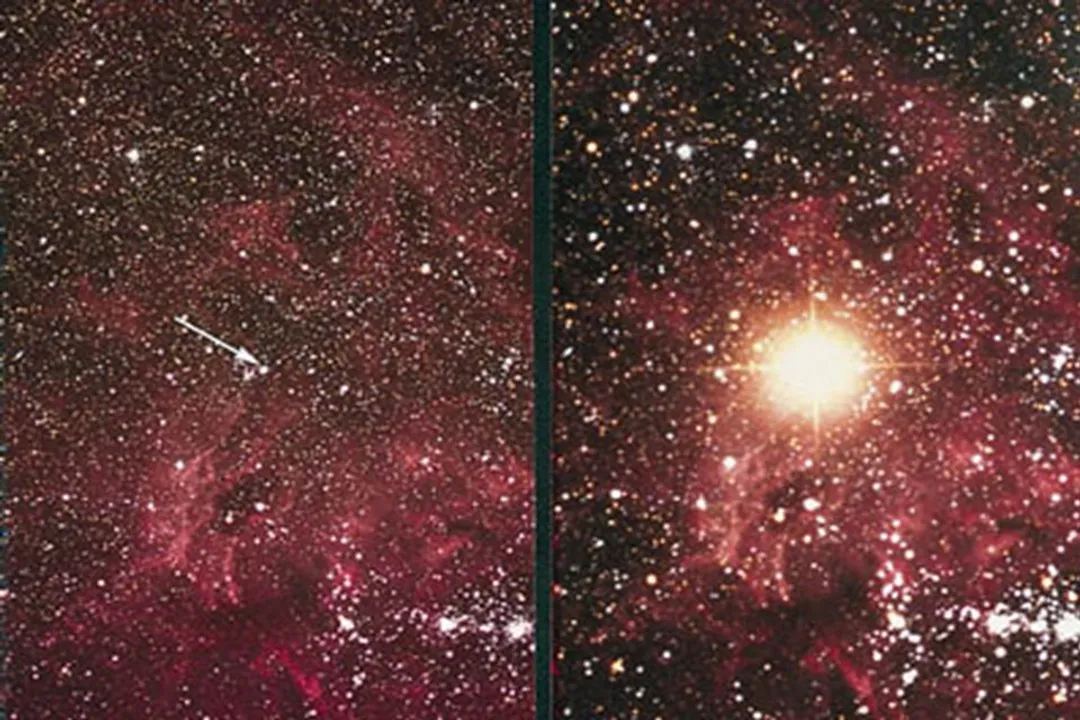
High-mass stars meet a much more violent end. When the iron core collapses, the star rebounds in a massive explosion called a supernova [1][7]. This explosion is so energetic that it creates elements heavier than iron and disperses them into space [8]. What remains depends on the mass of the core: if the remnant is between about 1.4 and 3 times the mass of the Sun, it compresses into a neutron star, an incredibly dense object composed almost entirely of neutrons [6]. If the remaining core mass exceeds this limit, gravity overcomes even the resistance of neutrons, and the star collapses into a black hole—a region of space where gravity is so intense that not even light can escape [1][4].
# Matter Recycling
Analyzing these stages reveals a cycle of stellar enrichment that is critical to the chemical composition of the universe. When a star dies, it does not simply vanish. Planetary nebulae and supernovae inject heavy elements—such as carbon, oxygen, iron, and gold—back into the surrounding interstellar medium [6][7].
This process transforms the chemical makeup of the galaxy over time. The gas from which new stars form is progressively enriched with the debris of previous generations. This means that first-generation stars were composed almost entirely of hydrogen and helium, while younger stars, including our own Sun, contain a higher percentage of heavier elements [1]. In a sense, the material in our solar system, including the atoms in our bodies, consists of the processed leftovers from stars that died billions of years ago [2][8]. This continuous loop ensures that stellar evolution is not just a linear timeline, but a self-propagating system that facilitates the creation of complex chemistry in the cosmos.
#Videos
The Life Cycle of a Star - Stellar Evolution Explained - YouTube
Related Questions
#Citations
Stellar evolution - Wikipedia
Stellar Evolution - | The Schools' Observatory
Life Cycle of Stars - BYJU'S
Which are the stages of stellar evolution? - Quora
How Stars Form: A Star's Life Cycle in Six Stages - KiwiCo
Stellar Evolution - University of Michigan [umich.edu]
Stellar evolution | McGraw Hill's AccessScience
[PDF] Stellar Evolution – Cosmic Cycles of Formation and Destruction
The Life Cycle of a Star - Stellar Evolution Explained - YouTube