Which condition must be met for a Hubble image resulting from filter data to often be labeled "true color"?
The filters used correspond only to wavelengths the human eye can see
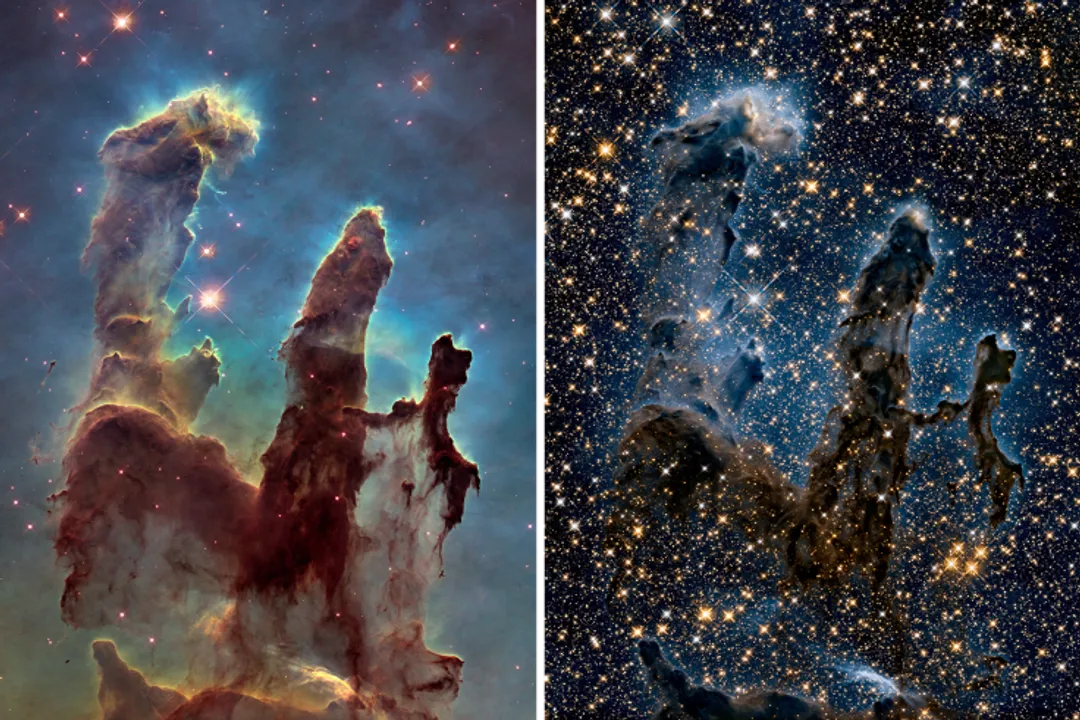
The term "true color" in the context of astronomical imaging refers specifically to data derived from filters that isolate wavelengths already within the range detectable by the human eye (the visible spectrum). When scientists use filters corresponding only to visible red, green, and blue light, the resulting image attempts to mimic what the eye would perceive if the celestial object were bright enough. However, even these "true color" images usually require significant adjustments to brightness and contrast because the original signal is too faint for a direct, straight mapping, meaning this label applies only to the selection of input wavelengths, not necessarily the final processed output.
#Videos
How are Hubble Space Telescope images 'colorized' and processed?