What effect does the required brightness range stretching process have on the visual representation of deep space objects?
It inherently exaggerates the contrast between faint and bright areas compared to eye perception
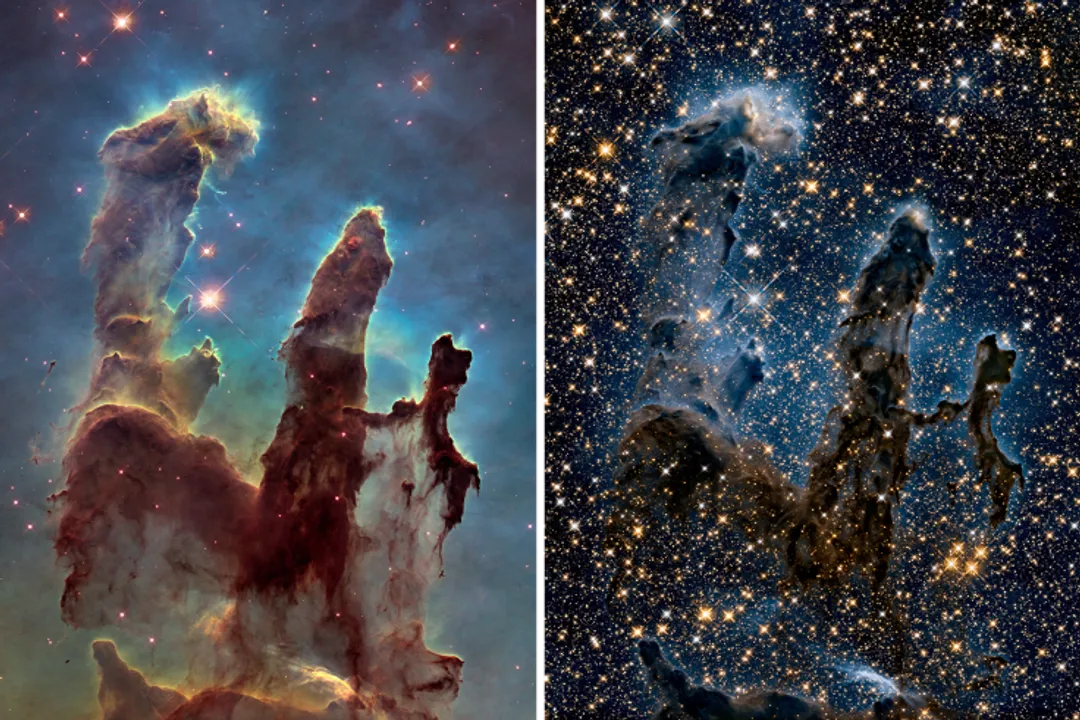
Because deep space objects are inherently faint, the raw data captured by telescopes results in images dominated by black space surrounding a relatively small, undetailed object. To reveal subtle structures, especially in the dimmer outer edges of nebulae or galaxies, image processors must perform a 'stretching' operation on the brightness range. This involves remapping the absolute darkest signal that registered any light to a visible gray/black level, and mapping the brightest signal to white. This manipulation is necessary for visual clarity but inherently amplifies the difference between the brightest points and the faintest points beyond what the eye would naturally perceive if viewing the object directly.
#Videos
How are Hubble Space Telescope images 'colorized' and processed?