What is the real color of space?
The perception of the cosmos often defaults to an absolute, featureless black, a vacuum devoid of light. While this may be the accurate description when observing the night sky from Earth's surface, or even when looking out of a spacecraft window, it doesn't capture the aggregate reality of all the light being generated across trillions of miles of observable existence. The actual color of space, when averaged across the entire expanse, turns out to be far less dramatic than the inky void we imagine, settling instead into a rather unremarkable shade of off-white. [1][7]
# Blackness Appearance
The simple reason space appears black is fundamentally about the absence of atmosphere and the finite speed of light. [2] On Earth, our sky is blue because our atmosphere scatters sunlight in all directions, allowing us to see light coming from every direction, even when looking away from the Sun. [4] Space lacks this crucial scattering medium. If you were to look away from any star, planet, or galaxy, there is nothing to intercept and redirect photons toward your eye; the light travels in straight lines from its source, and if the source isn't directly in your line of sight, you see nothing but the void. [6]
Astronauts who have experienced this firsthand confirm this visual reality. Looking out from the International Space Station, the view is dominated by the dazzling brightness of the Earth below and the sharp, unfiltered light of the Sun, but the rest of the universe is a black backdrop punctuated by brilliant, unwinking stars. [8] This contrast is stark—the foreground objects are incredibly bright against an absolute black background because there is no residual, scattered light to fill in the shadows. [8]
# Astronaut Views
The firsthand reports from those who have left our atmosphere offer a fascinating perspective that challenges the colorful images we see from probes and telescopes. Astronauts report that while the stars are sharp, the space between them lacks any intrinsic color other than black. [8] If they look toward a distant nebula, it might appear faint or indistinct unless they are very close to it or it is intensely bright. [6] The human eye, even when adapted to the dark, struggles to register the diffuse, ancient light that exists everywhere because it is simply not intense enough to trigger a strong signal against the overwhelming darkness separating objects. [2] This is a critical distinction: the local experience of space is black, an experience shared by any observer positioned far from major light sources. [8]
# Cosmic Average
To move past the local experience and determine the real color of space, scientists had to perform a massive cosmic survey. This wasn't about looking at a single patch of the sky, but about gathering the light from billions of galaxies across the observable universe and blending it together. [1] In 2002, astronomers Karl Glazebrook and Ivan Baldry performed this measurement, aggregating the light from over 200,000 galaxies. [1][7]
When all this light was combined and analyzed, it didn't produce the expected deep blue of young, hot stars, nor the pure black of a true void. Instead, the resulting hue was a pale, slightly creamy beige. [7] This average color was officially named Cosmic Latte. [7]
# Beige Hue Explained
The name "Cosmic Latte" came about after a public poll determined that "Cosmic Turquoise" or "Sky Blue" were less appealing descriptions for the beige result. [7] The specific color coordinates identified were close to the modern definition of beige, with a standard hexadecimal color code near #FFF8E7. [7]
This color is the aggregate spectral energy density of the universe, essentially the sum of every photon emitted throughout cosmic history that is currently reaching us from all directions. [1] The fact that it leans toward beige rather than blue is a direct indicator of the universe's age and evolutionary stage. Young, massive stars burn hot and blue, dominating the light spectrum in early epochs of the universe. [1] As stars age, they shift toward yellow and eventually red giants. The beige color we measure now reflects a shift away from the intensely blue light of the younger universe toward the yellower, longer wavelengths emitted by older, more common stars. [1] If we could conduct the same measurement billions of years in the future, when most stars have cooled into red dwarfs or faded white dwarfs, the average color of space would likely shift even further toward red. [4]
This analytical method of summing the light reveals something about stellar demographics that our naked eyes cannot see across vast distances. Imagine projecting a small, perfectly filtered image of the entire sky onto a single point; Cosmic Latte is that synthesized point. [6] It is a color born from immense statistical averaging, a ghost of all the star formation that has ever occurred. [1]
Here is a simplified comparison of how different spectral observations combine to form the average:
| Light Source Dominance | Implied Universe Stage | Perceived/Dominant Color Shift |
|---|---|---|
| Hot, Blue Stars | Early Universe | Blue/Violet |
| Middle-Aged Stars (like our Sun) | Present Universe | Beige/Yellow-White |
| Cool, Red Stars | Distant Future Universe | Red/Orange |
| [1][7] |
# Imagery Deception
If space is beige on average, why do images from instruments like the Hubble Space Telescope or the James Webb Space Telescope (JWST) show vibrant blues, fiery reds, and deep purples? This is where the difference between scientific measurement and public visualization becomes crucial. [3] Telescope images are rarely what the human eye would see unaided. [8]
Telescopes are engineered to capture light across various wavelengths, many of which fall outside the visible spectrum for humans (like infrared or ultraviolet). [5] To create the stunning, colorful images popularized on social media and in press releases, scientists employ a process called false-color imaging. [3][5]
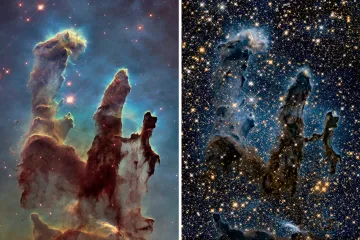
For example, data captured in the infrared spectrum by JWST—light invisible to us—is assigned to a visible color channel, often red, because longer infrared wavelengths correspond conceptually to longer visible red wavelengths. [3] Shorter wavelengths are mapped to blue or green. [5] This process allows researchers to highlight specific chemical compositions, temperature variations, or star-forming regions that would otherwise be completely invisible or appear as muddy gray to our eyes. [3][9] The goal is not realism in the human sense, but clarity in scientific representation. [5] The famous pillars of creation, for instance, glow with false colors that trace the density and temperature of the gas and dust that make up those structures. [3]
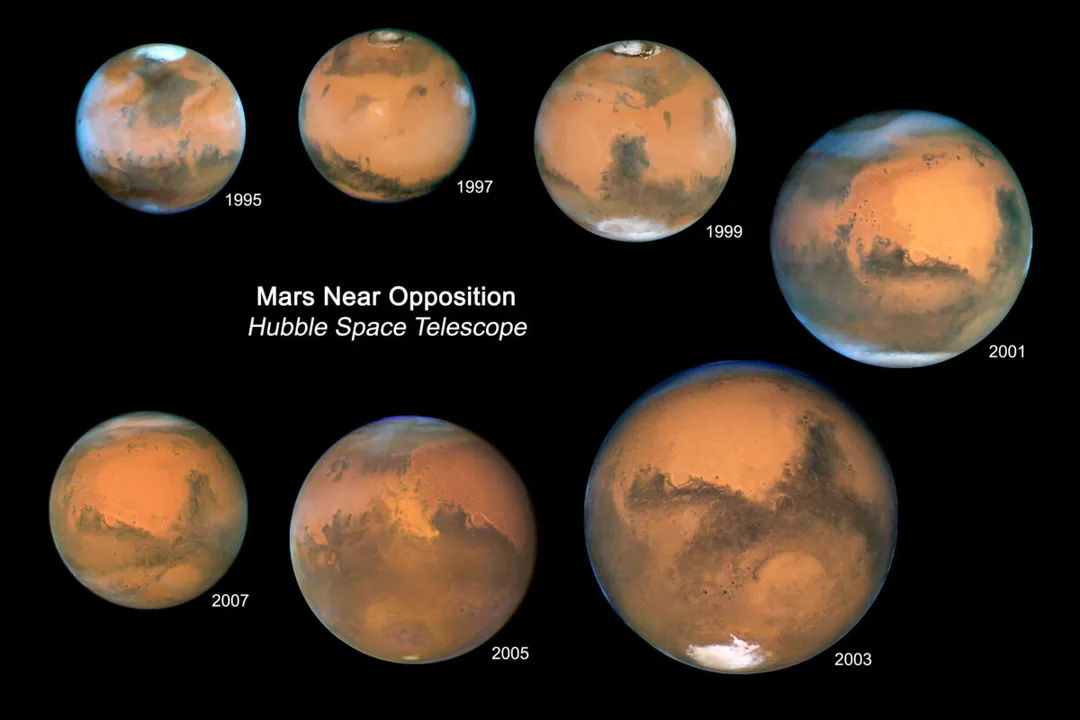
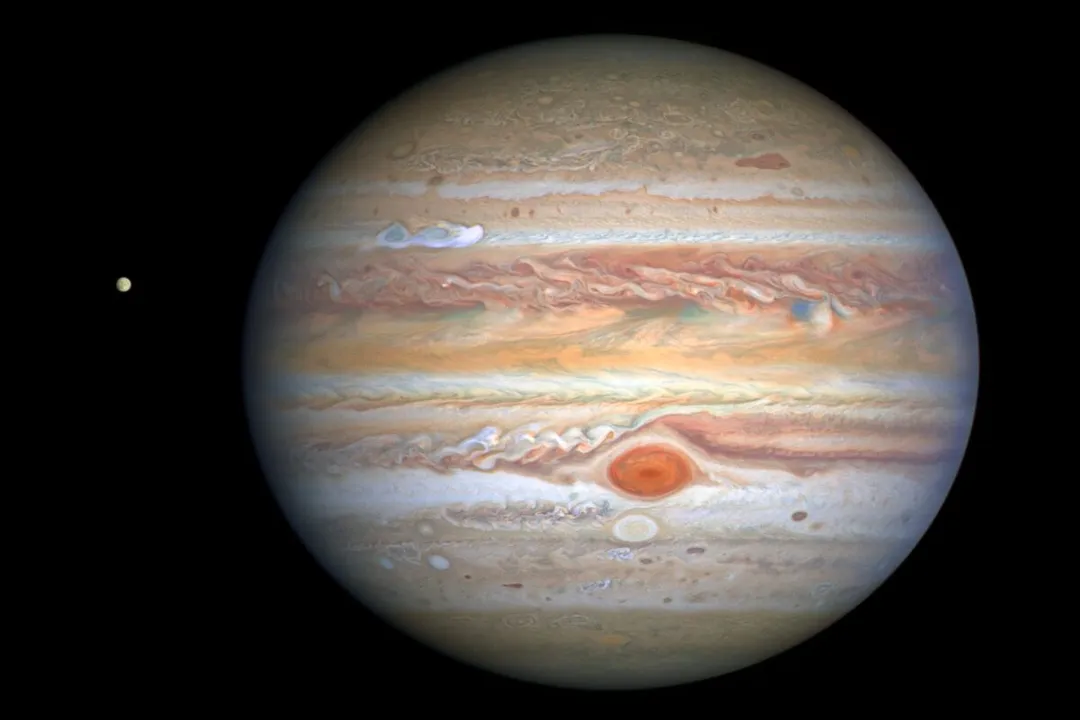
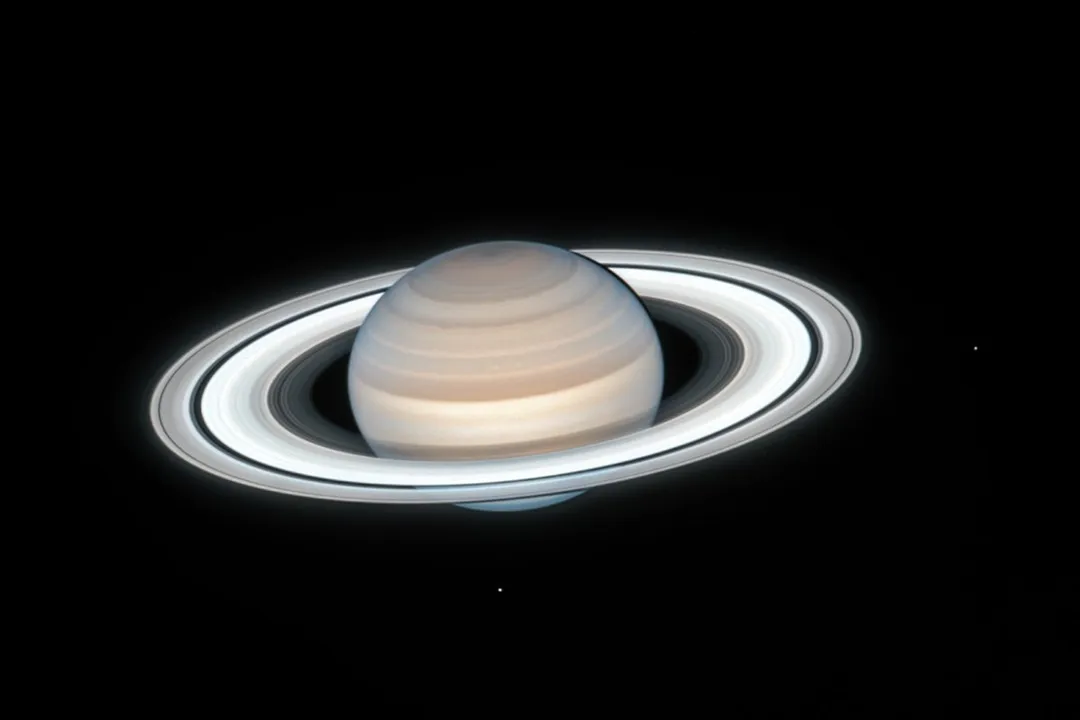
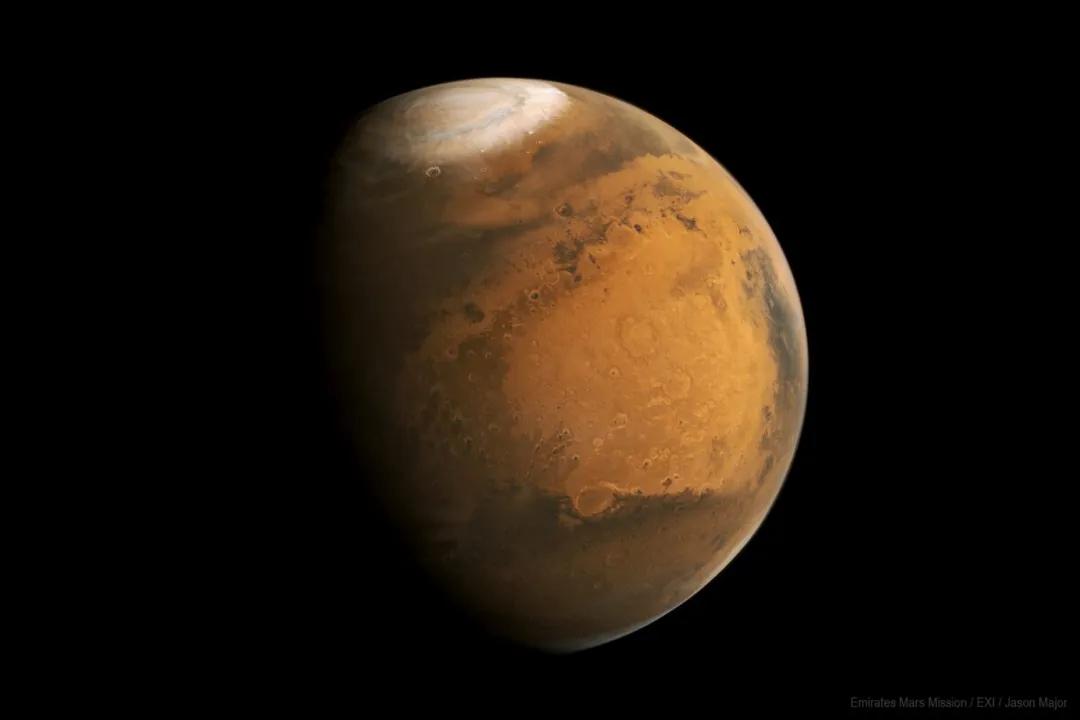
It's important to remember that what makes the planets in our solar system look colorful in textbooks—their atmospheric scattering and surface composition—is often exaggerated or altered when photographed from space or rendered for public consumption, much like deep space imagery. [9] The true color of Mars, for instance, is a dull, butterscotch-brown, though it is often depicted as a vibrant red. [9]
# The Informational Paradox
The conflict between the black void and the beige average presents an interesting paradox for anyone trying to grasp the cosmos. On one hand, the experience of the observer in space confirms the blackness, suggesting emptiness. [2][8] On the other hand, the calculated average proves the space is full of light, just so thinly distributed that no single patch contains enough photons to register as anything other than dark. [6]
If you were to hold a small, perfectly uniform bucket out into the void for a thousand years to collect all the light falling into it, the contents would, when analyzed, yield that Cosmic Latte color. [4] This means the universe is not empty; it is simply vastly under-lit in any given location when compared to the amount of space separating the light sources. The blackness is a product of scale and distance, while the beige is the product of total accumulation. [1]
This leads to an original consideration of stellar aging. The beige color strongly implies that the universe has passed its peak of blue-light production. If we could fast-forward the cosmic clock significantly, the collective stellar output would shift to longer, cooler wavelengths. Therefore, the measured color is a direct, albeit subtle, measurement of the average age of all radiating stars in the universe right now. The beige shade is a visual fingerprint confirming that the universe is aging out of its most vibrant, blue-hot youth into a more mellow, middle-aged glow. [1]
# Contextualizing Perception
To further analyze the discrepancy between the beige average and the black local view, consider the contrast ratio the human eye can manage. Our eyes are remarkable, but they have limits. When looking at a star field, the difference in brightness between the brightest star and the background void is immense. [8] The difference between the Cosmic Latte and the blackness of true vacuum is comparatively tiny, far below the threshold for conscious perception when confronted with brighter objects. [6]
If one could completely block out the light from all foreground and background stars, and somehow diffuse the ambient light of the entire universe evenly, we would perceive the beige hue. However, since light travels through space without interaction until it hits a detector (or an eye), the path remains dark.
Another point of distinction arises when considering local nebulae or star-forming regions visible to the naked eye from a spacecraft. These areas are intensely luminous because the gas clouds are dense enough to emit or reflect significant light over short distances. [2] The fact that we can see them brightly only reinforces how dim the background is; they are bright islands in a largely dark sea, and the sea itself is made of near-perfect vacuum. [8]
This brings up a second insight: the color of "empty" space is fundamentally different from the color of "visible" objects in space. The "real color of space" can be interpreted in two scientifically valid ways: the pervasive, averaged light energy (Beige) and the experienced visual background (Black). [6][7] Any popular media or general discussion that attempts to provide a single answer is necessarily incomplete, as it merges observational astronomy (the beige total) with human sensory experience (the black local view). [4] The beauty in telescope imagery, which is vibrant and full of color, is entirely manufactured to translate non-visible data into recognizable visual information, highlighting structure, not inherent visual reality. [3][5]
# Synthesis
Ultimately, the question of space's color yields a three-part answer, none of which is entirely satisfying on its own. To the human eye looking out from a window—whether on Earth or in orbit—space is overwhelmingly black due to the lack of atmosphere to scatter light. [2][8] The vibrant, rich colors we see in stunning photographic releases from missions like JWST are false colors, carefully mapped by scientists to reveal structures and chemical compositions invisible to us. [3][5] And finally, when one compiles every single photon emitted across the entire known cosmos and averages it out, the resulting shade is a pale, unassuming Cosmic Latte beige, an indicator of the universe's mature stellar population. [1][7] The real color is context-dependent: black for experience, beige for statistics, and vivid colors for scientific translation.
#Videos
Is the colour in space images "real"? - YouTube
Related Questions
#Citations
What colour is space? - BBC Science Focus Magazine
Space Isn't As Colorful As It Seems : r/Astronomy - Reddit
Is there color in space or is everything black and white? - Facebook
Is the colour in space images "real"? - YouTube
What's the color of space? Here to put to rest the questions ... - TikTok
What is the real color of space, not from human eyes? - Quora
Cosmic latte - Wikipedia
Can We Really See Colors in Space? What Astronauts Say
Why the true colors of the planets aren't what you think