Where is a significant fraction of Mars's remaining water currently locked away according to orbital observations and radar data?
Answer
As ice deposits in the polar ice caps and mixed into the subsurface soil
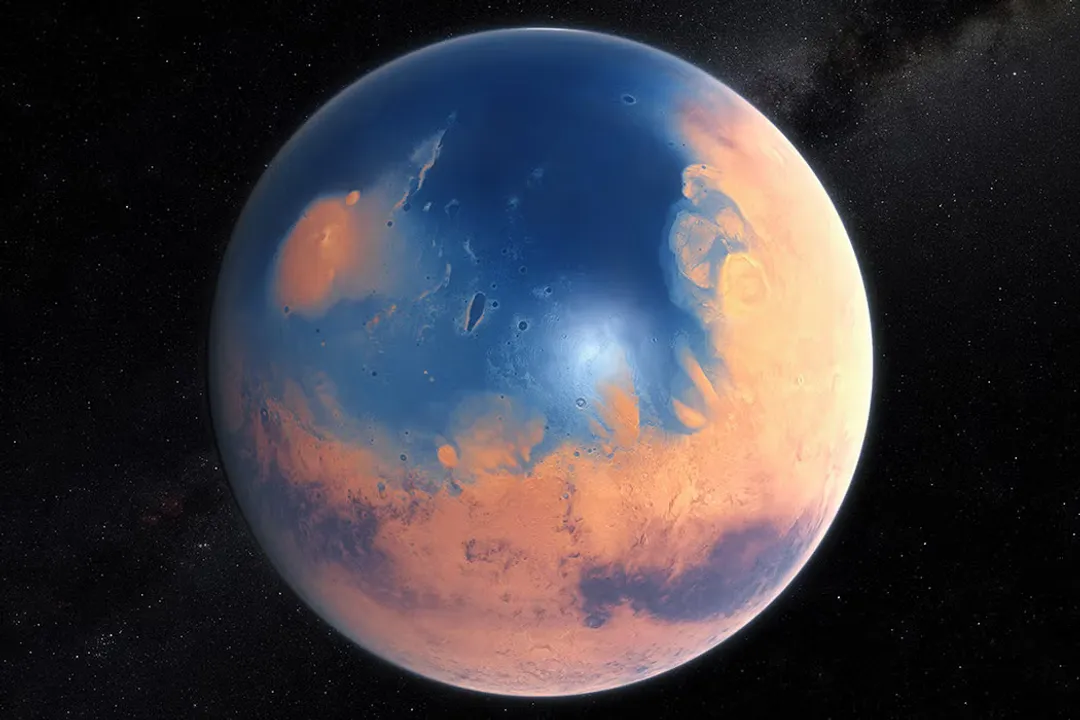
While massive amounts of surface water were lost to space or vaporized, not all water vanished. A substantial fraction remains stored in frozen form. Radar data and orbital observations confirm extensive reservoirs existing beneath the surface layers, particularly in the mid-latitudes. These reserves are primarily located as ice deposits within the polar ice caps and mixed throughout the subsurface soil. The current surface conditions of extreme cold and low pressure prevent this ice from melting into stable liquid water today, except potentially in rare, localized pockets warmed geothermally.
Related Questions
Which geological feature, nicknamed "blueberries," provides evidence of long-term interaction with liquid water on the Martian surface?What critical internal change caused the shutdown of Mars's planetary magnetic field billions of years ago?What is the primary mechanism by which the solar wind eroded the Martian atmosphere after the magnetic shield failed?How did the thinning of the Martian atmosphere directly affect the stability of liquid water on the surface?What two main routes did water molecules take to leave the Martian system following atmospheric breakdown?According to the University of Chicago study, what condition accelerated the initial loss of water vapor before the magnetic field fully disappeared?What chemical alteration did high-energy radiation cause on the Martian surface after the atmosphere thinned?What is the current state of Mars's atmosphere compared to Earth's sea-level pressure?What factor in planetary resilience is cited as the ultimate deciding factor between Earth remaining a water world and Mars becoming arid?What historical visual transformation accompanied the loss of water vapor and atmospheric thinning on Mars?Where is a significant fraction of Mars's remaining water currently locked away according to orbital observations and radar data?