Why is Mars dry now?
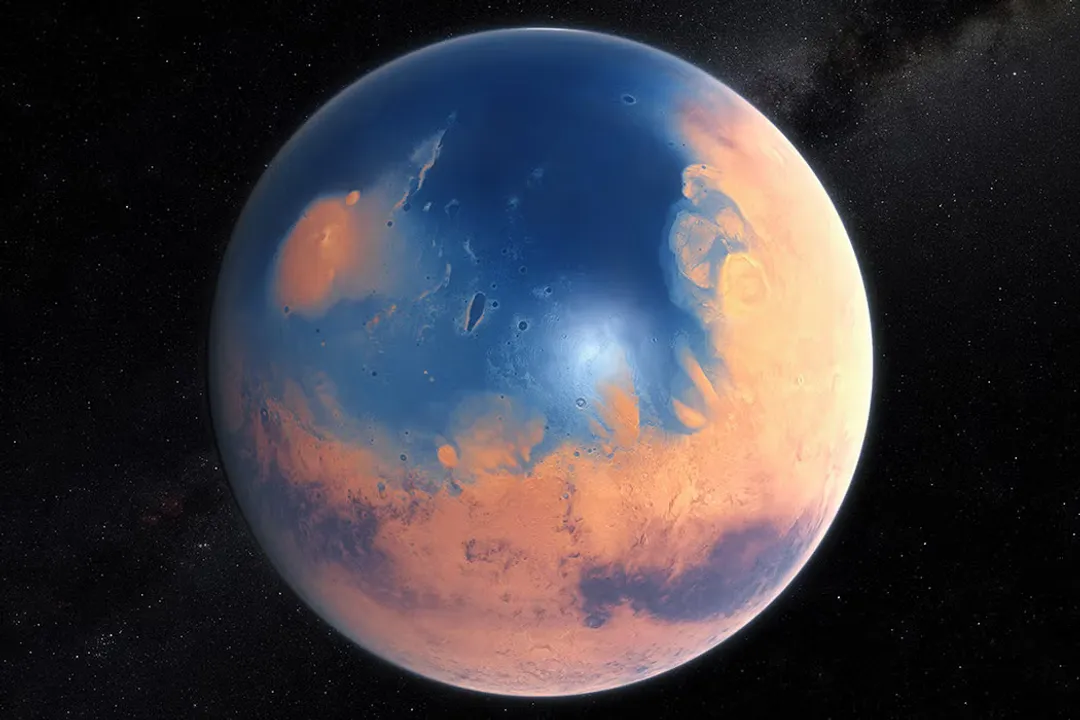
The Red Planet we observe today, cold, dry, and seemingly barren, holds a profound secret: it was once home to flowing water, perhaps even oceans, billions of years ago. [7] Billions of years is a long time, and the transformation from a potentially blue world to a rusty desert is one of the most compelling mysteries in planetary science. The consensus points toward a catastrophic loss of its protective layers, which allowed the environment to change drastically, boiling off or stripping away the liquid water that once carved canyons and filled basins. [3]
# Ancient Water Clues
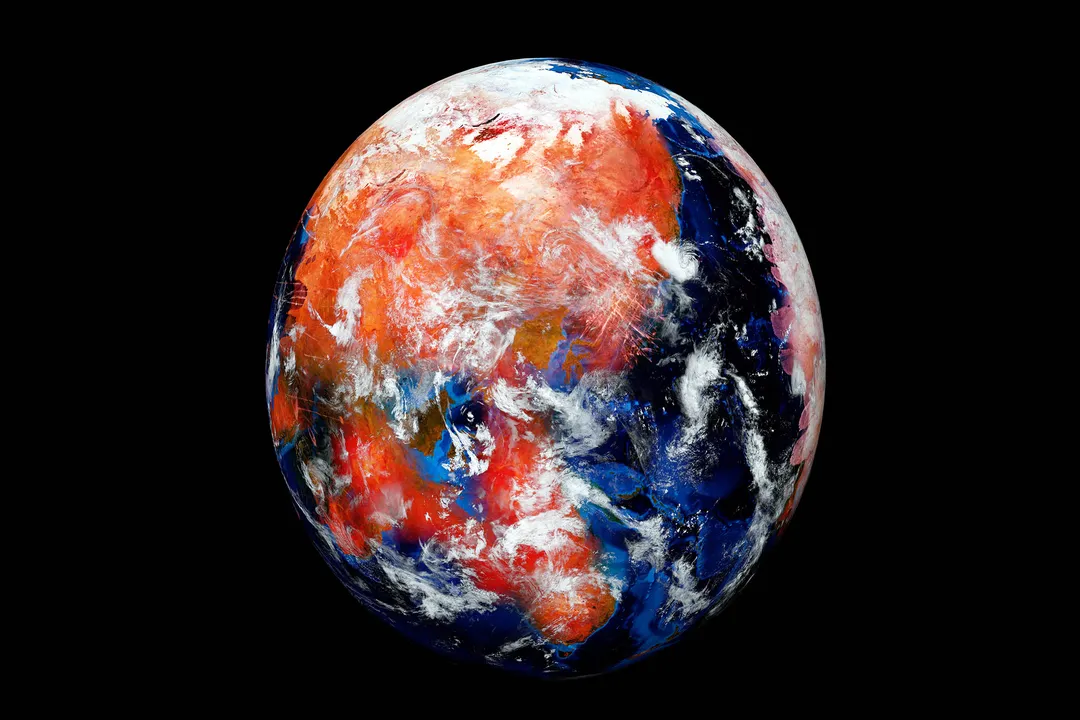
Evidence for ancient water is etched across the Martian surface, offering tantalizing glimpses of a wetter past. Orbital and surface missions have revealed geological features that are hallmarks of long-term interaction with liquid water. We see dried-up riverbeds, deltas, and minerals that only form in the presence of water, such as hematite spheres nicknamed "blueberries". [7][3] These features suggest that early Mars, during its first billion years, possessed a thick atmosphere and enough surface warmth to sustain liquid water, possibly across vast regions. [7] It appears that the transition to the arid world we see now was a gradual process that accelerated dramatically over geological time scales. [8]
# Magnetic Shield Failure
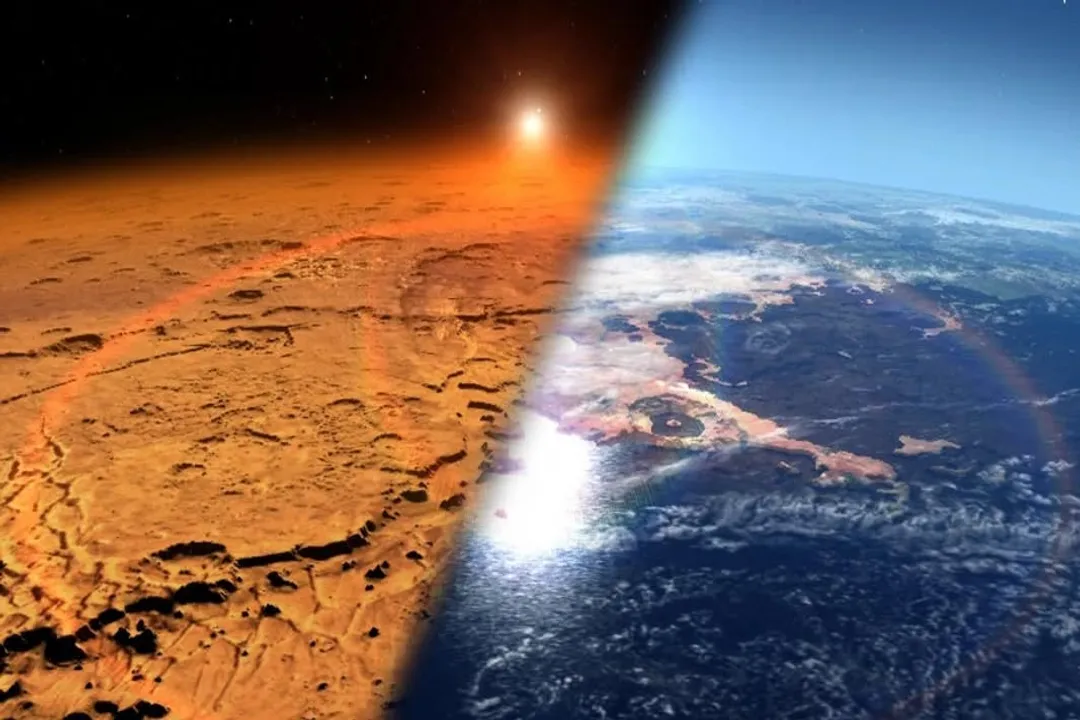
A critical difference between modern Mars and its early, wetter self lies in the planet’s internal engine. Earth maintains a powerful global magnetic field generated by the churning, molten iron of its outer core—a dynamo effect. [8] Mars, being smaller, cooled down much faster than Earth. [8] This cooling caused its metallic core to solidify or stop moving dynamically, effectively shutting down its planetary magnetic field billions of years ago. [2][8] This loss was not merely a cosmetic change; it removed the planet's primary defense mechanism against the Sun's relentless output. [8]
# Atmospheric Erosion
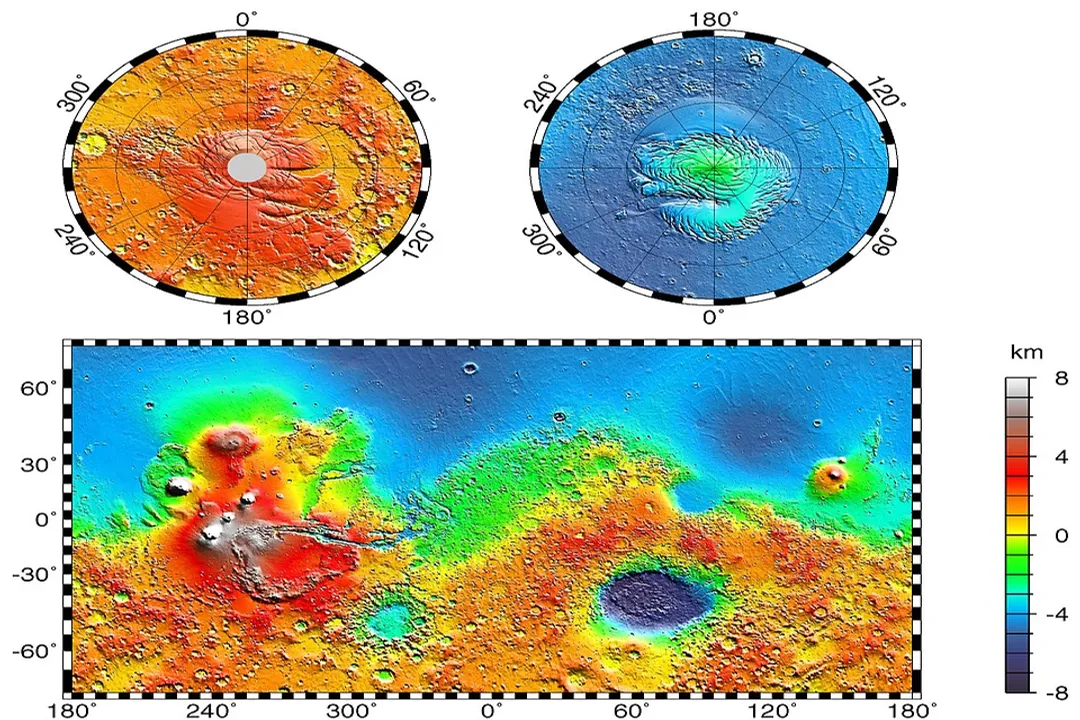
Once the protective magnetic field dissipated, the solar wind—a constant stream of charged particles emanating from the Sun—was free to interact directly with the upper layers of the Martian atmosphere. [2][8] On Earth, our magnetic field deflects most of this charged barrage around the planet, safeguarding our atmosphere. [8] Without this shield, the solar wind could directly impact the atmospheric gases, kicking molecules, including water vapor, into space over time. [2] This process, known as sputtering or atmospheric escape, slowly but surely thinned the atmosphere. [3]
This atmospheric thinning had profound secondary effects. As the atmosphere became thinner, the pressure on the surface dropped. Water boils not just at a specific temperature, but at a specific pressure and temperature combination. As the atmospheric pressure decreased, the boiling point of water dropped significantly. [3] Even if surface temperatures were momentarily warm enough, the low pressure would cause liquid water to rapidly turn to vapor and escape, rather than pool or flow freely. [3]
Interestingly, data from NASA's MAVEN mission has confirmed that atmospheric escape did indeed happen through various mechanisms, with sputtering by the solar wind being a major contributor once the magnetic field vanished. [2]
# Escape Routes
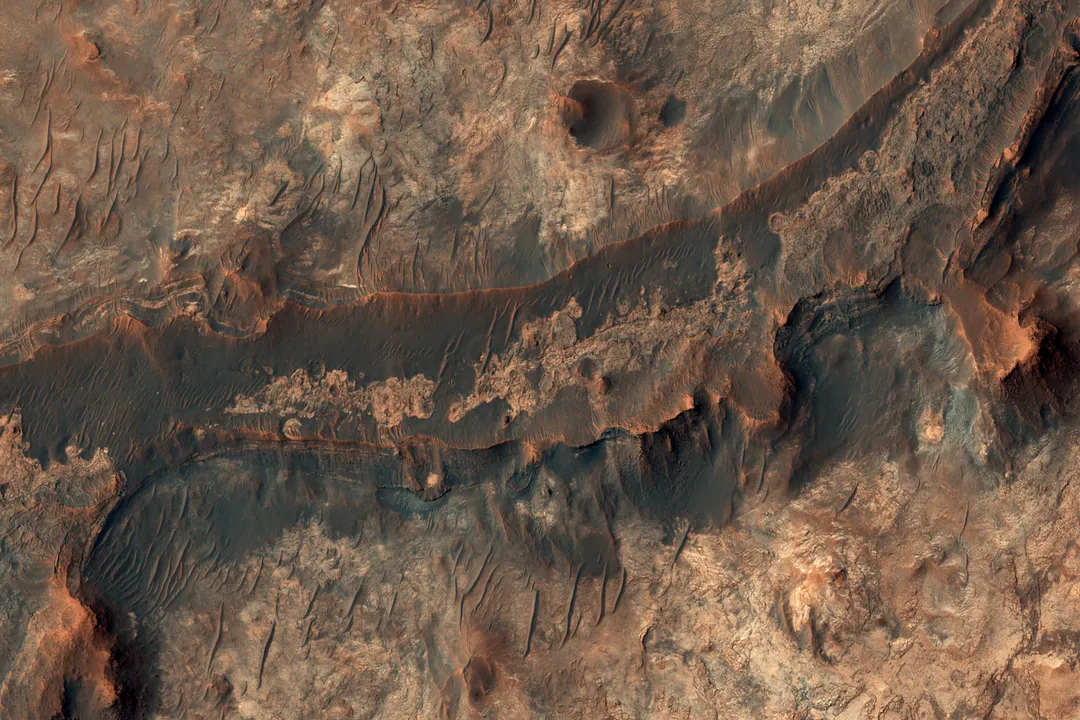
Where exactly did all that water go? It didn't simply vanish; it took several routes out of the Martian system. Some of the water vapor was physically blown away into space by the solar wind. [2] Other water molecules were broken down by ultraviolet radiation high in the atmosphere, separating hydrogen and oxygen. [2] The much lighter hydrogen atoms could then easily escape into space, leaving the heavier oxygen behind, which reacted with surface rocks or also slowly escaped. [2]
A recent study from the University of Chicago offers a slightly more nuanced timeline for this process, suggesting that the atmosphere began to escape more rapidly before the magnetic field fully disappeared. [1] This research indicates that early Mars was unusually hot, resulting in a massive amount of water vapor trapped in its upper atmosphere. [1] This vapor-rich atmosphere provided a much larger target for solar stripping, leading to a faster initial loss of water than previously modeled, even while the magnetic field was still somewhat active. [1] Essentially, the pre-existing conditions—a very wet, warm early Mars—made the planet vulnerable to a faster-than-expected demise once the atmospheric loss mechanisms ramped up. [1] If we visualize the process, imagine a bathtub draining: the slow trickle of a failing plug (magnetic field) is one factor, but an unusually high water level overflowing the rim (hot, vapor-rich atmosphere) accelerates the overall loss tremendously. [1]
It’s worth noting the visible change that accompanied this atmospheric loss. Early Mars likely had an atmosphere capable of scattering blue light, similar to Earth, giving it a blue sky. [5] As the water vapor was lost and the atmosphere became dominated by finer dust particles, rich in oxidized iron (rust), the sky shifted to the characteristic reddish-orange hue we see today. [5]
# Subsurface Reservoir
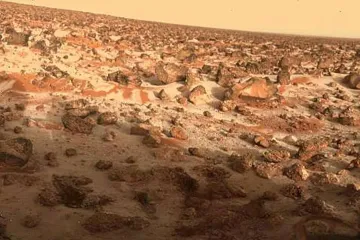
While large amounts of surface water were lost to space or vaporized, not all the water on Mars is gone. A significant fraction is locked away in two primary locations: as ice deposits in the polar ice caps and mixed into the subsurface soil. [7][3] Radar data and orbital observations confirm extensive reservoirs of water ice beneath the surface layers, particularly in the mid-latitudes. [7] However, the conditions on the surface—the extreme cold and low pressure—prevent this ice from melting into stable liquid water today, except perhaps transiently in localized pockets or below the surface where geothermal heat might provide a slight warming effect. [3]
# Resilience Comparison
Considering the fate of Mars provides a fascinating, if sobering, contrast to Earth’s persistence. Earth’s survival as a water world hinges on several factors, chief among them being our surprisingly long-lived magnetic field. [8] Earth's core remains hot and active, sustaining the dynamo necessary to deflect the solar wind effectively. [8] Mars’s smaller mass meant its heat budget depleted faster, sealing its fate relatively early in the solar system’s history. Furthermore, even if Mars had retained its early, thick atmosphere, the lack of strong gravity compared to Earth would still make retaining lighter gases over eons a challenge, though the magnetic shield’s failure was the far more immediate catastrophe for surface water. [3][8] The difference in planetary size, which dictates internal thermal evolution, proved to be the ultimate deciding factor in the presence or absence of surface oceans. [8]
# Radiation's Lingering Effect
Beyond the simple loss of mass via the solar wind, the exposure of the surface to high-energy cosmic radiation and solar ultraviolet light after the atmosphere thinned likely had a lasting chemical impact. When water vapor is exposed directly to UV light, it breaks down into highly reactive components. While hydrogen escapes, the remaining oxygen and hydroxyl radicals interact vigorously with surface minerals. [2] This means that even if atmospheric pressure were somehow restored, the dried-out surface rocks themselves are chemically altered, saturated with oxidized compounds, and perhaps structurally resistant to holding or absorbing liquid water in a stable, large-scale manner. [7] The radiation didn't just remove the atmosphere; it actively changed the soil into a less hospitable medium for future water stability.
# Current Status
Today, Mars is characterized by an extremely thin atmosphere, less than one percent of Earth’s sea-level pressure. [3] This scant air, composed mostly of carbon dioxide, cannot support stable liquid water on the surface. [3] The planet experiences average temperatures around $-81$ degrees Fahrenheit (about $-63$ degrees Celsius), though summer days near the equator can briefly hit $70$ degrees Fahrenheit ($20$ degrees Celsius). [3] The water remains, largely locked away as subsurface ice and polar caps, a frozen relic of a time when Mars was dynamic and perhaps capable of hosting life. [7][3] The planet’s arid state is the direct, long-term result of losing its magnetic shield, which allowed the solar wind to strip away the atmosphere that once kept its water liquid. [2][8]
Related Questions
#Citations
Why did Mars dry out? New study points to unusual answers
NASA: New Insights into How Mars Became Uninhabitable
Why Did Mars Dry Out? | Astronomy.com
Was Mars doomed to be a desert? Study proposes new explanation
NASA reveals why Mars changed from a blue world into a red desert
Why Mars Turned Into a Desert While Earth Remained Alive A new ...
Water on Mars - Wikipedia
How Mars Lost Its Magnetic Field—and Then Its Oceans - JSTOR Daily
What are the reasons for the dry and rocky surface of Mars and its ...