What exterior feature, formed during atmospheric heating, aids in initial field identification of a recovered meteorite?
Answer
Fusion crust
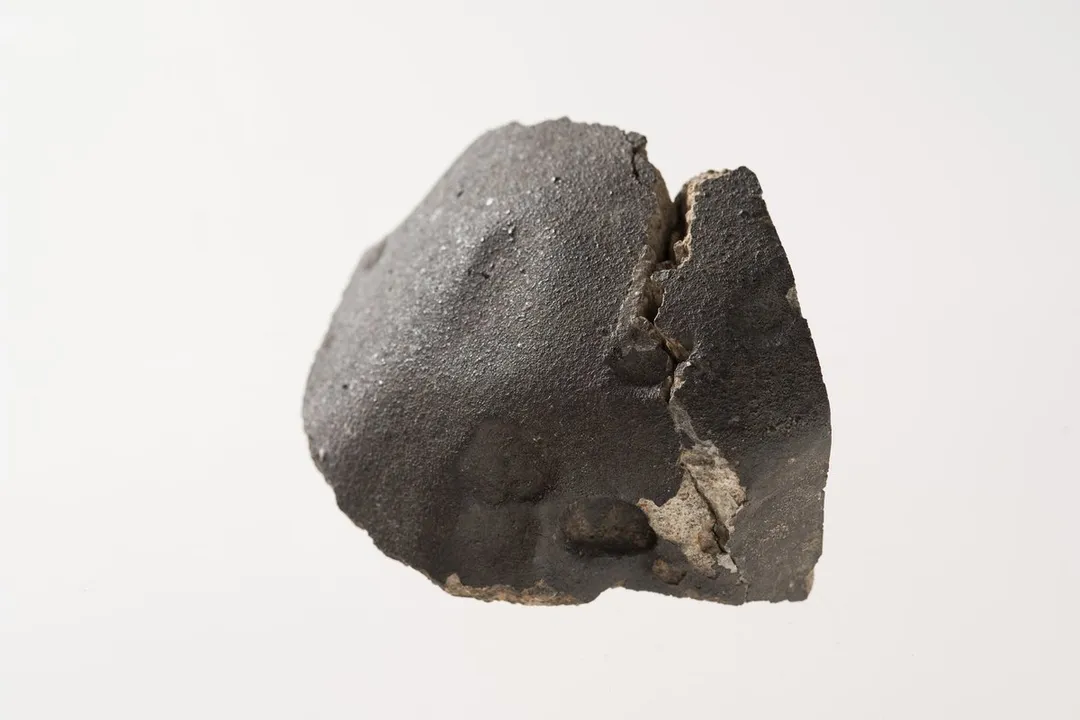
A key initial indicator used to distinguish a genuine meteorite from an ordinary terrestrial stone is the presence of a fusion crust. This feature manifests as a thin, dark rind that develops on the exterior surface of the space rock during its rapid transit through the atmosphere. The intense heating caused by atmospheric entry vaporizes and melts the outermost layer of the object, which then solidifies quickly upon deceleration, forming this characteristic crust. While laboratory analysis is required for definitive confirmation, observing a fusion crust, along with potential magnetic attraction due to iron content, prompts closer expert inspection.
Related Questions
What is the designation for the physical object existing in space before atmospheric interaction?What causes the brilliant flash observed when a meteoroid encounters Earth's atmosphere?What is the name given to the remaining portion of cosmic material that strikes the Earth's surface?What specific term designates a particularly bright meteor observed in the atmosphere?What primary material constitutes Iron meteorites, representing shattered parent body cores?Why are Chondrites considered the most primitive material for studying early solar system history?What exterior feature, formed during atmospheric heating, aids in initial field identification of a recovered meteorite?What is the approximate diameter limit distinguishing a Meteoroid from an Asteroid?What distinct crystalline pattern is revealed upon cutting and polishing Iron meteorites?What is the primary composition characteristic of Stony meteorites, the most common type recovered?Where are Stony-iron meteorites thought to originate within their differentiated parent body?