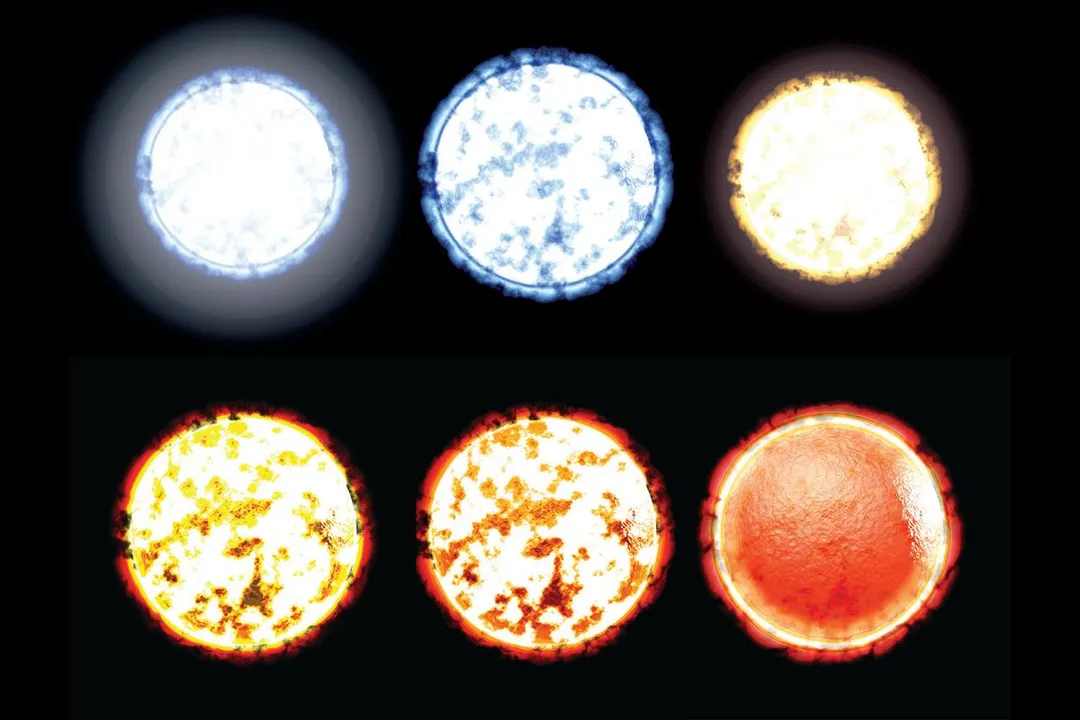
How does the peak wavelength of emitted radiation change when an object behaving like a blackbody radiator increases its temperature?
The peak wavelength shifts predictably toward the shorter, higher-energy end of the visible spectrum.
An object approximating a blackbody radiator emits light across a continuous spectrum of wavelengths, meaning the intensity of light produced varies depending on the wavelength. As the object's temperature rises, the distribution curve of this emitted energy shifts dramatically. Specifically, the wavelength at which the object emits the maximum amount of energy—its peak wavelength—moves toward the shorter end of the spectrum. In the context of visible light, shorter wavelengths correspond to higher energy photons, which we perceive as the violet and blue regions. Conversely, cooler objects emit their peak radiation at longer, lower-energy wavelengths associated with the red end of the visible spectrum. This physical law directly dictates the observed color-temperature relationship in stars.