Which Kelvin temperature range generally characterizes the surface of the coolest visible stars identified as Red?
Answer
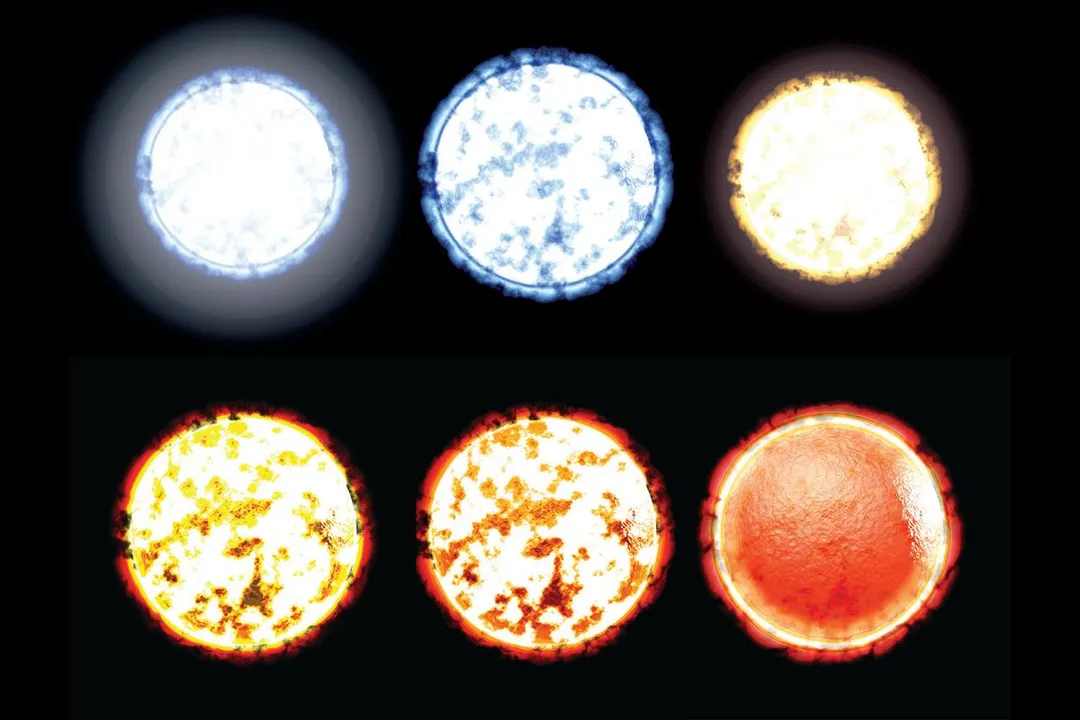
Dipping down to 3,500 K or even as low as 2,000 K.
The color red is associated with the longest wavelengths in the visible spectrum, which corresponds to the lowest surface temperatures among stars observable by the naked eye. The text establishes a clear hierarchy where Red stars occupy the very bottom of the thermal scale presented. Their surface temperatures are indicated to range from approximately 3,500 Kelvin down to the coolest extreme of about 2,000 Kelvin. Although Betelgeuse is cited as an example of a massive Red star, it is crucial to remember that this cool surface temperature does not necessarily imply low total energy output, especially for very large stars which can compensate with vast surface area.
Related Questions
How does the peak wavelength of emitted radiation change when an object behaving like a blackbody radiator increases its temperature?Where does the Sun's actual peak emission fall within the visible spectrum, contrasting with its perceived color?What is the approximate minimum surface temperature threshold for stars classified as Blue?Which Kelvin temperature range generally characterizes the surface of the coolest visible stars identified as Red?To which spectral classification range does the star Rigel in Orion belong based on its associated temperature?What is the correct progression of star colors listed from the hottest stellar objects down to the coldest?What letter classification corresponds to the Sun, and what is its approximate surface temperature?How does a star's initial mass dictate its core temperature and subsequent main-sequence lifespan relative to its color?Why does the Sun, whose peak emission is green, appear white or yellow-white to human perception?Despite having a cool surface temperature, why can Betelgeuse, a Red star, still shine brilliantly?