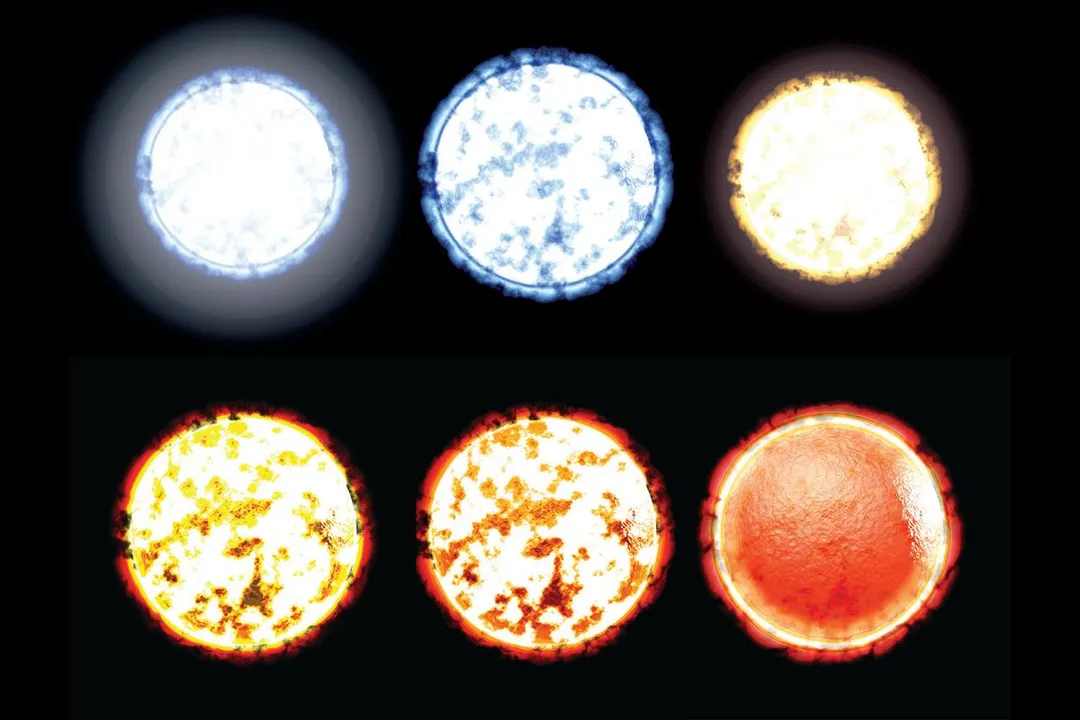
Despite having a cool surface temperature, why can Betelgeuse, a Red star, still shine brilliantly?
It possesses a vast surface area, characteristic of Red Giants or Supergiants, allowing it to radiate a huge total amount of energy despite the low surface temperature.
Betelgeuse is identified as a massive, cool Red star, indicating a low surface temperature typically associated with the coolest end of the thermal scale (under 3,500 K). Luminosity, or total energy output, is determined by both surface temperature (Stefan-Boltzmann Law) and surface area. While Betelgeuse's surface temperature is low, its immense size (as a Red Giant or Supergiant) provides an extraordinarily large surface area from which to radiate heat. This vast surface area ensures that the total integrated energy output remains very high, resulting in a brilliant shine that might mislead an observer who only considers color without factoring in physical dimensions.