How does the hydrogen-burning phase duration of a massive star compare to that of our Sun?
Answer
It lasts only a few million years, a mere blink compared to the Sun's billions of years
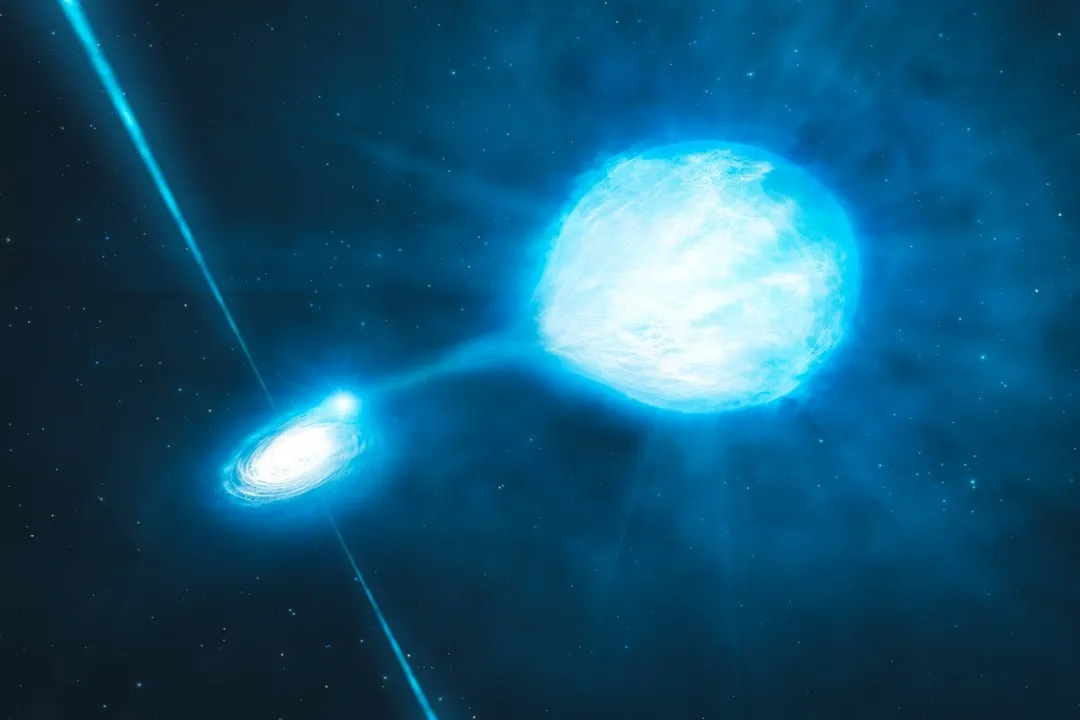
While both massive stars and smaller stars like the Sun begin by fusing hydrogen into helium, the extreme mass of the massive star creates core temperatures and pressures far exceeding those in the Sun. This causes the nuclear reactions to proceed at an exponentially faster rate, as energy output is proportional to a high power of the star's mass. Consequently, massive stars deplete their hydrogen fuel supply rapidly, lasting only a few million years in this stage, whereas the Sun is projected to spend billions of years in its hydrogen-burning phase.
Related Questions
What architectural pattern describes a massive star's internal elemental makeup during later life stages?Why does the fusion process halt when the core becomes predominantly iron ($^{56} ext{Fe}$) or nickel?What elements are primarily created during the Carbon Burning stage following helium exhaustion?Which energy-generating stage immediately precedes the catastrophic collapse triggered by the iron core?How are elements heavier than iron, such as gold and uranium, synthesized in massive stars?How does the hydrogen-burning phase duration of a massive star compare to that of our Sun?What mechanism is the primary driver for creating the most neutron-rich elements during a core-collapse supernova?What materials are continuously replenished into the interstellar medium by massive stars via stellar winds before they explode?What determines the general definition of a massive star concerning its initial heft?What primary elements result from the Helium Burning stage following the exhaustion of core hydrogen?What factor sensitively affects the presence of trace elements like sodium or phosphorus in the outer shells during carbon fusion?