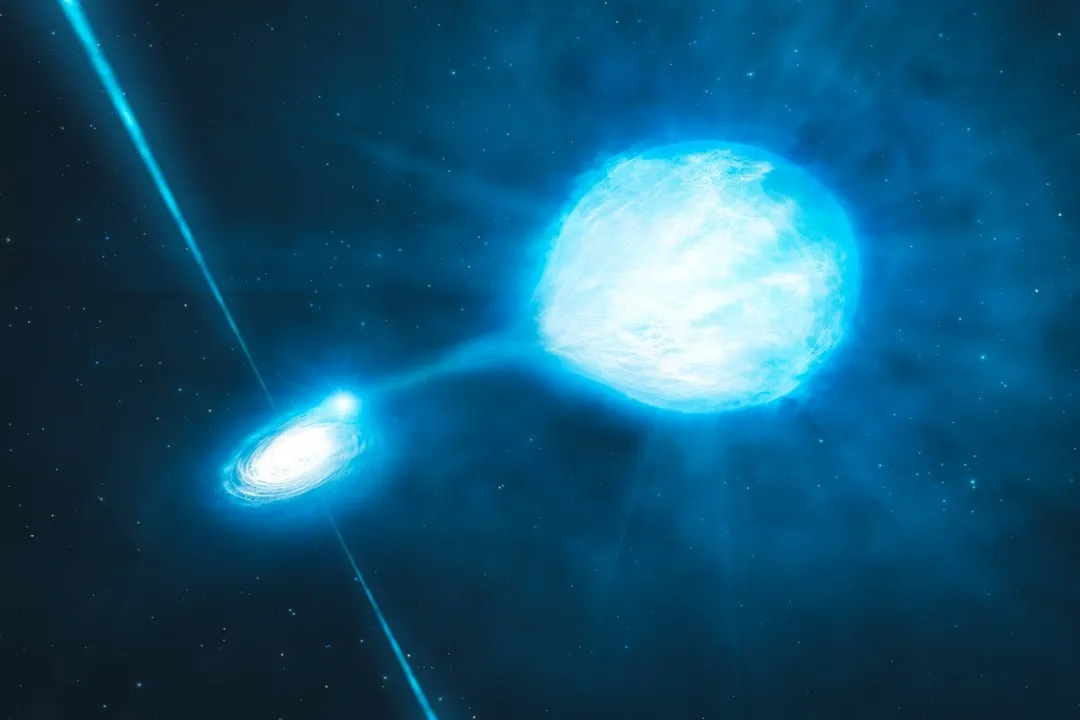
How are elements heavier than iron, such as gold and uranium, synthesized in massive stars?
Via neutron capture processes driven during the supernova explosion aftermath
Elements heavier than iron cannot be created during the normal fusion phases because those stages release energy only up to iron; fusion beyond iron requires an energy input. The synthesis of these truly heavy elements, like gold, platinum, and uranium, occurs in the immediate, violent aftermath of the core reaching the iron limit. The star undergoes core-collapse, triggering a supernova explosion. The extreme conditions and high density of free neutrons generated in the microseconds following the collapse drive the rapid neutron capture process (r-process). This mechanism allows existing iron-peak nuclei to quickly absorb numerous neutrons before they decay, thus building up the heaviest, most neutron-rich isotopes.