Why can JWST not image the surface of a planet orbiting Proxima Centauri?
Answer
The planet is 100 times smaller than the smallest detail JWST can resolve
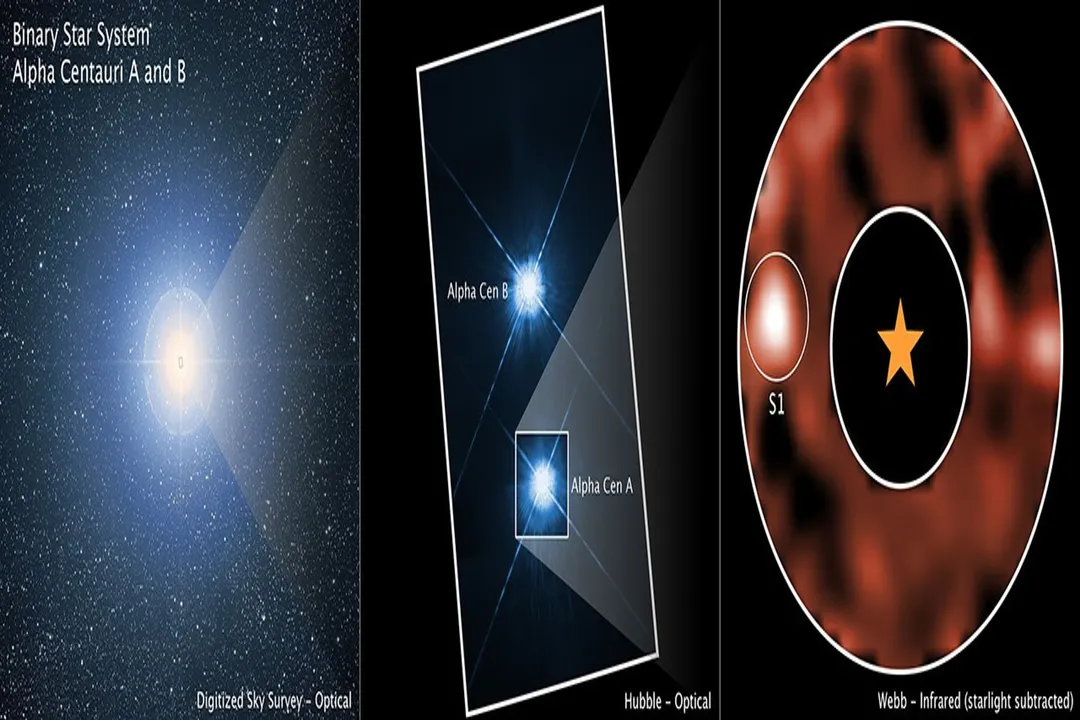
The physical limitations of current telescope technology prevent the imaging of planetary surfaces around distant stars. Even with a 6.5-meter primary mirror, the diffraction-limited resolution of the telescope is not fine enough to see a planet as anything more than a single point of light. A planet orbiting Proxima Centauri is approximately 100 times smaller than the smallest detail the telescope could theoretically resolve, making it physically impossible to turn that point of light into a resolved disk or image surface features.
Related Questions
What causes the characteristic six-pointed flare seen in JWST images of stars?What does it mean to resolve an image in the context of telescope capabilities?Which factors dictate the angular resolution limit of a telescope like JWST?What is the primary function of the MIRI coronagraph on JWST?Why is JWST optimized to observe in the infrared spectrum?What discovery was made using JWST to study the Alpha Centauri system?Why can JWST not image the surface of a planet orbiting Proxima Centauri?What technology do future Extremely Large Telescopes use to improve resolution?Why did the potential planet in the Alpha Centauri system stop being detected?What is the proposed concept of space-based interferometry?