What scientific insight is gained by analyzing the composition of ancient ice preserved in the lunar south pole PSRs?
Answer
Reconstructing the bombardment history of the Moon and water arrival on inner planets
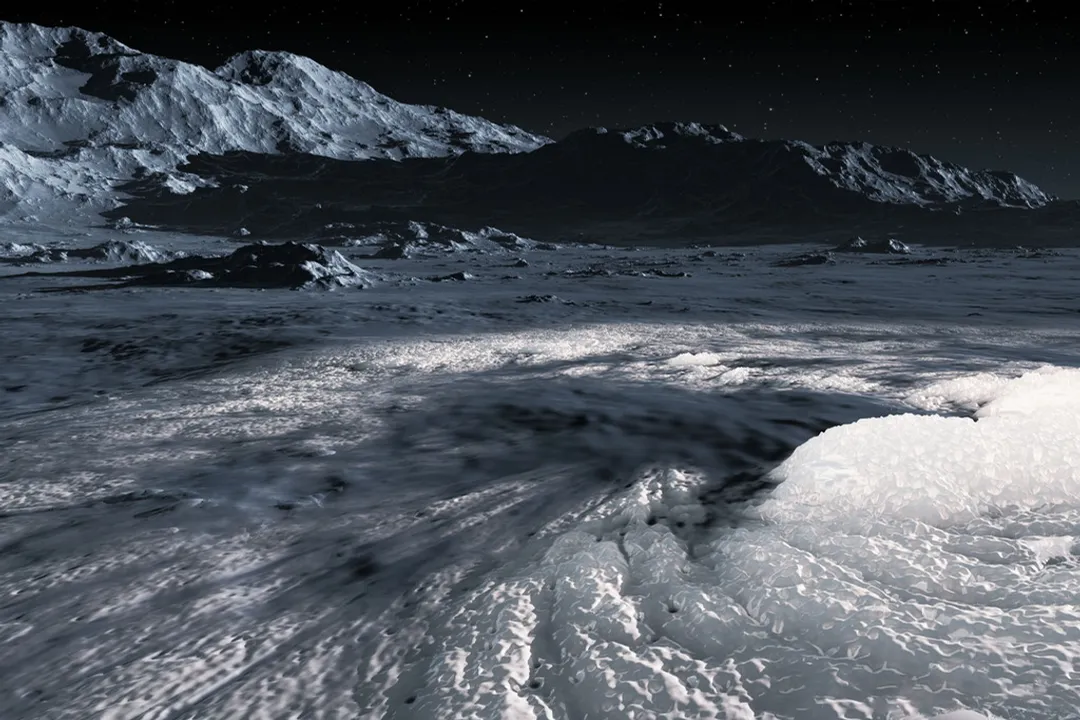
The Permanently Shadowed Regions (PSRs) function as geological cold traps, safeguarding volatile compounds delivered by impacts across billions of years. Analyzing the composition of this ancient, chemically unchanged ice provides scientists with an invaluable, pristine chemical record. This record allows researchers to reconstruct the history of bombardment that the Moon endured and offers critical insights into the mechanisms by which water may have originally arrived on Earth and other terrestrial planets in the inner Solar System.
Related Questions
What crucial material is concentrated near the Moon’s south pole driving international focus?What defines the Permanently Shadowed Regions (PSRs) at the lunar south pole regarding temperature?What two primary components are yielded by electrolysis of water ice for propulsion needs?Which major space program explicitly targets the lunar south pole for initial crewed landings due to water ice potential?Which international mission successfully executed a soft landing near the south pole, proving operational capability in that terrain?How does utilizing lunar water ice for in situ resource utilization (ISRU) primarily benefit deep space missions heading towards Mars?What scientific insight is gained by analyzing the composition of ancient ice preserved in the lunar south pole PSRs?What engineering advantage results from placing solar power arrays on high peaks near south pole craters versus equatorial sites?Volatile compounds delivered by impacts are trapped in south pole craters because they function as what type of storage unit?What process is used to split water ice into breathable oxygen and propellant components?