What opposing force balances the inward pull of gravity in a stable star?
Answer
Outward push generated by the heat of nuclear fusion in its core
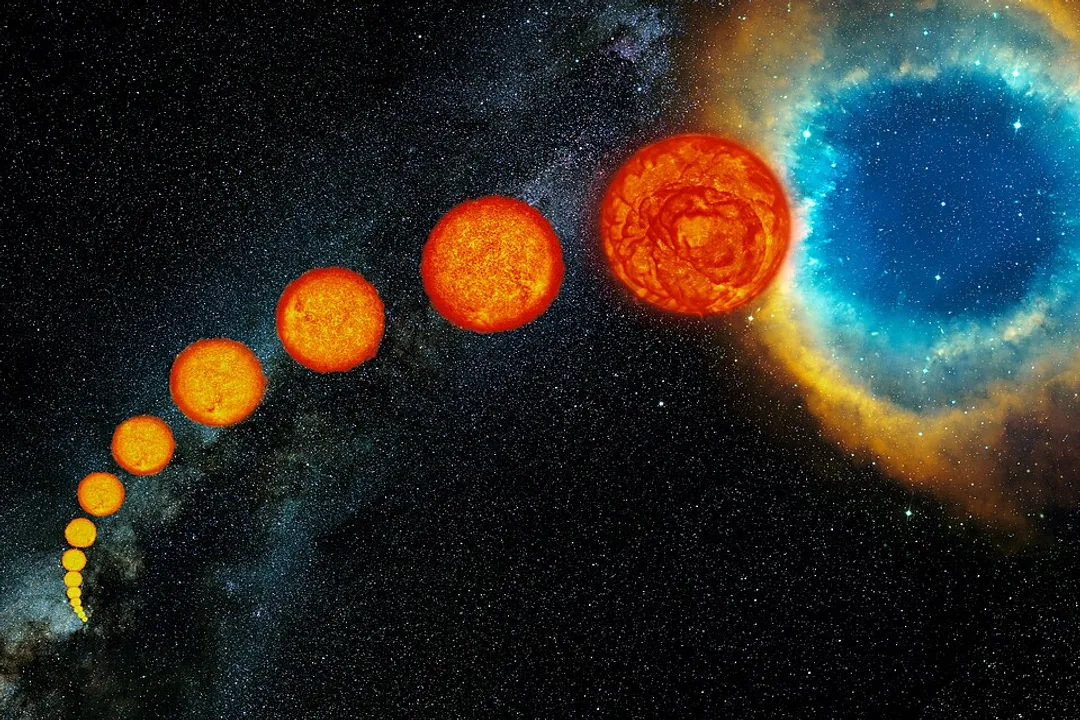
A star maintains its structure and stability through a constant, violent equilibrium between two primary forces. The overwhelming inward force is generated by the star's own gravity, which seeks to crush the mass toward the center. Counteracting this gravitational crush is the intense outward push generated by the tremendous heat released from continuous nuclear fusion reactions occurring within the star's core. When these forces are balanced, the star remains in hydrostatic equilibrium on the main sequence, neither collapsing nor expanding uncontrollably.
#Videos
Why Would The Size Of A Star Affect Its Luminosity? - Physics Frontier
Related Questions
What fusion cycle dominates when core temperature surpasses 18 million Kelvin?What exponent approximates the scaling for luminosity (L) based on mass (M) for main sequence stars?How much brighter is a 10 M☉ star expected to be using the M^3.5 relation?What color light do stars exceeding 20,000 Kelvin primarily emit?What direct result of greater mass leads to the higher core temperatures required for extreme fusion?Why is the star Vega, at 2.1 times the Sun's mass, sometimes less dense overall than the Sun?How does the main-sequence lifespan of a star 20 times the Sun's mass compare to the Sun's 10 billion years?Which stars represent the majority of the total star count in the universe, despite their low brilliance?What is the primary hydrogen fusion reaction used by stars similar to our Sun?To what factor is the reaction rate of the CNO cycle fiercely sensitive?What opposing force balances the inward pull of gravity in a stable star?