What key characteristic of the Deep Space Network (DSN) overcomes the challenge posed by Earth's rotation?
Answer
Global placement of stations
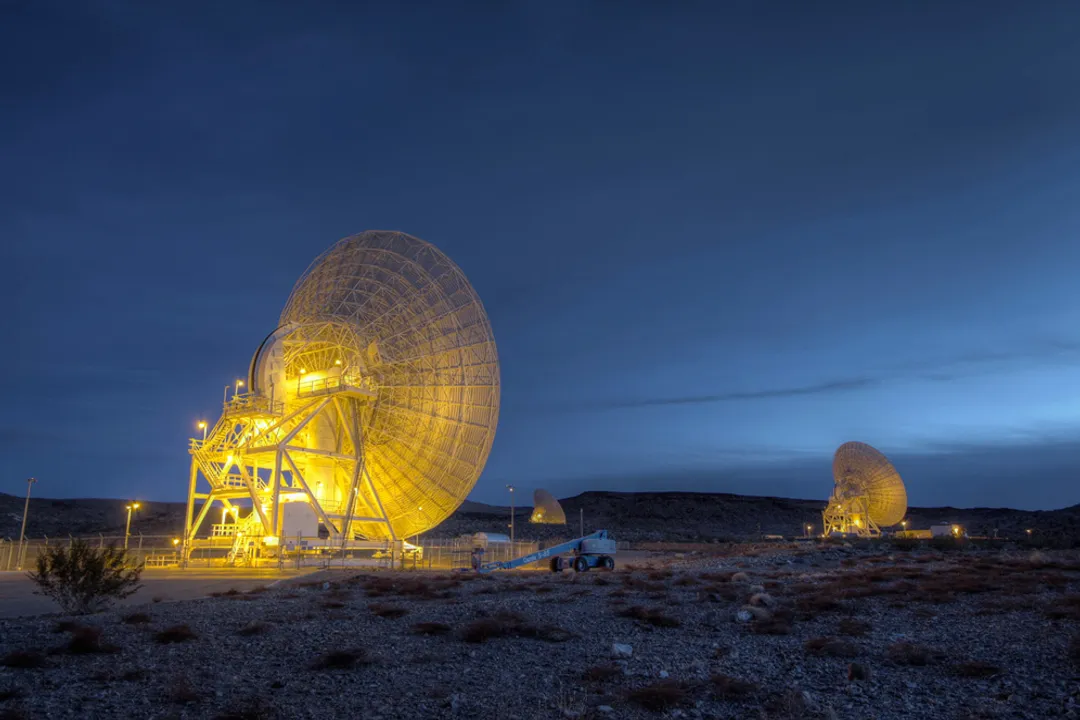
To ensure continuous contact with spacecraft millions of miles away, the Deep Space Network utilizes a geographically dispersed setup across the globe. By having major antenna complexes situated in locations such as the United States, Spain, and Australia, the rotation of the Earth naturally brings one of these facilities into position to maintain a clear line of sight to Mars at all times. This strategic global distribution eliminates the possibility of communication blackouts caused by the Earth turning away from the target planet, ensuring reliable data reception and command transmission.
#Videos
How Mars rover Curiosity communicates with Earth - YouTube
Related Questions
What is the range of the one-way light time delay for commands traveling from Earth to Mars?What two critical factors severely constrain the direct communication link a rover uses via its High-Gain Antenna (HGA)?Which antenna type is typically employed by Martian rovers for the more common, power-efficient link with an orbiting spacecraft?What frequency range do Martian orbiters typically utilize when transmitting relayed scientific data down to Earth stations?What phrase describes the period when controllers must schedule transmission because an orbiter is passing overhead of the rover?What is the designated primary communication gateway on Earth responsible for receiving signals from Mars missions?What key characteristic of the Deep Space Network (DSN) overcomes the challenge posed by Earth's rotation?What must a rover commander balance when deciding between using the HGA for an emergency check-in versus the UHF relay system?What specific procedure is standard for maintaining data integrity when the DSN or an orbiter detects corrupted signal segments?What is the consequence of the one-way time delay for operating a robotic explorer on Mars?