How does the visibility window of 3I/ATLAS compare to that of a typical long-period Oort Cloud comet?
Answer
Its visibility window is swifter, representing a final, highly favorable opportunity
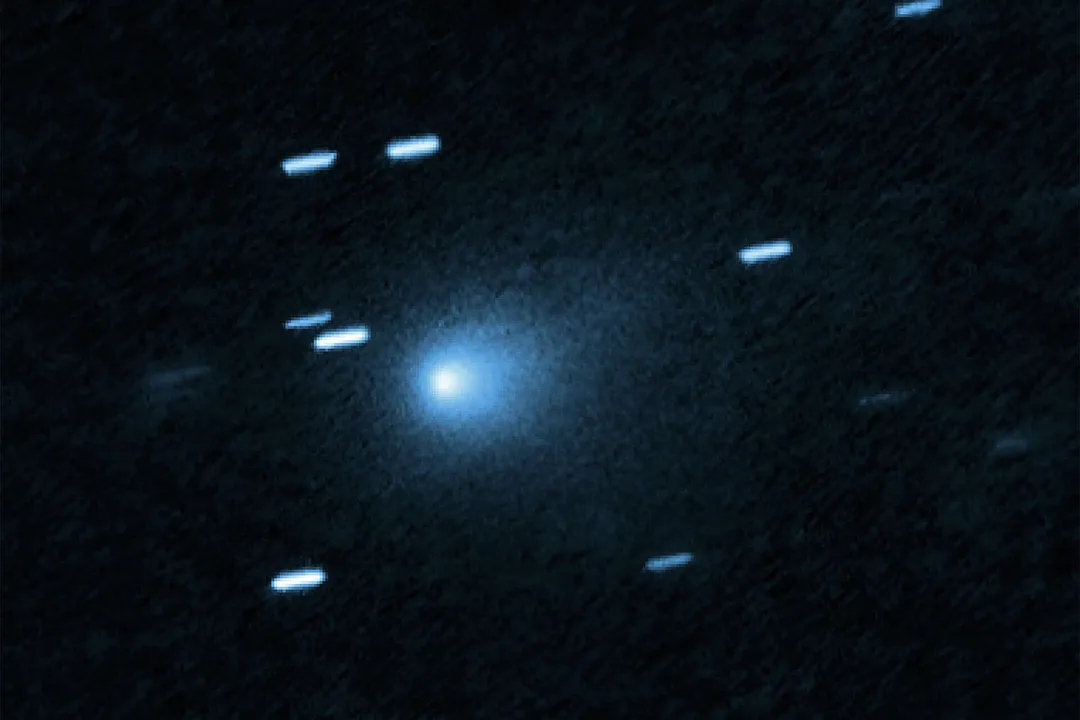
Unlike periodic comets like Halley's (76 years), the hyperbolic path of 3I/ATLAS dictates it will not return to our cosmic doorstep, making the December 2025 event its final chance for human visual experience.
#Videos
Interstellar Comet 3I/ATLAS Passes Close to Earth. Here's Why it ...
Related Questions
What does the Roman numeral 'I' in the designation 3I/ATLAS indicate?On what specific date did Comet 3I/ATLAS reach its nearest point to Earth?Where did Comet 3I/ATLAS originate?Which NASA probe was actively observing 3I/ATLAS on the day of its closest approach?What is the characteristic of Comet 3I/ATLAS's trajectory that defines its singular viewing opportunity relative to Earth?According to general viewing advice, what environmental factor is considered paramount for seeing a comet's diffuse glow?What specific equipment is frequently recommended to help observers resolve faint details or the coma of a comet like 3I/ATLAS?How does the visibility window of 3I/ATLAS compare to that of a typical long-period Oort Cloud comet?Besides distance from Earth, what two primary inherent properties of the comet itself determine its apparent brightness?What factor causes the specific recommended viewing time (e.g., pre-dawn east vs. post-sunset west) to vary regionally for Comet 3I/ATLAS?