Is the ATLAS a comet?
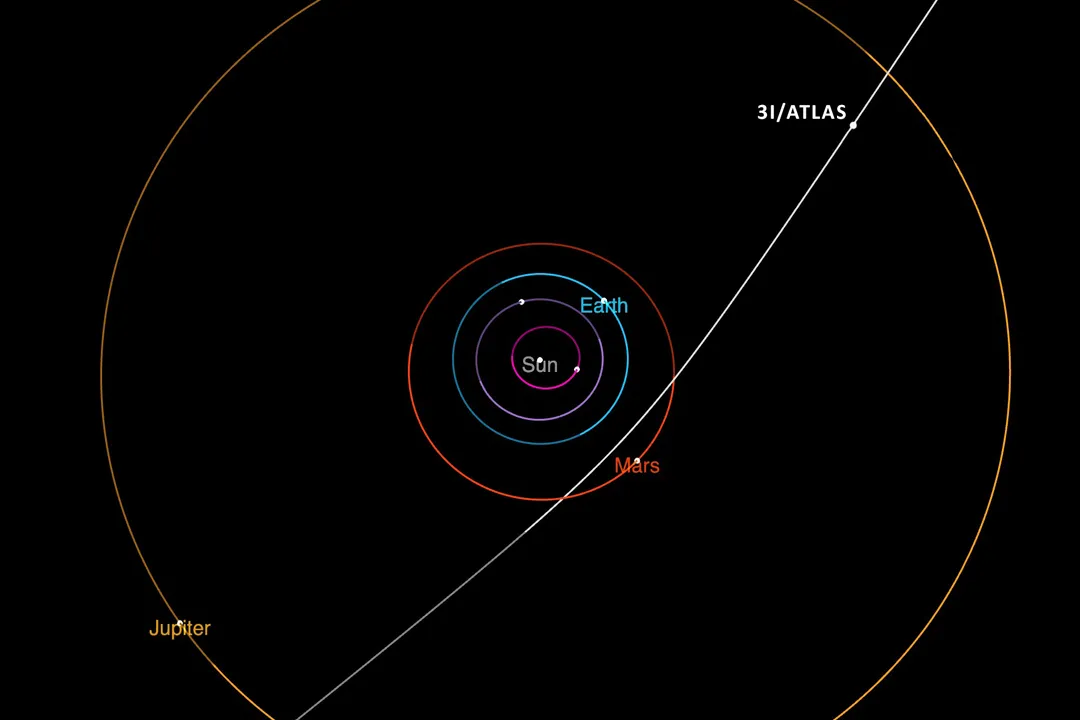
The object designated 3I/ATLAS is indeed classified as a comet, specifically an interstellar one, marking it as only the third such visitor confirmed to have traversed our solar system. This designation is important because its entire trajectory places it as a foreigner to our Sun's gravitational influence, having originated from the vast reaches between star systems. Its arrival offers a rare, fleeting opportunity for astronomers to study materials and conditions from another stellar neighborhood before it sails back out into the darkness, never to return on a bound orbit.
# Discovery Origin
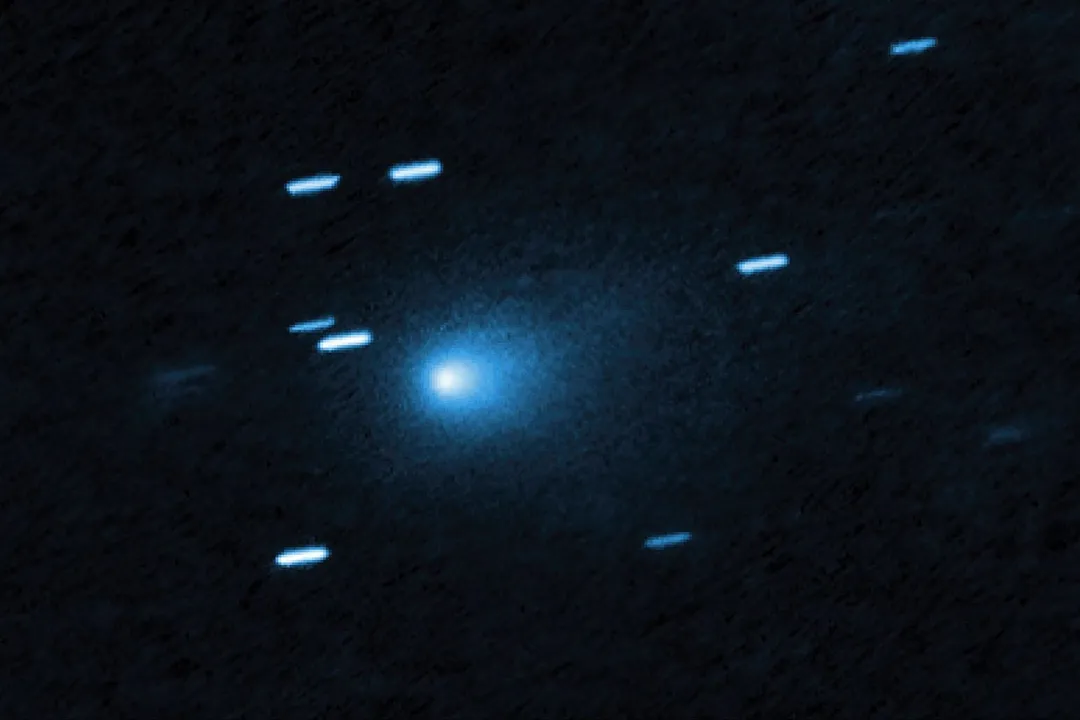
The identification of this celestial body began with the very system named for its purpose: the Asteroid Terrestrial-impact Last Alert System, or ATLAS. It was first spotted in 2019, making it a relatively recent arrival in the astronomical catalog. While ATLAS is primarily designed to scan the skies for near-Earth objects that might pose an impact threat, it occasionally sweeps up distant travelers like 3I/ATLAS.
Initially, the initial data might have suggested a different classification. There were reports suggesting that, based on certain telescope data, some observers questioned whether it should be labeled a comet, perhaps leaning toward an asteroid identification. However, as the object moved closer to the Sun and observations accumulated, the activity characteristic of a comet became undeniable, solidifying its status as a true icy wanderer.
# Interstellar Identity

What fundamentally separates 3I/ATLAS from the vast majority of comets we observe—those belonging to the Oort Cloud or Kuiper Belt—is its path through space. Its orbit is hyperbolic. In the context of celestial mechanics, a hyperbolic trajectory means that the object is moving too fast to be gravitationally bound to the Sun. It is merely passing through, having been captured by the Sun's gravity for a brief period before being flung back out into the interstellar medium.
This characteristic of having an extremely elongated, non-closed path is the definitive stamp that confirms its origin outside of our own solar nursery. It is a rare visitor with a compelling story etched into its trajectory. Thinking about the scale of this journey offers a moment of perspective: while even the most distant Oort cloud comet is traveling within the Sun's influence, 3I/ATLAS has likely traveled for billions of years across the gulf between stars, crossing light-years of space before its current, brief detour past our Sun. Its composition likely reflects the birthplace of another star system, making the data it sheds far more valuable than that from a native solar system object.
# Behavior Observed
The confirmation that 3I/ATLAS is a comet is based on its activity—the outgassing of volatile materials that form the characteristic coma and tail when heated by the Sun. However, the way 3I/ATLAS expressed this activity proved to be quite unusual, offering scientists some perplexing puzzles.
One of the most notable observations involved the appearance of its jets when the object was oriented in a specific way relative to Earth and the Sun. During this time, observers witnessed weird wobbling jets. This pattern of jets was described as unevenly distributed around the nucleus. Such distinct asymmetry in outgassing suggests that the nucleus might not be spinning uniformly or might have specific fissures or areas prone to sublimation, leading to the observed erratic tail structure.
This peculiar jet behavior is not commonly seen in typical solar system comets, which often display more predictable or broad outgassing patterns once they are sufficiently warmed. The object's initial classification confusion may have stemmed partly from this non-standard presentation of cometary activity, making initial assessments tricky. Analyzing these wobbles provides insight into the physical shape, rotation rate, and surface composition of the nucleus, information that is incredibly difficult to obtain for objects so far away. A technical point worth noting is that the distinction between a faint, active asteroid and a small, newly activated comet can sometimes rely on very subtle spectroscopic differences that only detailed follow-up observation can resolve.
# A Rare Trio
3I/ATLAS joins a very exclusive club in the annals of solar system exploration. It is only the third known object originating from outside our stellar neighborhood to have been detected passing through. The others being the famous, cigar-shaped 'Oumuamua and the definitively cometary 2I/Borisov.
The fact that we have detected three interstellar visitors in relatively quick succession—'Oumuamua (2017), Borisov (2019), and ATLAS (2019)—after millennia of observation suggests one of two things, or perhaps both. Either the population of these objects floating through the galaxy is much denser than previously modeled, or our current generation of wide-field survey telescopes, like ATLAS, has simply reached the necessary sensitivity to catch them more frequently. If it is the latter, we might expect to detect more interstellar objects every few years, turning a "once-in-a-generation" event into a regular, albeit infrequent, occurrence in the coming decade.
We can compare the primary observational markers of the known visitors to better understand ATLAS’s place:
| Object Designation | Discovery Year | Interstellar Confirmed | Primary Observation Trait |
|---|---|---|---|
| 'Oumuamua | 2017 | Yes | Extreme elongation and non-gravitational acceleration |
| 2I/Borisov | 2019 | Yes | Clear cometary activity (tail/coma) |
| 3I/ATLAS | 2019 | Yes | Hyperbolic path, unusual wobbling jets |
The initial ambiguity surrounding ATLAS's nature, whether asteroid or comet, highlights a necessary hurdle in deep-space surveys. When an object is discovered far from the Sun, it is often too small and inactive to show a tail, leading to an asteroid designation based on its trajectory if the orbit is clearly hyperbolic. It is only upon closer approach that tell-tale signs of ice vaporization appear, forcing a reclassification to 'comet.' This iterative process, where early cataloging can be preliminary, is a natural consequence of observing fast-moving, distant targets. It is a testament to the agility of ground-based astronomy that the reclassification occurred smoothly, shifting the focus from potential impact hazard to pristine scientific target.

# Celestial Close Call
For observers on Earth, the close proximity of 3I/ATLAS represented a prime viewing opportunity. At one point, specifically around December 19th, the interstellar comet passed within roughly 170 million miles of our planet. While this distance sounds vast—and it is, being much further than the typical close approach of Mars—it was close enough for powerful telescopes to gather significant data on its composition and activity before it receded permanently.
This close pass, even if millions of miles away, is what allowed scientists to capture the intricate details of those strange, uneven jets. The geometry had to be just right: the comet needed to be oriented such that its activity pointed somewhat toward our line of sight, allowing the wobble to be resolved against the background stars. The fact that this visitor was tracked so precisely, from its initial faint detection by ATLAS to detailed observations of its gaseous plumes by major facilities, underscores the high level of cooperation and tracking capability now standard in modern astronomy. It took coordinated effort to not only confirm its identity but also to characterize its fleeting behavior during its brief stop in our cosmic neighborhood.
#Videos
Newly-discovered 3I/ATLAS comet makes closest approach to Earth
Related Questions
#Citations
Comet 3I/ATLAS - NASA Science
3I/ATLAS - Wikipedia
Interstellar comet 3I/ATLAS reveals weird wobbling jets in rare sun ...
3I/ATLAS: The Truth About The Interstellar Comet Everyone's ...
3I/ATLAS: Not a comet? New telescope data points to interstellar D ...
Newly-discovered 3I/ATLAS comet makes closest approach to Earth
On Friday, Dec. 19, the interstellar comet 3I/ATLAS will pass within ...
Comet 3I/ATLAS: A Rare Visitor with a Story to Tell
Comet 3I/ATLAS Today (Dec. 24, 2025) - Human Trafficking Houston