Is it common to see a comet?
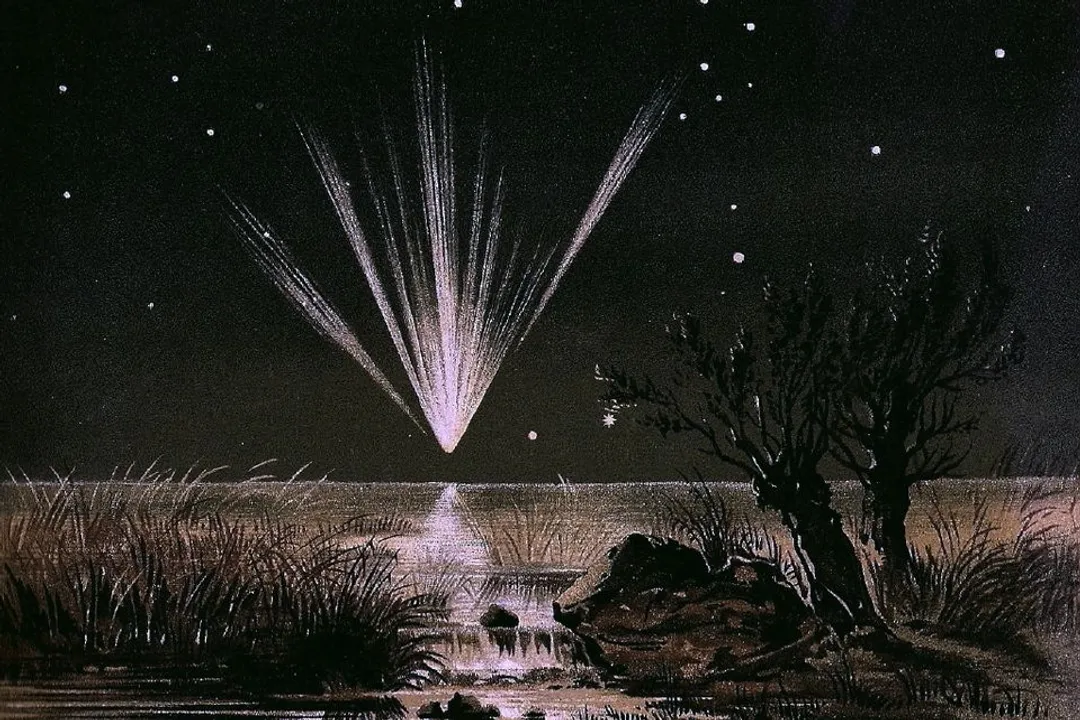
The immediate answer to whether seeing a comet is common depends entirely on what you define as "seeing" one. If you mean the appearance of a celestial visitor bright enough to stop casual conversation and dominate the night sky, then no, that is quite rare. If you mean an object that diligent sky-watchers with good equipment can detect year after year, then comets are quite frequent visitors to the inner solar system.
Comets themselves are ubiquitous, though unseen. They are the ancient, icy remnants from the formation of our solar system about 4.6 billion years ago, storing original building blocks in frozen reservoirs like the Kuiper Belt and the even more distant Oort Cloud. [3][6] They are often popularly described as "dirty snowballs". [3] It is only when their highly eccentric orbits fling them close to the Sun that they warm up, causing volatile ices to vaporize—a process called outgassing. [3][5] This activity creates the temporary, gravitationally unbound atmosphere, or coma, and often the iconic tail that makes them visible from Earth. [3]
# Visibility Frequency
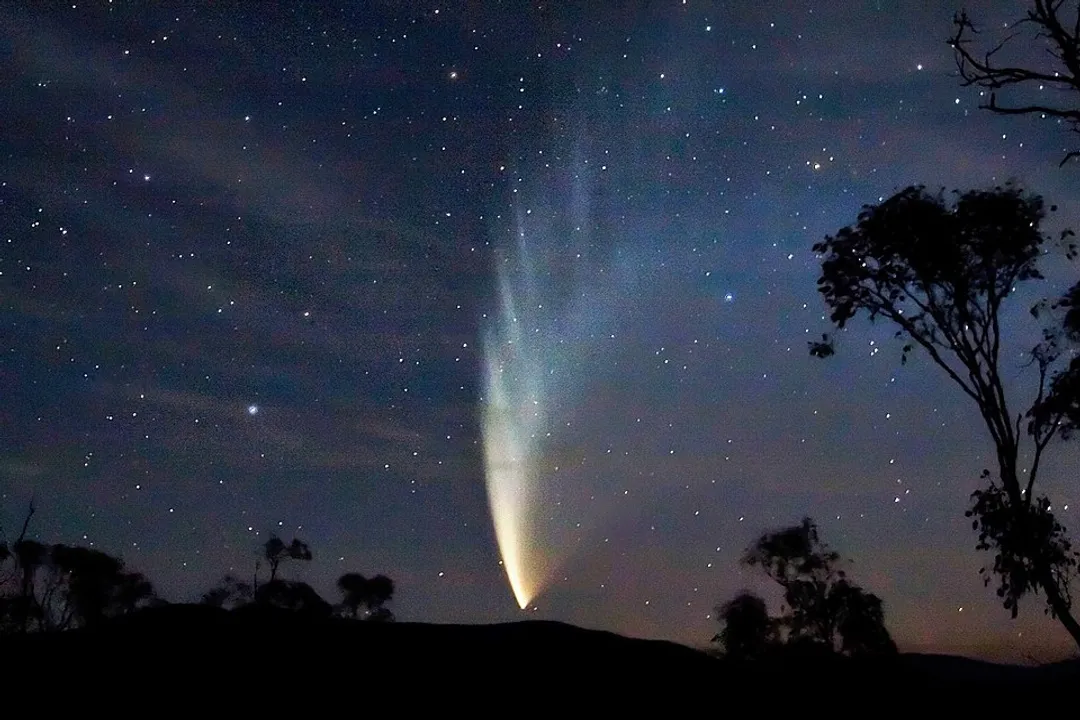
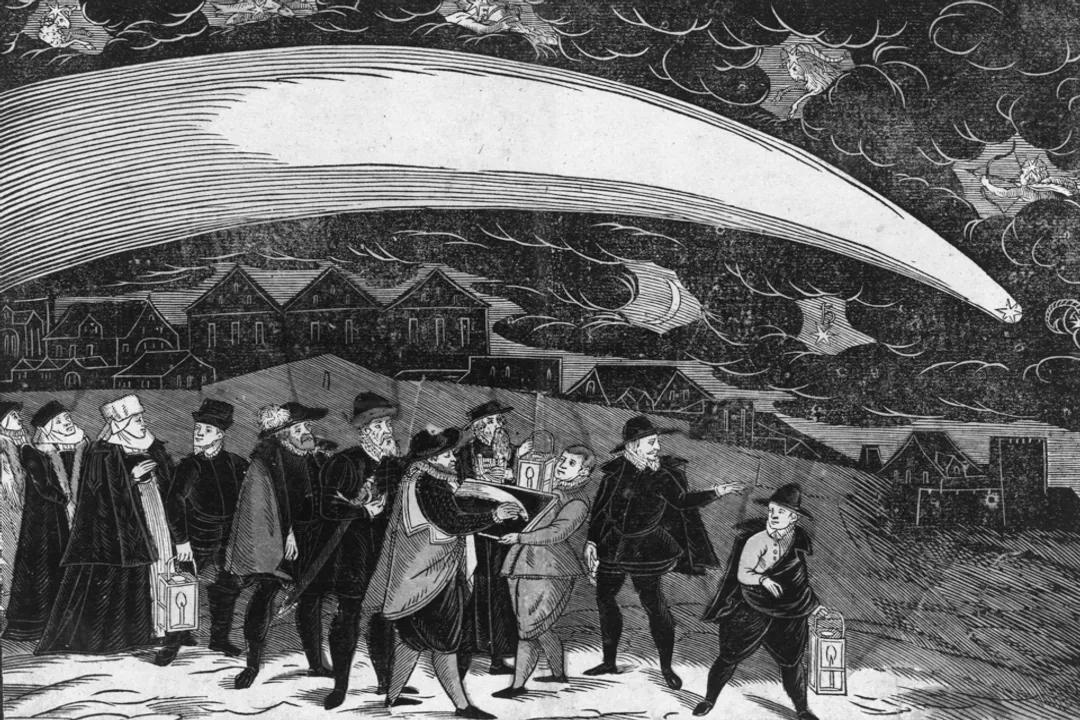
The sheer number of these icy bodies orbiting the Sun is immense, estimated in the trillions in the Oort cloud alone. [3] However, this abundance doesn't translate to frequent spectacular sightings.
Generally, estimates suggest that roughly one comet per year becomes visible to the naked eye. [3] This is the baseline for the casual observer. Yet, these annual visitors are often faint and may not offer a truly memorable display. [3] They are the objects that require patience, dark skies, and often binoculars to confirm their fuzzy presence. [5]
The real showstoppers, referred to as "great comets," which are bright enough to capture widespread public attention and become well-known outside astronomy circles, appear far less often. [3][4] Historically, these truly exceptional events have occurred, on average, about once every decade. [3] Comparing past exceptional sightings like Comet Hale–Bopp in the late 1990s to more recent events like Comet Neowise in 2020, it’s clear that a truly "great" comet—one that remains visible to the naked eye for months—is a generational event. [4][7] Observers in online discussions suggest that a significant, bright comet might arrive every 10 to 20 years. [4]
Short-period comets, those with orbits under 200 years, are more predictable because their paths are established. [3][4] Conversely, the long-period comets, which take thousands or millions of years to return, are often visiting the inner solar system for the first time in recorded history, making their appearance and maximum brightness notoriously difficult to forecast accurately. [3][4]
The sheer volume of objects being tracked by modern surveys creates an impression of frequent cometary activity. For instance, an astronomer tracking data might see dozens of potential candidates annually. [6][7] If we look ahead to a year like 2026, forecasts show several comets expected to be visible, but nearly all are slated for telescopic or high-powered binocular observation, with only a handful having a slight chance of reaching magnitude 5 or 6—the lower threshold for easy naked-eye viewing under ideal conditions. This means the gap between the comets detected and the comets seen by the average person is quite large. For every one comet that makes headlines, many others are merely faint smudges only confirmed by professionals or dedicated amateurs. [5]
# What Makes a Comet Stand Out
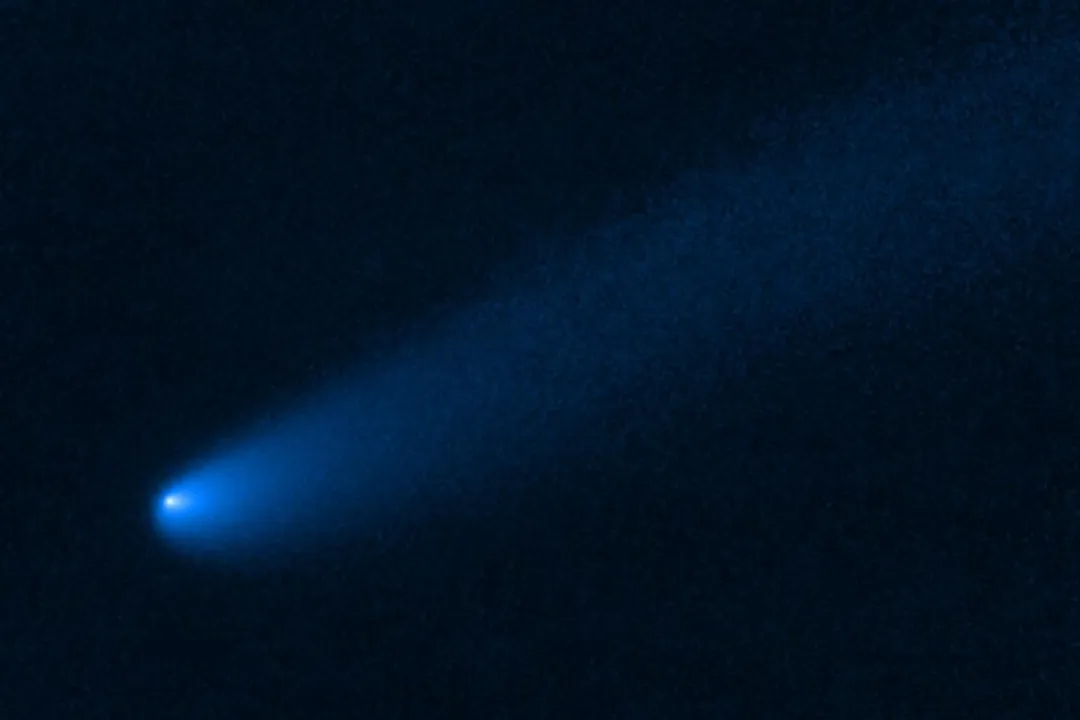
When a comet does become notable, it’s usually due to one of three factors: its extreme brightness, its path relative to Earth, or a unique visual characteristic.
# Brightness and Color
The visibility of a comet is governed by factors like the size and activity of its nucleus, how close it passes to the Sun (perihelion), and how close it gets to Earth. [3][5] A comet can fail spectacularly even if predictions are optimistic, as seen with Comet Kohoutek in 1973, which was highly anticipated but underperformed. [3]
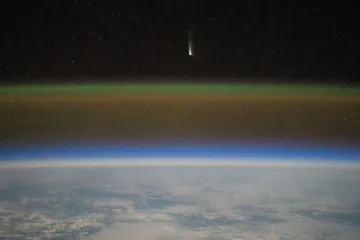
The visual appearance can also change dramatically. Most comets that are detectable without optical aid appear simply as grayish, fuzzy patches against the sky. [7] However, some exhibit colors that turn them into true spectacles. Comet C/2025 A6 (Lemmon) was noted as the most striking comet of 2025 partly due to its distinct emerald glow. [6][7] This signature green hue is caused by the presence of diatomic carbon (), a molecule that glows when excited by solar radiation before being rapidly broken down by sunlight. [6] The tail, conversely, is often a pale blue, composed of ionized gases being pushed directly away from the Sun by the solar wind. [3][6]
# Daytime Sightings
Seeing a comet during the day is an extreme rarity, as the Sun’s overwhelming light usually washes out the relatively faint coma and tail. [2] While it has happened historically, it requires the comet to be exceptionally bright and positioned just right relative to the Sun and the observer. [2] Modern astronomy usually focuses on pre-dawn or post-sunset viewing when the sky is dark enough near the horizon. [5]
The specific visual phenomena associated with a comet, like the bright green glow, can sometimes be a more defining feature than sheer magnitude alone. A faint comet that displays a vivid color contrast against the dark sky—perhaps achieved when the light blue ion tail is viewed against a backdrop of clear, light-pollution-free air—can be more memorable to an amateur astronomer than a slightly brighter, dull gray one. This means that "common" sightings are technically frequent, but unusual sightings—green ones, great comets, or double comets appearing simultaneously—are what people truly remember and discuss. [7]
# Tips for Observation
For those hoping to catch one of the many binocular-level comets that cruise through the solar system, preparation and location are key. [5]
If you want to increase your odds of seeing a comet that isn't a "great comet," take these steps:
- Consult Ephemerides: Check resources like the IAU Minor Planet Center or specialized apps that track upcoming comets, paying close attention to their predicted magnitude. [5]
- Get Dark: Light pollution is the single greatest enemy of faint celestial viewing. Traveling to a location far from major city lights will drastically improve your chances of seeing a comet predicted to be at magnitude 7 or 8. [5]
- Use Averted Vision: When looking for a faint object, slightly offset your gaze rather than looking directly at the expected location. This technique utilizes more light-sensitive areas of the human eye and can reveal dim details better. [5]
- Bring Optics: While some comets might be visible to the naked eye, binoculars or a telescope with a wide field of view are the best instruments to confirm objects that are just at the edge of visibility. [5]
While the solar system is constantly sprinkled with these icy travelers, the chance to see a truly spectacular, naked-eye comet remains an occasional, special event—one that astronomers work hard to predict but which nature always reserves the right to surprise us on. [3][5]
#Videos
A comet is heading for earth, how close will it get? - YouTube
Related Questions
#Citations
Have comets and asteroids always been so prevalent in the night sky?
Comet - Wikipedia
How to spot comet SWAN (C/2025 F2) - The Planetary Society
Comets - NASA Science
Here's how to see a rare green comet this week | National Geographic
2 green comets shine bright. How to spot them in the night sky - AP.org
A comet is heading for earth, how close will it get? - YouTube
Upcoming Comets Visible in 2026 - Star Walk