How to tell if it's a comet?
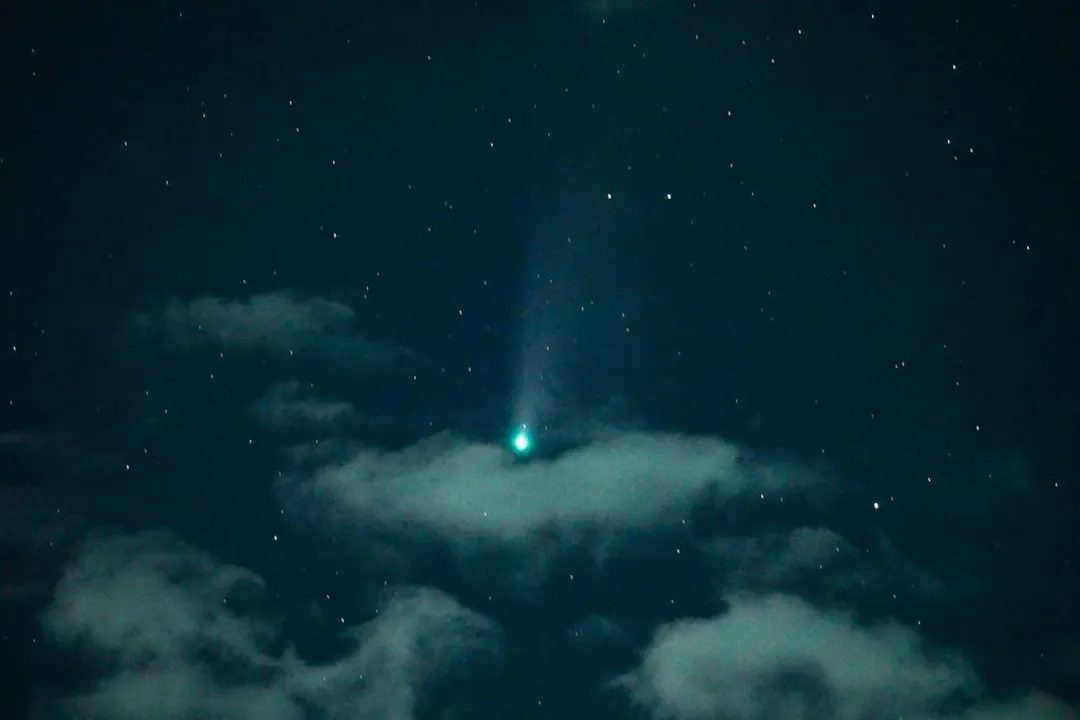
When you look up at the night sky and spot something unusual—a smudge of light where there should just be pinpricks—the natural question arises: What am I actually seeing? It is easy to confuse an approaching comet with a bright planet, a satellite flare, or even space debris, but the true comet possesses distinct characteristics that set it apart from its cosmic neighbors. [5][6] The primary clue lies in its very composition and the resulting visual effect when that icy body nears the warmth of the Sun. [1]
# Fuzzy Blob
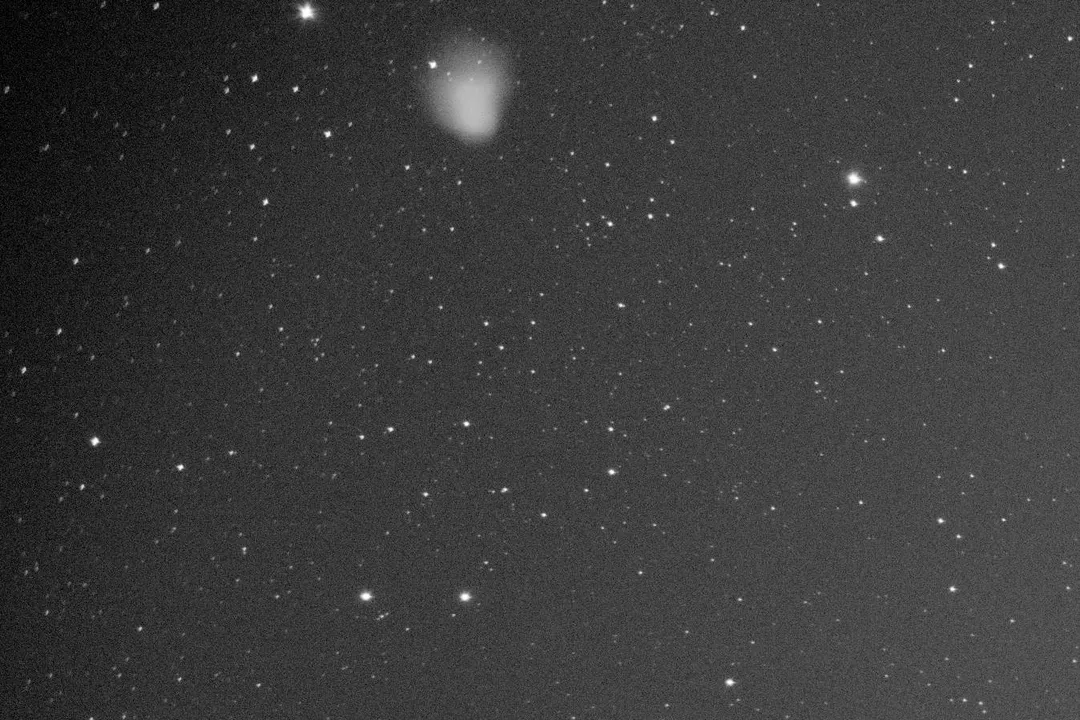
The single most telling visual characteristic of a true comet, especially one active near the Sun, is its lack of a sharp outline. Stars and asteroids, even through a telescope, appear as crisp, point-like sources of light, regardless of how large your aperture is. [3][1] A comet, however, is built from a nucleus of rock, dust, and frozen ices—often called a "dirty snowball"—that begins to sublimate (turn directly from ice to gas) when it swings close to our star. [1][5]
This outgassing creates a vast, tenuous atmosphere around the solid core, known as the coma. [1] This coma diffuses the reflected sunlight, causing the entire head of the object to look distinctly fuzzy or hazy, much like an elliptical galaxy seen in a small telescope. [5][3] If you are observing a faint object that seems to smear slightly into the background, you are likely looking at a comet, rather than a sharp-looking asteroid. [3]
The nucleus itself is tiny, often just a few kilometers wide, but the coma can swell to be larger than the Earth, or even the Sun in rare cases, making the object easily observable even if the central point remains dim. [1][5] Furthermore, under the right conditions, these gases can glow from ionization, or the dust can reflect light, forming tails. [1]
# Transient Streak
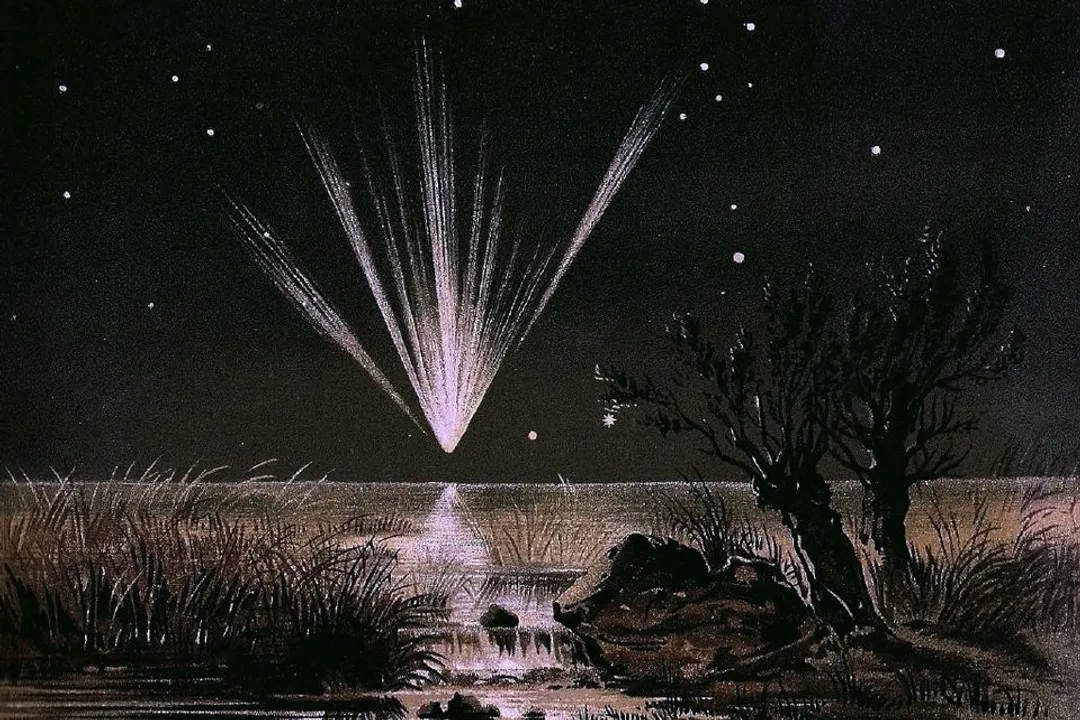
A common initial misidentification for an object moving in the sky is confusing a comet with a meteor, popularly known as a shooting star. [5] Meteors are caused by minuscule particles of cosmic debris entering Earth's atmosphere at high speed and vaporizing due to friction. [5][6]
The key differentiator here is motion and duration. A meteor streaks across your field of view in a matter of seconds, a fleeting flash of light. [6] A comet, by contrast, is a deep-space object traveling along a massive orbit around the Sun. While it is moving, that movement is incredibly slow relative to your viewing time. [5] You would not see a comet "shoot" across the sky; instead, you observe its position shift subtly against the background stars over the course of hours, or more noticeably, night after night. [5] If the object burned up quickly in a quick flash, it was a meteor, not a comet. [6] Distinguishing it from space junk or a rocket launch is similar: junk moves more slowly than a meteor and might drift sideways across minutes, but a comet's defining feature near the Sun is the presence of that fuzzy coma, which space junk lacks. [6]

# Star Point
When an object does remain sharp and star-like, even when bright, it usually signals an asteroid, or possibly an extremely inactive or "extinct" comet. [3][1] Asteroids, having formed closer to the Sun, are primarily rocky bodies orbiting in relatively circular paths, resembling faint stars even in powerful amateur scopes. [3][1]
However, the line between these two types of minor bodies can become blurred. Some objects, like "Manx comets" or active centaurs, orbit in paths similar to asteroids but occasionally display cometary activity. [1] If your object looks sharp but is known to be traveling on a highly eccentric (elongated) orbit that takes it far out beyond the planets, it could be an extinct comet nucleus that has lost most of its ice, or perhaps a body only recently discovered that hasn't begun outgassing yet. [1] For an amateur observing visually, if the object looks like a star and isn't showing any evidence of fuzziness, it is highly unlikely to be an active comet. [5]
# Motion Check
For those actively trying to identify a specific object, the rate of its movement across the celestial sphere is critical. A known comet will follow a predictable, though slow, path determined by its solar orbit. [5] If you are using imaging techniques—taking multiple pictures of the same patch of sky hours or days apart and then "blinking" them together on a computer—the comet's movement against the fixed stars will confirm its nature. [3]
It is worth noting that while a known, bright comet will follow its published path (ephemeris), which is the gold standard for confirmation, an unknown object moving with noticeable displacement over just a few hours might warrant closer inspection. Objects that are extremely close to Earth, such as some near-Earth asteroids, can show a faster apparent drift over a single night than a distant comet. When assessing an unknown fuzzy object, check its motion over an entire night or across sequential nights; the progression should be stately and consistent with a long-period orbit, not erratic or overly rapid like a closer asteroid or an object in low Earth orbit. [5] A fuzzy object that exhibits no discernible motion when blinked over a short period, or one where stars seem to shine through the alleged object when blinking, is often just an imaging artifact or reflection, not a genuine deep-sky visitor.
# Tail Direction
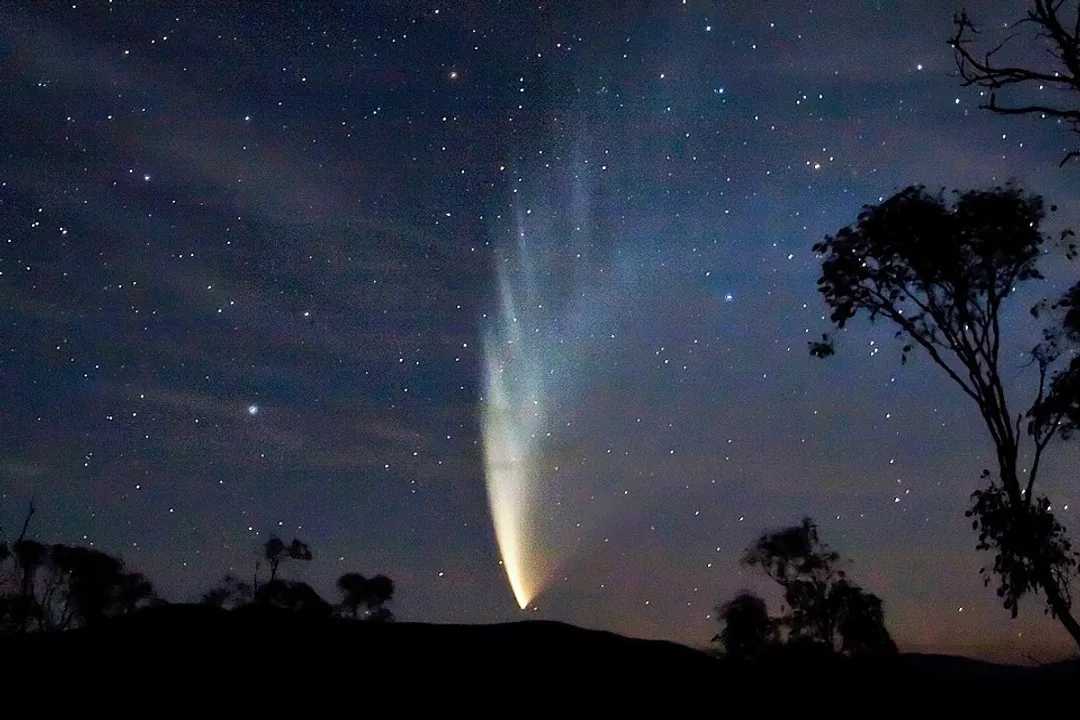
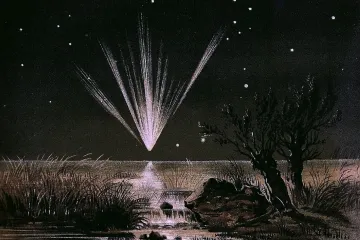
If the object is bright enough to have developed a tail, this feature provides definitive confirmation and a clue about its path. A comet typically develops two distinct tails when heated by the Sun. [1][5]
- The Ion (Type I) Tail: This tail, composed of gases energized by the solar wind, always points directly away from the Sun, regardless of the comet's direction of travel. [1][5]
- The Dust (Type II) Tail: This tail, made of heavier dust particles pushed by solar radiation pressure, tends to curve, following the comet's orbital path somewhat. [1][5]
This geometry leads to an interesting visual effect: as a comet travels outward from the Sun after passing perihelion, it is actually traveling tail-first. If you see a fuzzy object with its tail leading it, it is heading toward the Sun; if the tail streams behind it, it is moving away. [5] This orientation of the tail relative to the Sun is something planets, asteroids, and space junk simply do not replicate. [1]
# Chemical Signature
While most faint comets appear grey, the chemistry of brighter ones can offer an additional layer of identification, especially when comparing them to other objects that merely reflect sunlight. When comets become active, the gas they release can sometimes reveal characteristic colors that are highly unusual for rocky debris or man-made objects. [1] For instance, the presence of diatomic carbon in the coma often imparts a subtle green hue, while the dust tail can sometimes skew toward yellow or red depending on the composition of the silicate and organic materials present. [1] Identifying such a specific spectral signature—a greenish glow being a classic indicator—is a key piece of evidence pointing toward a volatile-rich comet, rather than a simple chunk of rock. [1]
# Tracking Confirmation
Finally, if you suspect you have seen a comet, the ultimate way to confirm its identity is through external records. While discovering a new comet is a thrilling prospect, the reality is that professional surveys and automated telescopes discover most objects today. [3] For the amateur seeking confirmation on a known object, checking online resources is essential. Websites that track current comets provide their orbital data, known as an ephemeris. By comparing the object's apparent position in the sky with these published coordinates, one can confirm if the object is a known comet currently making an apparition (its visible appearance). [1] Remember that even highly anticipated comets are notoriously difficult to predict; some fail to impress, while others unexpectedly brighten or even fragment into multiple pieces along their path. [1][5]
#Videos
Do you know how to spot a comet? - YouTube
Related Questions
#Citations
Comets - NASA Science
Comets and how to view them - Society for Popular Astronomy
How to find and discover a comet or asteroid
Do you know how to spot a comet? - YouTube
Comet, rocket, space junk or meteor? Here's how to tell your fireballs ...
Ways to spot a comet or asteroid? - Physics Stack Exchange
Comet - Wikipedia
How does one know if it is a comet or identify which one it is?