If an object looks sharp (star-like) and lacks fuzziness, what is it unlikely to be, even if it is moving?
Answer
An active comet.
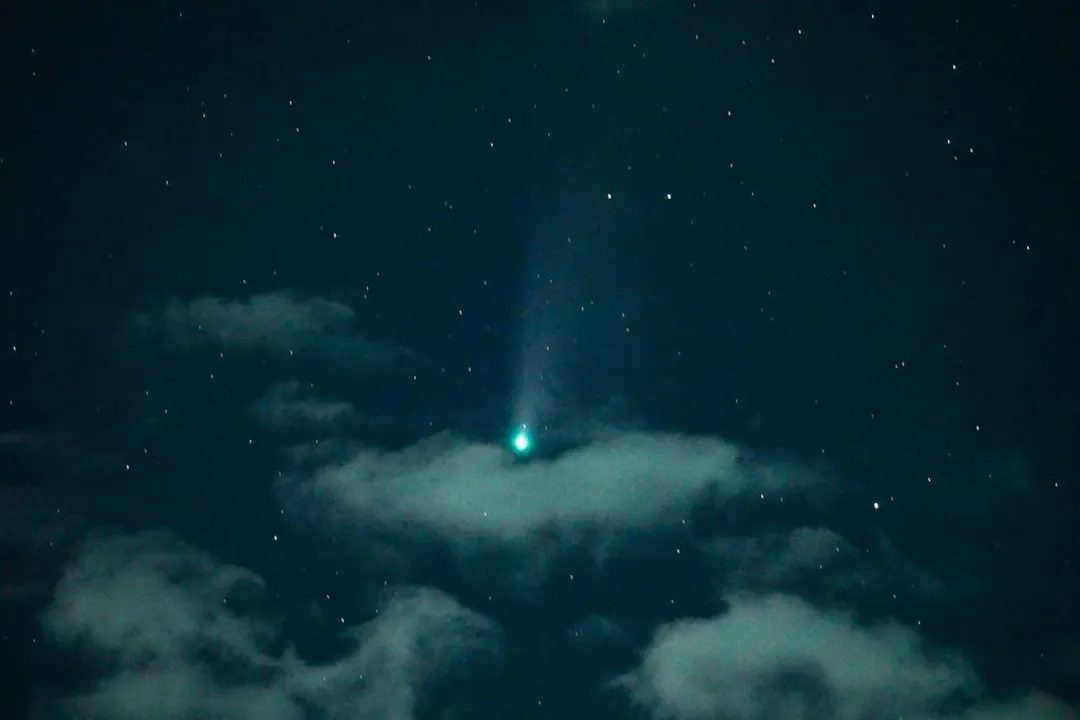
The presence of a fuzzy coma resulting from sublimation is the primary visual hallmark of an active comet when observed telescopically. If an object appears sharp, even if it is bright, it strongly suggests it is not an active comet shedding volatiles near the Sun. Such objects are far more likely to be asteroids, which are primarily rocky bodies with relatively circular orbits that maintain a star-like appearance, or possibly an extinct comet nucleus that has already lost most of its ice, thus lacking the necessary outgassing to produce fuzziness.
#Videos
Do you know how to spot a comet? - YouTube
Related Questions
What visual characteristic distinguishes an active comet from sharp, point-like stars and asteroids?What common nickname describes a comet's nucleus composed of rock, dust, and frozen ices?How does the duration of a meteor differ from the observable motion of a deep-space comet?What is the definitive directional behavior of a comet's Ion (Type I) Tail when near the Sun?Which characteristic describes the behavior of the Dust (Type II) Tail relative to the comet's path?What structure forms around the solid core of an active comet due to outgassing, causing its fuzzy appearance?What chemical signature often imparts a subtle green hue to the coma of an active comet?What is the gold standard method for confirming the identity of a known, bright comet using external records?If an object looks sharp (star-like) and lacks fuzziness, what is it unlikely to be, even if it is moving?What imaging technique is recommended for observing a comet's movement against background stars over time?