How to spot ATLAS comet?
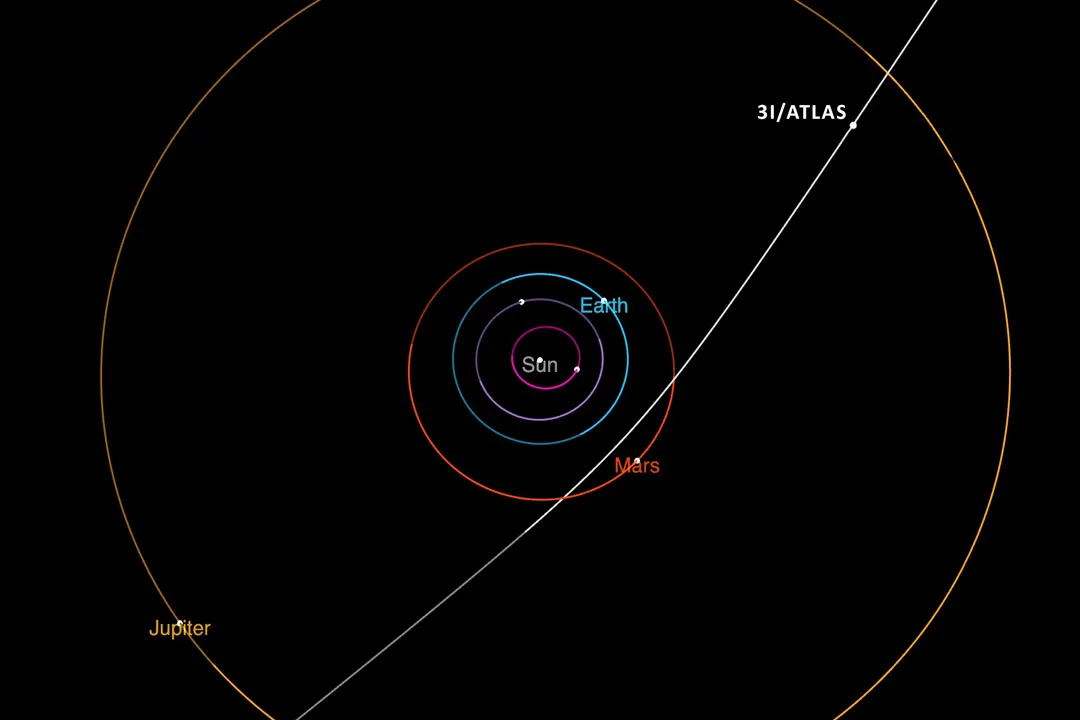
The arrival of Comet 3I/ATLAS offers a truly unique, fleeting look at material born beyond the gravitational influence of our Sun. This cosmic snowball, made up of ice, dust, and frozen gases, is currently tracing a hyperbolic path through our celestial neighborhood. It is only the third known interstellar object ever detected passing through our system, making its brief presence a high-priority target for astronomers worldwide.
# Interstellar Guest
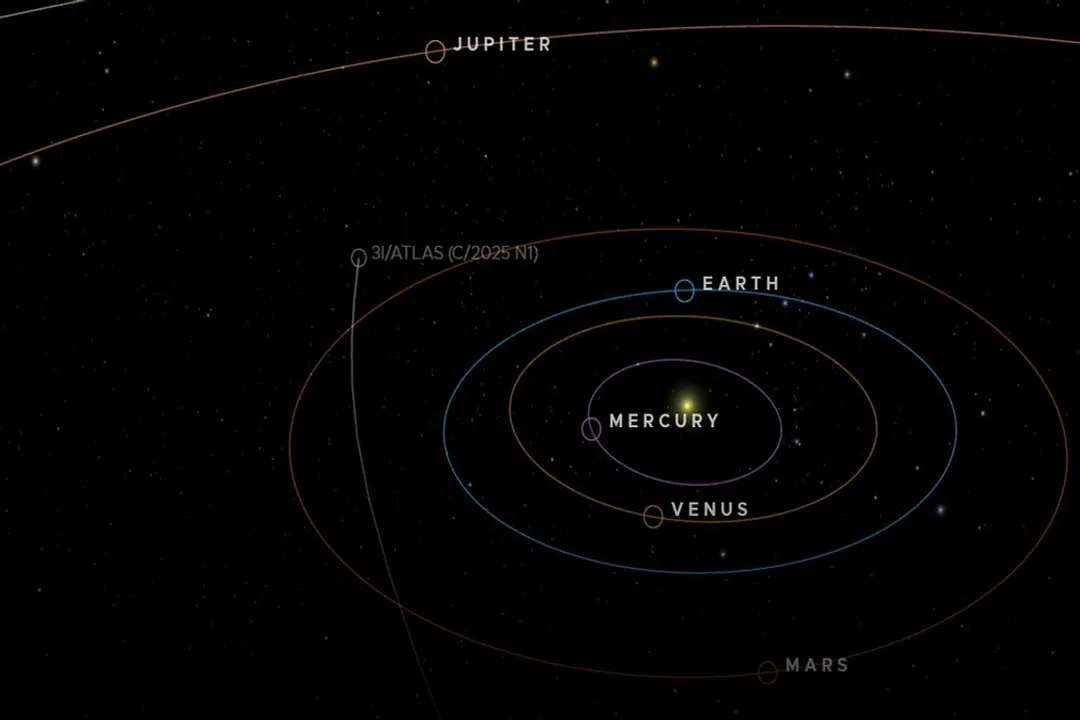
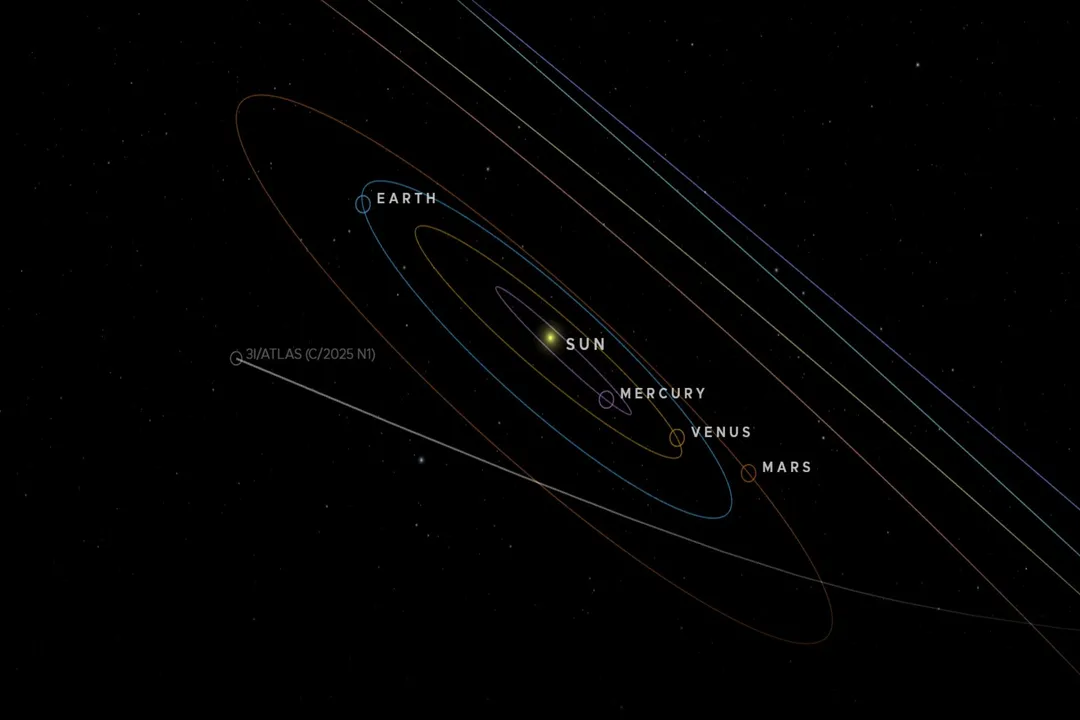
The designation 3I/ATLAS tells a story: the “I” signifies that the object originated from outside our solar system, and the “3” marks it as the third such traveler confirmed. Unlike the vast majority of comets which originate in the distant Kuiper Belt or Oort Cloud, ATLAS formed around an alien star. Because of its trajectory, which does not follow a closed orbital path around the Sun, it is set to exit the solar system and never return.
Discovered by the NASA-funded ATLAS survey telescope operating in Rio Hurtado, Chile, the initial sighting was reported on July 1, 2025. Astronomers quickly managed to gather archival data, pushing the first recorded observation back to June 14, 2025. Initial size estimates, derived from data gathered by instruments like the Hubble Space Telescope, place its nucleus diameter somewhere between about 1,000 feet (320 meters) and 3.5 miles (5.6 kilometers).
# Rarity Explained
What excites scientists most about this traveler is its composition and behavior, which differ noticeably from native solar system comets. Dr. Qicheng Zhang of Lowell Observatory noted that the cometary activity seemed unusually delayed; ATLAS held off on releasing water vapor—the process that causes rapid brightening—until it was much closer to the Sun than expected. Furthermore, on its inward path, the comet displayed high levels of carbon dioxide () compared to water vapor, a gas ratio more commonly associated with comets still far from stellar warmth. Analysis of the light scattering off its dust particles suggests an unusual structure, hinting that ATLAS’s icy grains formed under very different environmental conditions than those found in our local stellar neighborhood.
While this interstellar nature might sound dramatic, there is absolutely no risk of impact with Earth. The closest approach to our planet will still leave the comet far away—about 1.8 astronomical units (approximately 170 million miles). Its closest swing to the Sun occurred around late October 2025, at a distance of roughly 1.4 AU, just inside the orbit of Mars.
# Visibility Limits
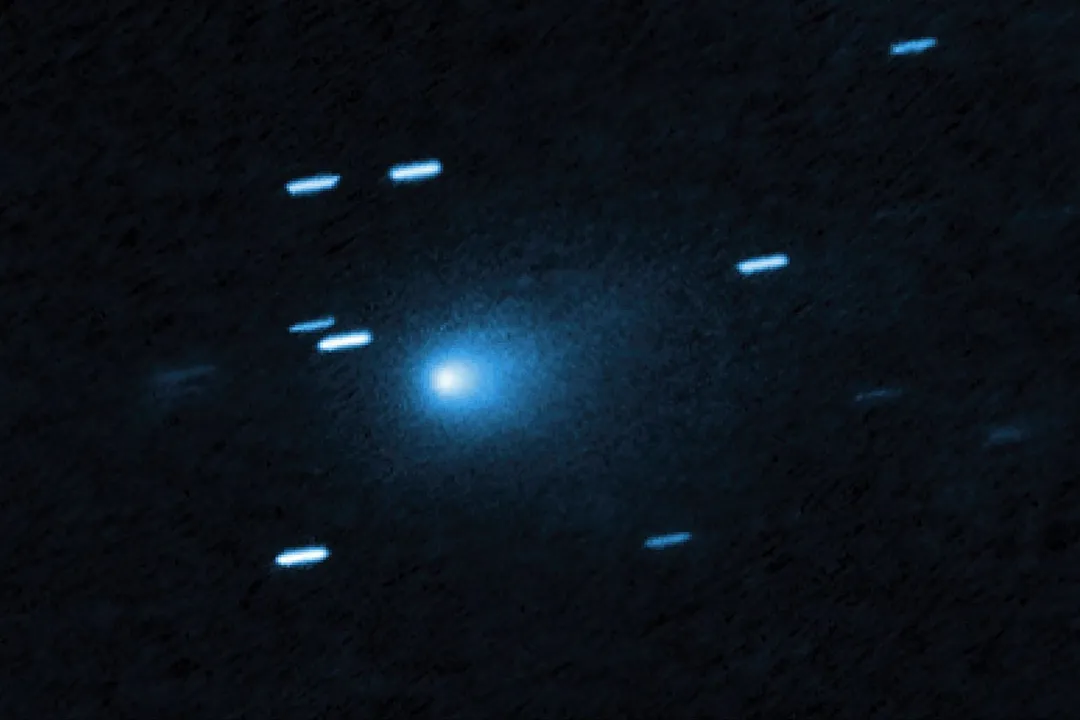
For the general public hoping to catch a visual, expectations must be carefully managed. Comet 3I/ATLAS is not a naked-eye object and will not offer the brilliant spectacle of comets like Neowise, even at its closest pass to Earth in mid-December.
The comet is faint. One user observing in November noted it reached magnitude 9.8, and by the time it reached its closest point to Earth, it had faded further to magnitude 11.1. The magnitude scale is logarithmic, meaning a jump from 9.8 to 11.1 represents a substantial dimming—roughly 3.3 times fainter.
To see it visually, a proper telescope is your best bet. Some experienced observers suggest a 10-inch telescope may be necessary to detect it. Even with such equipment, the visual target will likely look like a small, out-of-focus gray smudge rather than a bright, tailed object. Conversely, cameras are far more sensitive to this faint light, and astrophotographers can capture the object even when it is visually inaccessible.
A helpful consideration for any visual observer is that because the object is diffuse, using averted vision—looking slightly to the side of the object—can sometimes help the faint coma stand out against the background starlight.
# Finding Location
Pinpointing the comet’s position requires knowledge of its current location in the sky, which changes rapidly as it sweeps through the inner solar system. While some early December reports placed it near Ursa Major, as it reaches its closest approach to Earth, it is primarily situated within the constellation Leo.
For those using optical aid like a telescope, the technique for locating a faint, fuzzy object like this is known as "star hopping" rather than just scanning the area randomly. You first need to identify bright, stationary reference stars within the target constellation. For Leo, the bright star Regulus serves as a good reference point.
If you have a tracking telescope, using precise Right Ascension (RA) and Declination (DEC) coordinates is the most reliable method. For example, the coordinates for a specific time frame around the Earth flyby were cited as RA 10h 42m 34.4s and DEC +07° 23' 44.9" (for UTC midnight on December 20th).
If you are relying on a finder chart or setting up an equatorial mount, remember that these coordinates are often provided in Coordinated Universal Time (UTC). Knowing how to quickly convert that UTC time to your local time, and adjusting for any local Daylight Saving Time rules that might still be in effect, is critical, as a faint target can easily drift out of the field of view in minutes. When setting up your view with a telescope, start with a low-power, wide-field eyepiece to cover more sky before zooming in.

# Digital Aid
Fortunately, the modern stargazer has several technological shortcuts to track the comet without needing perfect manual star-hopping skills. Smartphone astronomy apps are invaluable tools for this task. Applications such as Stellarium utilize augmented reality technology to overlay the comet’s real-time position onto your view of the night sky. Similarly, TheSkyLive offers specific, real-time finder charts for the comet. For a more classical approach, the website heavens-above.com is also recommended for tracking information.
To understand the comet’s overall journey, NASA offers the Eyes on the Solar System interactive application. This tool creates a sophisticated 3D model of our solar system, allowing you to visualize the hyperbolic path of 3I/ATLAS as it passes through and then departs from our cosmic neighborhood. You can also track the object’s fading brightness over time by checking aggregated amateur observations on the Comet Observation Database (COBS), which charts the comet’s lightcurve.
# Remote Viewing
For those unable to secure time on a large telescope or who are dealing with poor weather, digital observation remains an excellent alternative. The Virtual Telescope Project routinely broadcasts live views of celestial events using remotely operated robotic telescopes. A specific livestream featuring views from Manciano, Italy, was scheduled around the time of the closest approach to Earth. Such broadcasts allow anyone with an internet connection to see the comet, often in clearer conditions than local weather permits, though these events are always subject to the weather at the remote observatory site. Furthermore, NASA itself uses numerous assets, including the Hubble and James Webb Space Telescopes, alongside orbiters like MAVEN and Perseverance on Mars, to gather data and imagery, which are regularly updated on their observation timeline pages.
#Videos
How to See 3I/ATLAS, Comet A6 Lemmon, R2 SWAN ... - YouTube
Related Questions
#Citations
Comet 3I/ATLAS - NASA Science
You can still see comet 3I/ATLAS in the night sky. Here's how.
I am quite new to astronomy but am hoping to try and take a look at ...
How to See 3I/ATLAS, Comet A6 Lemmon, R2 SWAN ... - YouTube
4 ways to track 3I/ATLAS without a telescope as it makes its ... - Space
Comet 3I/ATLAS: A Rare Visitor with a Story to Tell