When was the last time ATLAS was visible?
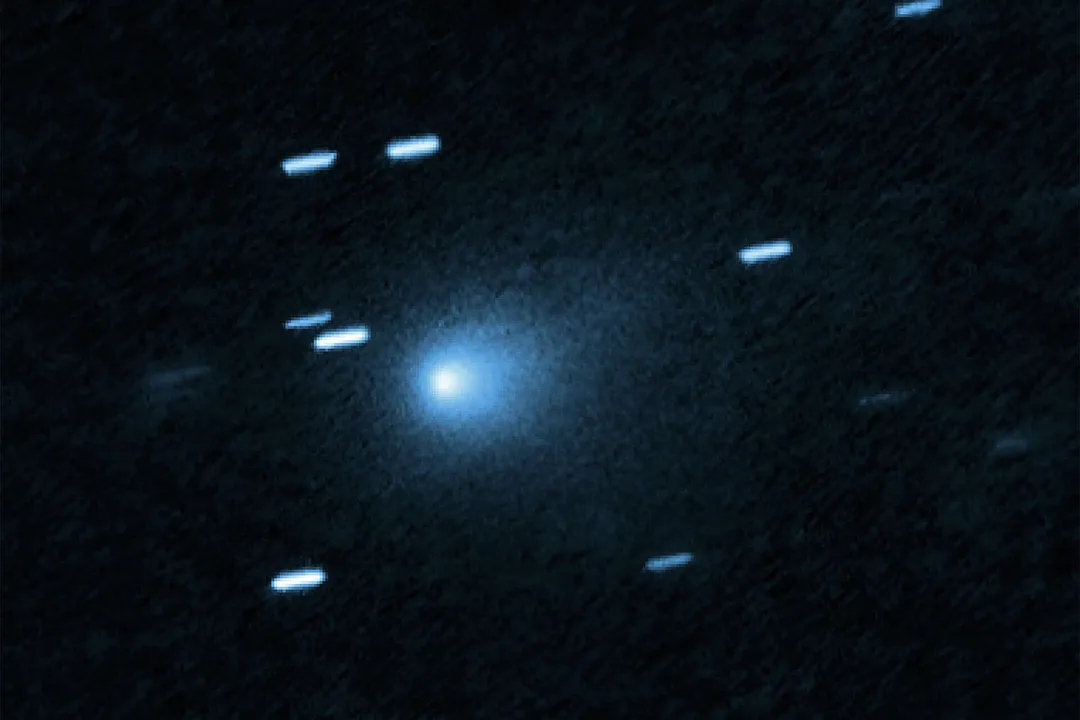
The most recent window of high visibility for the interstellar visitor Comet 3I/ATLAS centered on its closest approach to our planet, an event that marked a truly rare opportunity for sky-gazers. This specific celestial traveler, designated 3I/ATLAS, is not a native of our solar system; it hails from the vast reaches between the stars, making every time it crosses our path an event of particular scientific interest and observational excitement. The peak viewing time, according to reports, clustered around December 19, 2025, when it made its closest flyby to Earth.
# Interstellar Traveler
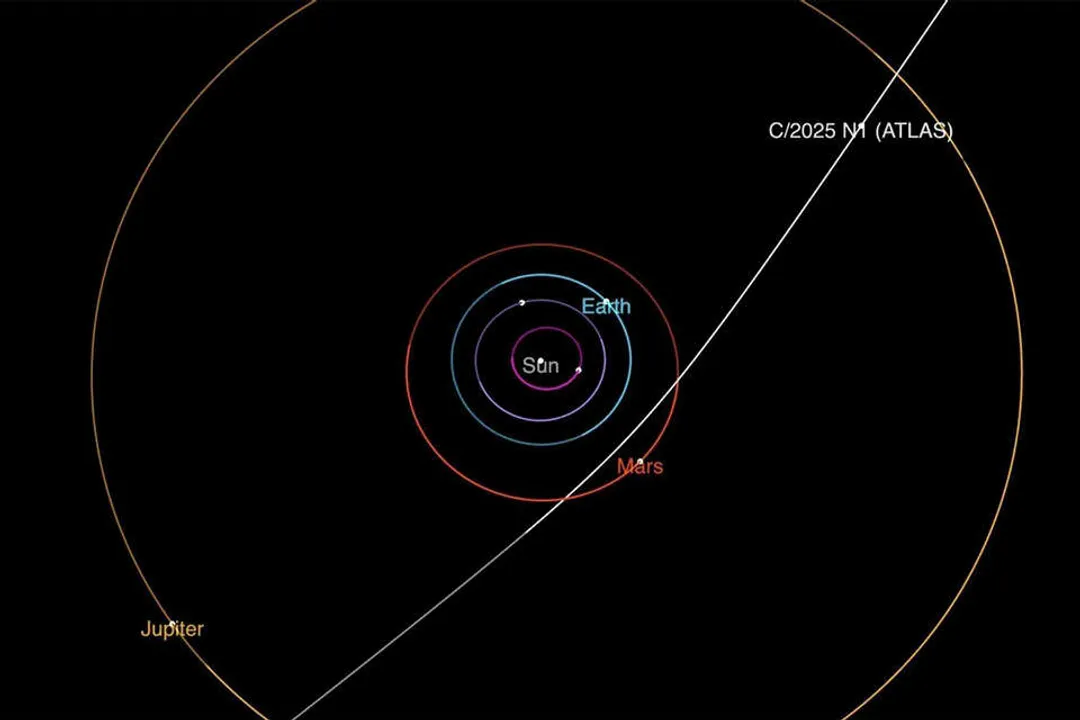
Comet 3I/ATLAS holds a unique position in astronomical records because it is classified as an interstellar object. This means that it originated outside the gravitational influence of our Sun, having traveled through the void of space for eons before our star system captured it temporarily on its outbound trajectory. Such visitors offer a rare chance to analyze material that formed around a different star, providing a baseline comparison for the composition of the comets born within our own solar neighborhood. Its designation, 3I, signifies that it is only the third confirmed interstellar object identified passing through our region of space.
# Closest Swing
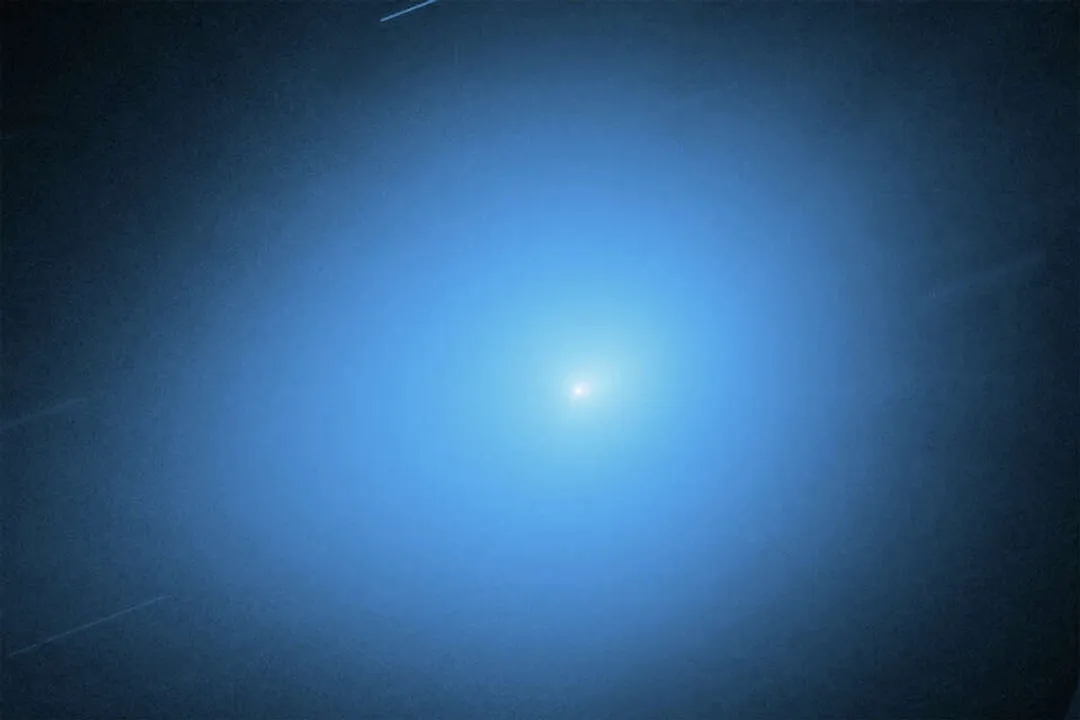
The primary focus for observers became the date of its closest encounter. Comet 3I/ATLAS reached its nearest point to Earth on December 19, 2025. This flyby was significant not just for its proximity, but also because it represented a final, notable pass before the comet heads back out into the deep interstellar medium. While the comet would have been observable before and after this date, the closest approach usually provides the best chance for visibility, even for fainter objects, due to its apparent brightness increasing as it nears Earth.
When observing an object like this, the relative geometry is everything. Even a close passage doesn't guarantee a stunning naked-eye view; brightness depends on a combination of its actual size, its reflective properties, and its distance from both Earth and the Sun. For this particular pass, while it was the closest flyby, reports indicated how to maximize viewing in areas ranging from Connecticut to California, suggesting visibility varied based on local weather and light pollution. The conditions needed to spot it often require seeking out dark skies away from city lights, as even a relatively bright comet can be washed out by terrestrial illumination.
If you were tracking this comet, the window around the 19th was the critical period. Knowing that it was making its closest pass that day allowed observers to plan accordingly, perhaps aligning efforts to view it through binoculars or small telescopes for the best visual confirmation.
# Viewing Advice

Locating any comet relies on knowing its position against the background stars, which changes nightly. For those in different parts of the United States, local news outlets provided guidance specific to their horizons. In locations like Connecticut, for example, citizens were advised on when the comet could potentially be seen in the night sky, suggesting optimal viewing times often follow sunset or precede sunrise, depending on the comet's orbital path relative to the Sun. Similarly, residents in areas like California were given tailored information on when the unique celestial body might be visible in their skies.
The general rules for successful comet viewing remain consistent, regardless of the object's origin. First, darkness is paramount. The fainter the ambient light, the better your chances of seeing the comet's diffuse glow or its tail, if one is present. Second, patience is essential. Comets are not sharp points like stars; they often appear as fuzzy patches, and letting your eyes adjust to the dark for at least twenty minutes enhances the ability to perceive dimmer objects. While binoculars are frequently recommended for seeing faint details or the coma, sometimes patience in a very dark location is the only tool needed for a visual confirmation.
It is interesting to note the difference in advice given regionally. A local guide for one area might emphasize looking toward the eastern horizon just before dawn, while another might suggest a western view immediately after twilight ends. This variability underscores that for a moderately bright object like 3I/ATLAS during its pass, where you stood on Earth dictated when you could best look for it.
Here is a simplified checklist of what a potential observer in late 2025 would have needed to consider for the best chance to see 3I/ATLAS near its peak:
| Factor | Requirement | Significance |
|---|---|---|
| Date | December 19, 2025 (or the days immediately surrounding) | Peak proximity to Earth |
| Location | Clear view of the horizon (e.g., away from tall buildings) | Must see the path the comet is taking |
| Time | After sunset or before sunrise, depending on orbital position | Maximizes contrast against a dark sky |
| Equipment | Patience; binoculars recommended | Helps resolve the fuzzy nucleus/coma |
# Scientific Documentation
The significance of 3I/ATLAS extends past amateur stargazing; it is a target for dedicated scientific instruments. On the very day of its closest approach, December 19, 2025, NASA's Parker Solar Probe was actively observing the interstellar comet. The Parker Solar Probe, designed primarily to study the Sun, was positioned in a way that allowed it to capture unique data as the comet passed relatively nearby. Data collected by the probe contributes to the overall understanding of the comet's properties, such as its composition or how it reacts to the solar wind, offering an expert perspective that complements ground-based visual observations.
This level of high-precision, near-Sun observation by a dedicated probe is a major advantage that newer interstellar visitors have over historical comets. In past centuries, observers had to rely solely on visual reports, which could be subjective or influenced by atmospheric conditions. Now, missions like the Parker Solar Probe can provide objective, real-time data on these fleeting visitors. The ability for the probe to observe 3I/ATLAS as it swung by Earth highlights the sophisticated coordination possible in modern space science, using one mission to gather data on an object primarily studied by others.
If you analyze the event based purely on trajectory, knowing that 3I/ATLAS is on an escape trajectory means that this close pass defines the "last time" in a meaningful sense—the last time it will interact significantly with the inner solar system for potentially millions of years, which is why observers felt a sense of urgency to catch it. The fact that the closest approach happened in December 2025 suggests a relatively swift journey through our inner neighborhood compared to the multi-year visibility windows sometimes afforded by long-period Oort Cloud comets.
# Visibility Context
When discussing when a comet was last visible, it is important to distinguish between a major, close-Earth flyby and general, long-term observability. Many comets pass through the inner solar system regularly or irregularly over decades or centuries. However, 3I/ATLAS is different because its trajectory is hyperbolic, meaning it will leave the solar system entirely. Therefore, the December 2025 event represents its final, highly favorable viewing opportunity relative to Earth.
The difference between an interstellar comet and a typical solar system comet is stark in terms of orbital period. A comet like Halley's repeats its visit every 76 years, giving viewers multiple chances across generations. In contrast, the expected path of 3I/ATLAS dictates it will not return to our cosmic doorstep. This single opportunity means that the collective record of what was seen and photographed during that December window represents the entire body of human visual experience with this specific object. For any observer who missed it, they will not get another chance to check it off their list from the vantage point of Earth. This lends a particular gravity to those reports from Connecticut and California describing their local viewing conditions.
One perspective to consider is how quickly visibility fades after the closest approach. Even if the comet was observable for several weeks leading up to December 19th, its subsequent dimming would be rapid as it moves further from both Earth and the Sun. This rapid drop-off after perihelion—the point of closest approach to the Sun—is typical, meaning the window for good viewing shrinks quickly once the optimal date passes. For instance, if the comet's coma brightness was maximized near the 19th, even a week later, changes in geometry combined with increasing distance would likely render it significantly fainter and harder to detect visually, even with good equipment.
Furthermore, the nature of an interstellar object means scientists have less predictive history to rely on compared to a known periodic comet. While trajectory calculations are precise, the brightness—how much gas and dust it releases—can sometimes be slightly unpredictable, especially for objects passing through the inner solar system for the first time. This inherent slight unpredictability adds an element of suspense to the observation window, making the confirmed sightings from late 2025 all the more valuable for establishing the comet's true characteristics. The published accounts detailing how to see it, including advice on equipment and timing, reflect the consensus understanding of the best practices for observing an object whose behavior is only known through one historical pass.
#Videos
Interstellar Comet 3I/ATLAS Passes Close to Earth. Here's Why it ...
Related Questions
#Citations
Comet 3I/ATLAS - NASA Science
You can still see comet 3I/ATLAS in the night sky. Here's how.
Latest Comet 3I/ATLAS news: Comet close approach today - Space
Interstellar Comet 3I/ATLAS Passes Close to Earth. Here's Why it ...
Comet 3I/ATLAS reaches closest point to Earth - Live Science
Comet 3I/ATLAS could be visible in the Connecticut night sky
How to See Interstellar Comet 3I/ATLAS as It Swings by Earth One ...
Interstellar visitor visible in California just this once - SFGATE