How does energy transit time compare between the convective zone and the radiative zone in the Sun?
Answer
Energy moves vastly faster in the convective zone (weeks vs millennia)
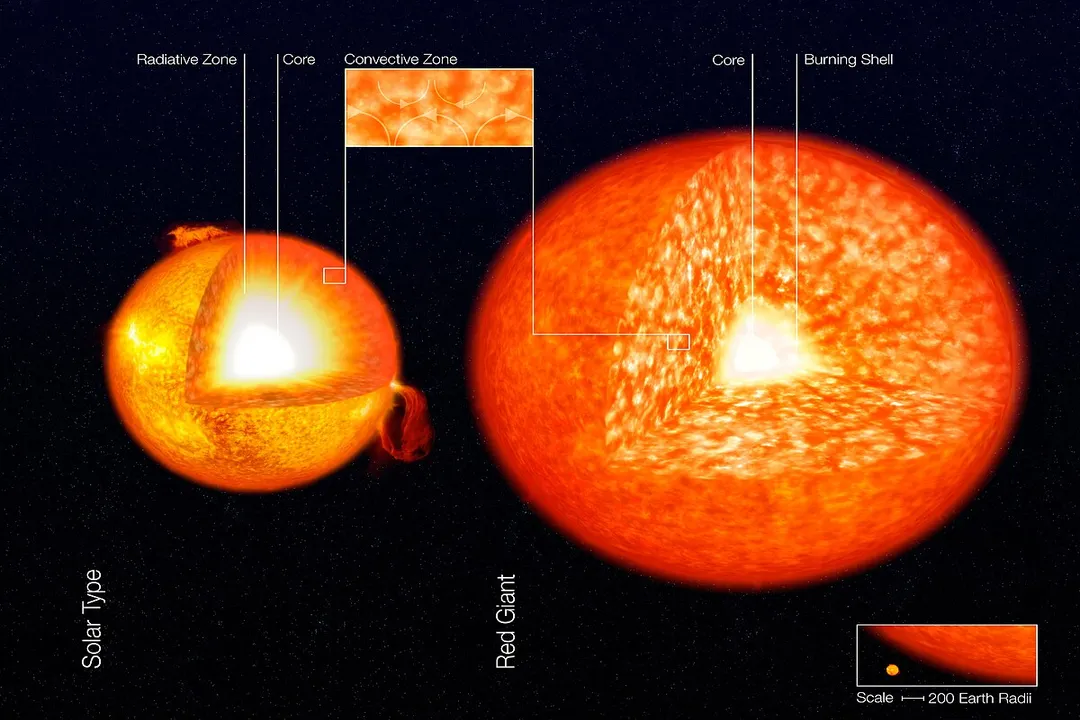
The difference in energy transport mechanisms results in a massive disparity in timescale. In the radiative zone of the Sun, the tortuous path of photons due to absorption and re-emission causes energy transfer times estimated around 170,000 years. In stark contrast, the convective zone transports energy via the bulk motion of mass, akin to boiling liquid. This process is incredibly efficient, allowing energy parcels to travel from the base of the convection zone to the surface in a matter of days or weeks, representing an astonishing acceleration compared to the millennia required in the deeper radiative layers.
Related Questions
What is the approximate starting depth of the Sun's convective zone?How is energy primarily transported in the radiative zone?What structural feature characterizes stars significantly more massive than the Sun?What observable feature on the Sun's photosphere is the visible top of a convective cell?How does energy transit time compare between the convective zone and the radiative zone in the Sun?What structural feature is true for very low-mass stars like red dwarfs?When does the physical principle of convection become dominant over radiation for energy transport?What is the approximate temperature difference between the base and the surface of the Sun's convective zone?What process generates the star's magnetic field due to motions within the convective zone?Why is the precise boundary of the convective zone critical input for stellar evolution codes?What physical principle defines the energy transfer in the convective zone?