What happens to the star after supernova?
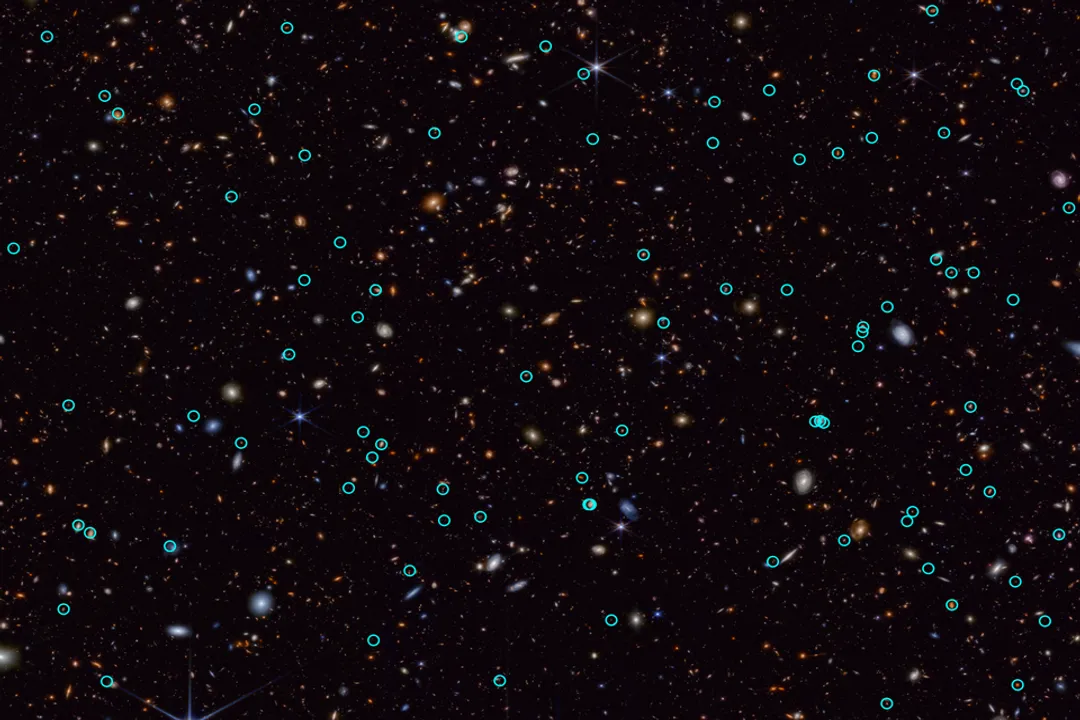
The final, spectacular death of a massive star—a supernova—is one of the most energetic events in the cosmos. For a brief time, the explosion can radiate more energy than our Sun will produce over its entire multi-billion-year lifetime. While the initial burst of light and the expanding cloud of gas and dust, the supernova remnant, capture the public imagination, the true mystery lies in what remains behind at the center. What happens to the star's core after that unimaginable implosion and rebound? The answer depends entirely on the initial mass of the star's dead heart.
# Stellar Death Throes
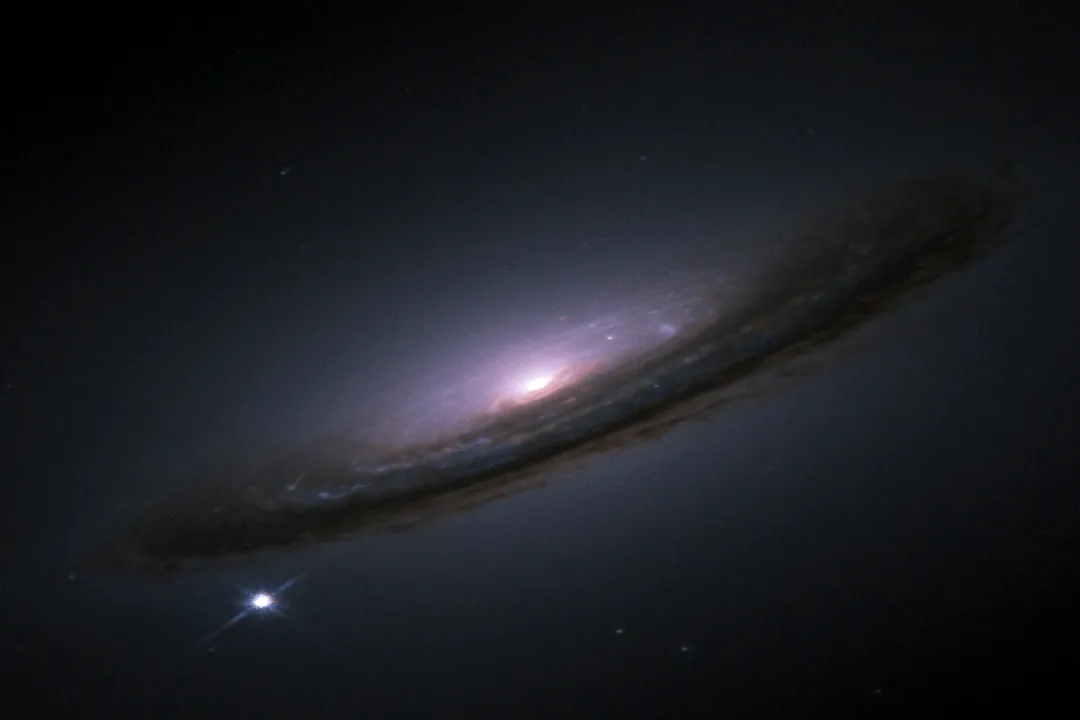
A supernova explosion occurs when a massive star exhausts the nuclear fuel in its core, leading to catastrophic failure. When fusion stops, the core can no longer generate the outward pressure required to counteract the immense inward crushing force of gravity. Gravity swiftly compresses the core until it reaches an incredible density. For stars large enough to go supernova, this collapse often compresses matter so tightly that protons and electrons are squeezed together to form neutrons. This immediate conversion creates a hard, incompressible surface known as the "neutron drip point" or the proto-neutron star.
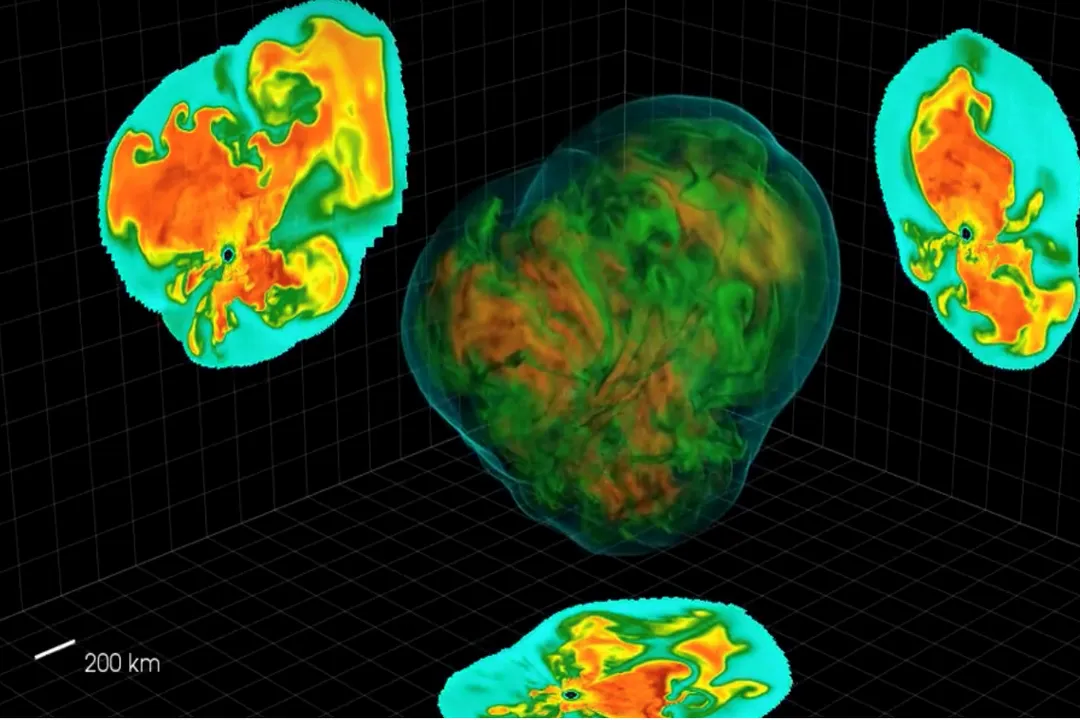
The outer layers of the star, which are still falling inward, violently strike this newly formed, rigid core. This impact causes a powerful rebound, launching a shockwave outward that tears the rest of the star apart, scattering newly synthesized heavy elements across the galaxy. This massive expulsion is the brilliant flash we observe as a Type II supernova.
# Core Mass Thresholds
The key determinant for the post-supernova object is the mass of that collapsed core, often measured in multiples of our Sun's mass, or solar masses (). The physical laws governing the stability of these ultra-dense objects mean that there is a critical mass limit. If the remnant core's mass falls below this limit, the repulsive forces generated by packed neutrons can halt the collapse.
When the core mass remains below approximately $2.5$ to $3$ solar masses, gravity is eventually halted by what is known as neutron degeneracy pressure. This pressure arises from the quantum mechanical principle that neutrons resist being squeezed into the same quantum state, effectively establishing a structural limit against further compression. This successful resistance results in the formation of a neutron star.
However, if the progenitor star was extremely massive, the core remnant might exceed this stability threshold, roughly estimated to be around . When gravity overwhelms even the powerful resistance of neutron degeneracy pressure, there is no known force strong enough to stop the implosion.
# Neutron Star Birth
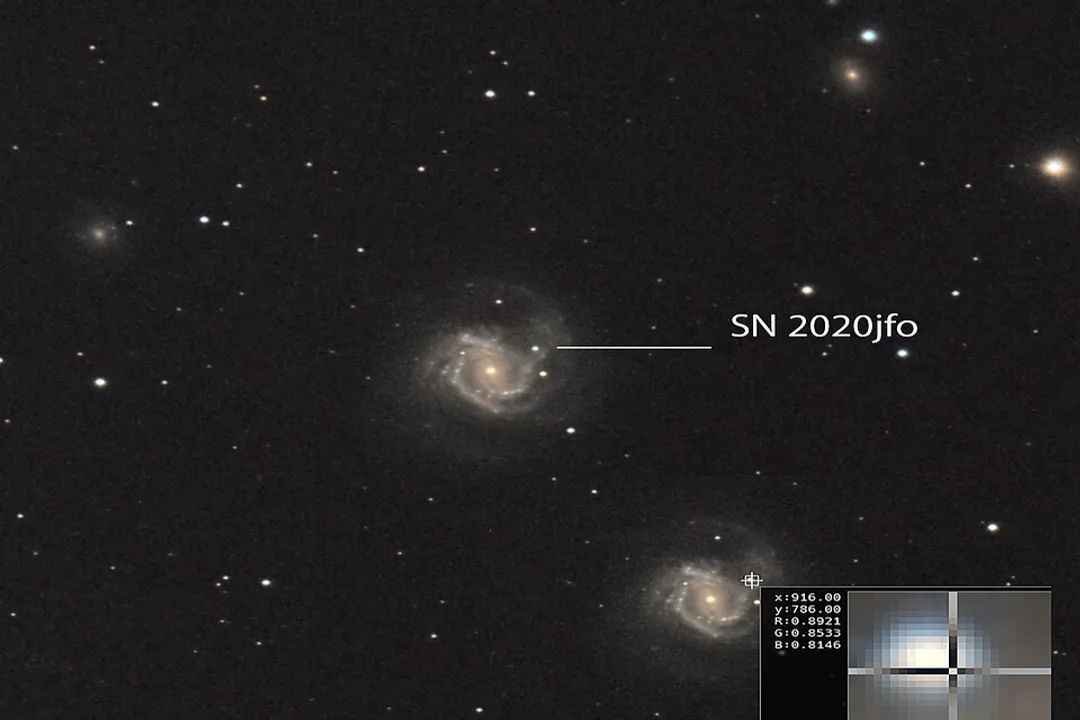
If the remnant mass is below the critical limit, the result is one of the most exotic objects in the universe: a neutron star. This object packs the mass of one or two Suns into a sphere only about 10 to 20 kilometers across—roughly the size of a major city. The density achieved is staggering; the material is so tightly packed that a single teaspoon of it would weigh billions of tons.
Imagine a star that lived its life fusing light elements into heavier ones, only to end up as a giant ball of pure neutrons held together by the very forces that failed to stop its collapse. This transition from ordinary matter to a degenerate neutron fluid represents a phase change so extreme that it is arguably the most dramatic structural alteration of matter known in the observable universe, second only perhaps to the conditions immediately following the Big Bang, simply dictated by a few extra solar masses of material.
These newly formed neutron stars possess incredible physical attributes. They often spin rapidly due to the conservation of angular momentum during the collapse, sometimes completing a rotation in mere milliseconds. Furthermore, they possess extremely powerful magnetic fields, which, when coupled with their rapid spin, can produce beams of electromagnetic radiation that sweep across space, observable from Earth as pulsars.
# The Black Hole Finale
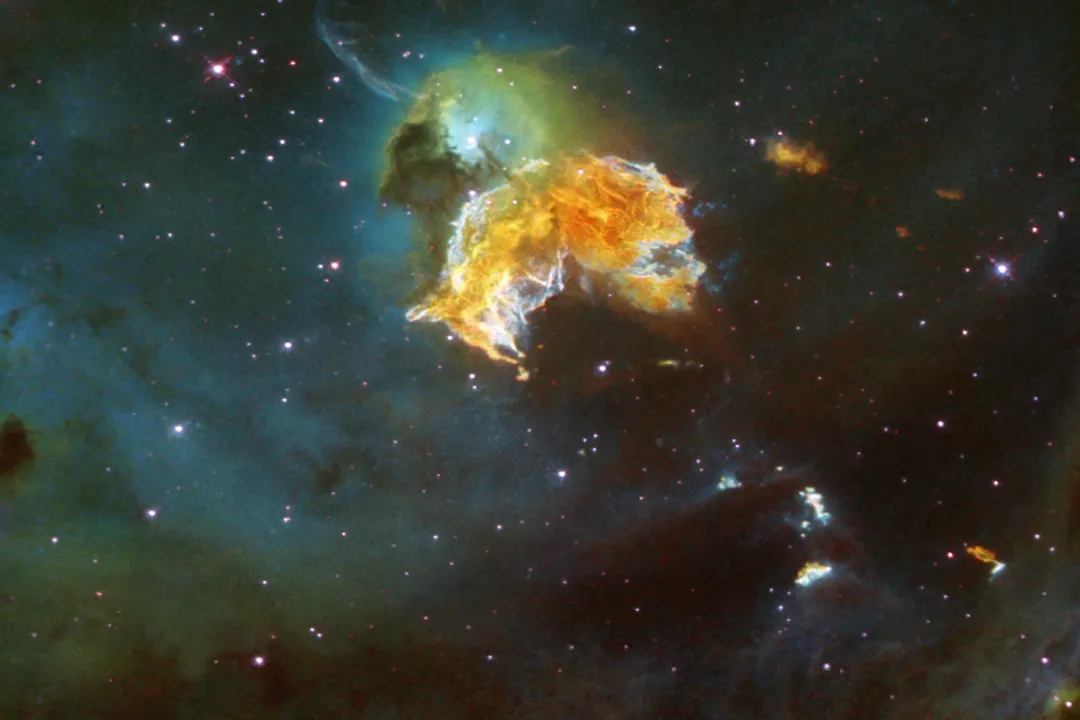
When the mass of the collapsing core exceeds the stability limit, the final outcome is a black hole. In this scenario, gravity achieves total victory. There is no known mechanism, not even neutron degeneracy pressure, capable of supporting the structure against the crushing force.
The core collapses indefinitely, shrinking to an infinitely small, infinitely dense point called a singularity. The defining characteristic of a black hole is its gravitational influence: it creates a region of spacetime from which nothing, not even light, can escape once it crosses the boundary known as the event horizon.
The formation of a black hole occurs rapidly once the core collapses past its point of no return. While the light from the visible supernova explosion can take time to travel across the galaxy to us, the physical collapse leading to the black hole's immediate existence happens in the fractions of a second following the core's initial implosion. We observe the black hole's effects later, through the accretion disk of material falling in or the gravitational influence on nearby stars, long after the initial stellar explosion has faded.
# Distinguishing the Outcomes
The difference between ending up with a neutron star or a black hole is incredibly fine, depending on only a small fraction of solar mass, making it one of the most sensitive tipping points in stellar evolution.
| Remnant Core Mass () | Resulting Object | Governing Force |
|---|---|---|
| to $3$ | Neutron Star | Neutron Degeneracy Pressure |
| Black Hole | Complete Gravitational Collapse |
It is interesting to note that for stars that end their lives as a Type Ia supernova—often occurring when a white dwarf in a binary system accretes too much mass—the star is completely consumed in the explosion, leaving behind no compact remnant like a neutron star or black hole. The destruction is total in that case.
One fascinating consideration about the timing of these remnants involves observation. When we spot a supernova light show, we are seeing the outer layers leaving. The formation of the neutron star or black hole is essentially an immediate consequence of the core reaching maximum compression, yet detecting that object might involve waiting for the supernova light to subside and then searching for the telltale X-rays or radio emissions associated with a newly born pulsar or the accretion disk around a new black hole. This temporal disconnect means the visible death is separated from the birth of the exotic remnant by the speed of light across interstellar distances.
# Cosmic Legacy
The supernova explosion is not just an ending; it is the mechanism for cosmic renewal. The violent ejection of material enriches the interstellar medium with all the heavy elements—the carbon in our bodies, the oxygen we breathe, and the iron in our blood—that were forged inside the dying star.
The remnants—be they spinning neutron stars, invisible black holes, or expanding shells of gas—serve as markers of the violent past and the building blocks for the next generation of stars and planets. The matter that once constituted a star millions of light-years away is dispersed, providing the raw ingredients for future stellar nurseries. The collapse of a massive star is thus a necessary, albeit destructive, step in the universe's ongoing cycle of creation and recycling.
Related Questions
#Citations
(Super)novas - what is actually happening during the explosion?
Supernova - Wikipedia
DOE Explains...Supernovae - Department of Energy
What happens when a star goes supernova? #cosmoknowledge ...
Lecture 19: The Fate of Massive Stars
What happens to the core of a super massive star after it ... - Quora
Stellar Evolution - | The Schools' Observatory
Why does matter stay collapsed in the core, following a supernova ...
When Does a Neutron Star or Black Hole Form After a Supernova?
How does a supernova completely destroy a star?