What happens to stars after they go supernova?

The explosive death of a star, known as a supernova, marks one of the most dramatic events in the cosmos. When a massive star exhausts its nuclear fuel, its internal structure can no longer resist the crushing force of its own gravity. This leads to a catastrophic implosion followed by a blinding rebound explosion that briefly outshines entire galaxies. [1][5][9] While the initial burst of light captures the public imagination, the real story of what happens after the light fades is about transformation: the creation of strange, dense objects and the seeding of the universe with the building blocks of future stars, planets, and life itself. [2]
# Explosive Finale
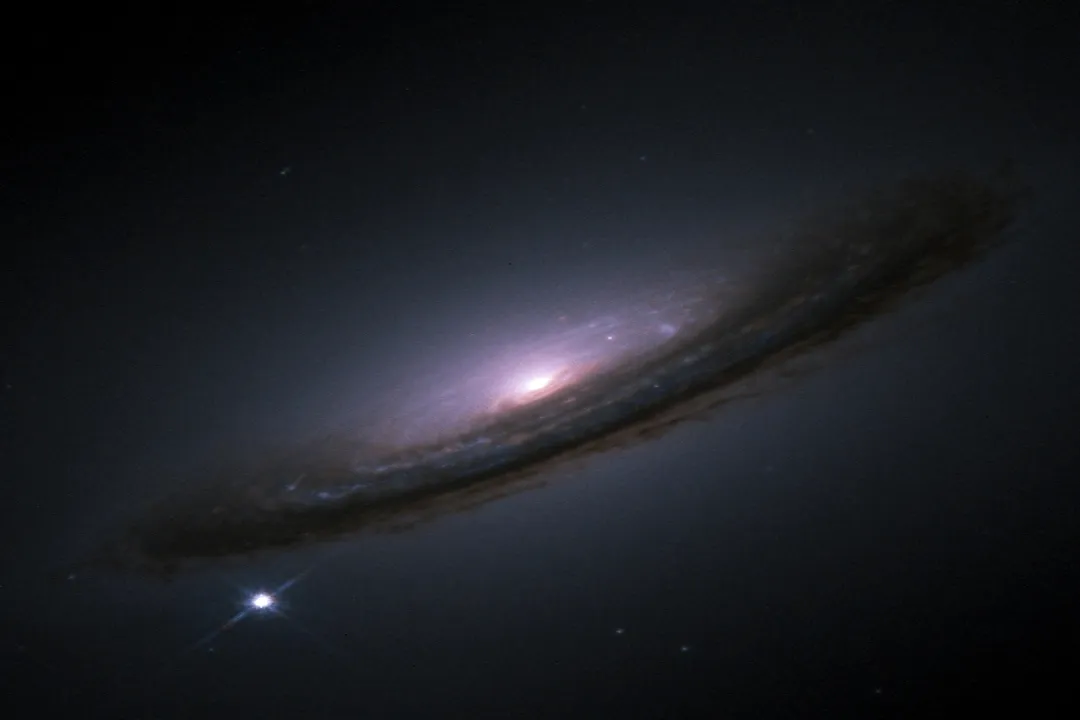
The mechanics of a core-collapse supernova, the kind associated with very massive stars, involve an abrupt shutdown of fusion when the core turns to iron. [2][5] Iron cannot be fused to release energy; it only consumes it. Once the iron core reaches a critical mass—roughly $1.4$ times the mass of our Sun—gravity instantly wins, causing the core to collapse inward at speeds approaching a quarter of the speed of light. [2][6][10]
This collapse proceeds incredibly fast, crushing matter down to unimaginable densities in mere milliseconds. [3] The outer layers of the star, still falling inward, violently strike this newly compressed, incompressible core. This collision generates a powerful shockwave that rips outward, tearing the rest of the star apart in a blaze of glory. [2][6]
It is important to distinguish this from other supernova types. For instance, Type Ia supernovae, which occur when a white dwarf in a binary system accretes too much mass and triggers runaway fusion, typically result in the complete destruction of the star, leaving behind no central stellar remnant. [1] However, for the massive stars—those born with initial masses greater than about eight times the Sun's mass—the fate of the core determines the story that continues after the explosion. [6][10]
# Core Remains

The deciding factor in what survives the supernova is the mass remaining in the compressed core after the initial implosion stops. This remaining mass must be supported by a quantum mechanical force known as degeneracy pressure. [1][3] If the core is not too heavy, this pressure is enough to stabilize it against further collapse, resulting in a compact stellar remnant. [2]
If we look at the mass ranges, the boundary conditions are fascinatingly narrow given the immense scale of stellar evolution. The stability of the matter at these extreme densities is governed by fundamental physics, creating distinct outcomes based on slight differences in the initial conditions of the progenitor star. [6] To give context to the resulting density, consider that a single teaspoon of material from one of these remnants could weigh billions of tons, far exceeding the mass of the tallest mountains on Earth combined, due to the near-perfect packing of protons and neutrons. [2]
# Neutron Star

When the collapsing core mass stabilizes between approximately $1.4$ and $3$ solar masses, the pressure forces electrons and protons together to form neutrons. [1][2] The core becomes an extremely compact object composed almost entirely of these neutrons, resisting further gravity through neutron degeneracy pressure. [1][6] This remnant is a neutron star. [2]
Neutron stars are mind-bogglingly dense, often packing more mass than the Sun into a sphere only about $20$ kilometers across. [2] Although the star itself has been destroyed, this ultra-dense core remains, spinning rapidly and often possessing incredibly strong magnetic fields. [7] For an astronomer observing a core-collapse event, finding a pulsar—a rapidly rotating neutron star emitting beams of radiation—is often the confirmation that a Type II supernova has occurred. [7]
# Black Hole
What happens if the remnant core is heavier than the maximum mass neutron stars can support? This theoretical limit is often referred to as the Tolman-Oppenheimer-Volkoff (TOV) limit, estimated to be around $2$ to $3$ solar masses for the core remnant. [1][6] If the core exceeds this weight, neutron degeneracy pressure is overcome, and nothing can halt the collapse. [6]
The matter compresses indefinitely, shrinking past the point where light can escape its gravitational pull, forming a black hole. [1][6] For general readers, the key takeaway is that the black hole represents the total victory of gravity over all other known forces. [6] While the visible supernova explosion fades, the black hole remains as a singularity hidden behind an event horizon—a boundary in spacetime from which no information can return. [6]
# Cosmic Enrichment
Regardless of whether a neutron star or a black hole is left behind, the defining characteristic of a supernova’s aftermath is the dispersal of stellar guts into the galaxy. [5] The tremendous energy released during the collapse and explosion creates conditions—intense heat and pressure—necessary for nucleosynthesis of elements heavier than iron. [2][9]
During their stable lives, stars primarily create lighter elements like helium, carbon, and oxygen. Elements like gold, silver, uranium, and others beyond iron are forged primarily within the violence of the supernova explosion itself or during the neutron star merger events that sometimes follow. [2] This ejected material, enriched with these heavy elements, mixes with existing interstellar gas and dust. This enriched cloud becomes the raw material for the next generation of stars and planetary systems. Simply put, the carbon in our bodies, the iron in our blood, and the silicon in the rocks beneath our feet were all synthesized and scattered by long-dead stars that went supernova. [2][9] Our Sun, being a second or third-generation star, owes its very composition to these ancient explosions. [7]
# Aftermath Structures
The immediate, visible aftermath is the supernova remnant. [1] This is the expanding shell of gas and dust ejected during the explosion, heated to millions of degrees by the shockwave sweeping through space. [5] These remnants can persist for tens of thousands of years, spreading their enriched material across vast interstellar distances. [5]
For instance, the famous Crab Nebula is the visible remnant of a supernova observed in the year $1054$ AD. [1][5] While the central compact object (in the Crab's case, a neutron star) remains stable for eons, the visible shockwave structure fades relatively quickly on a galactic timescale. It takes hundreds of thousands of years for the expanding gases to cool sufficiently and disperse into the general galactic medium, eventually becoming indistinguishable from the background ISM, ready to condense into new stellar nurseries. [5] Observing these remnants allows scientists to map out the chemical history of regions of the Milky Way, tracing the paths and ages of explosive events that occurred long before human observation began. [2]
Related Questions
#Citations
Supernova - Wikipedia
DOE Explains...Supernovae - Department of Energy
(Super)novas - what is actually happening during the explosion?
Stellar Evolution - | The Schools' Observatory
What happens when a star goes supernova? #cosmoknowledge ...
What happens to the core of a super massive star after it ... - Quora
The Life Cycles of Stars - Imagine the Universe! - NASA
Why does matter stay collapsed in the core, following a supernova ...
Supernova - ESA/Hubble
How does a supernova completely destroy a star?