How do the radiative zones of larger, hotter stars generally compare to that of the Sun?
They tend to have a much smaller or even non-existent radiative zone.
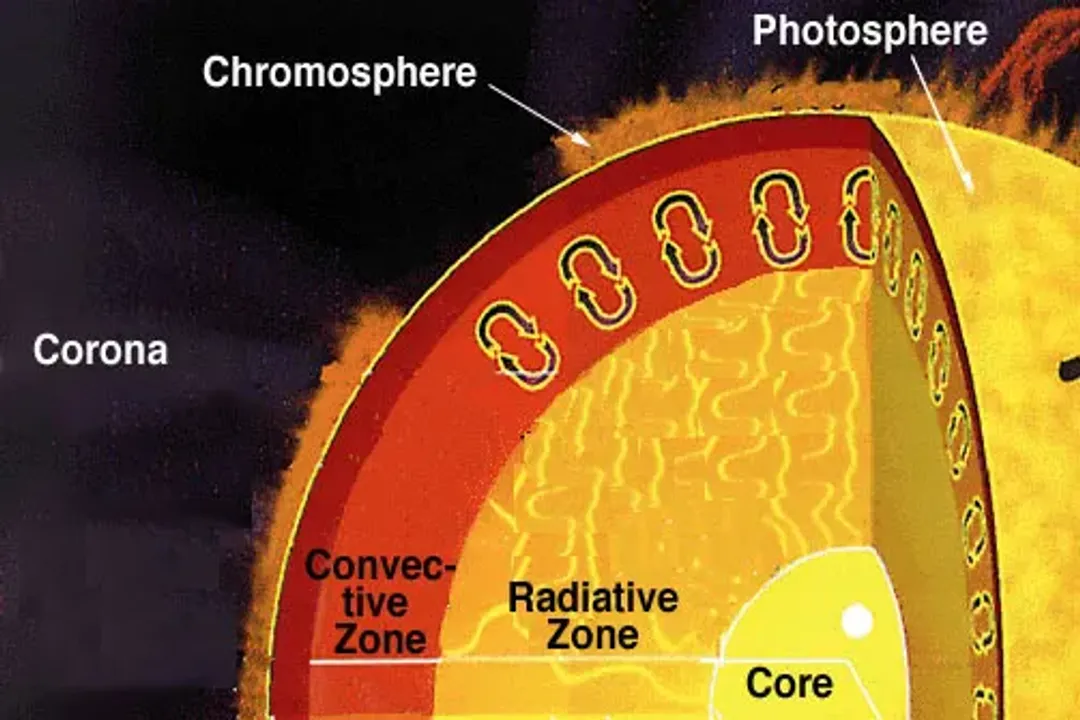
The structure of a star, including the size of its radiative zone, is heavily dependent on its initial mass and resulting core temperature. Larger and hotter stars possess cores that generate energy at a much higher rate, leading to vastly elevated central temperatures compared to stars like the Sun. Because the core is so much hotter, the temperature gradient steepens much closer to the center. This means that convection becomes the dominant and more energetically favorable mechanism for energy transport much sooner, resulting in a smaller radiative zone or one that is entirely absent, with convection starting almost immediately adjacent to the fusion region.
#Videos
How Do Convection And Radiation Zones Work In Stars? - YouTube