During initial collapse, gravitational potential energy is first converted into what form of energy that heats the gas?
Answer
Kinetic energy
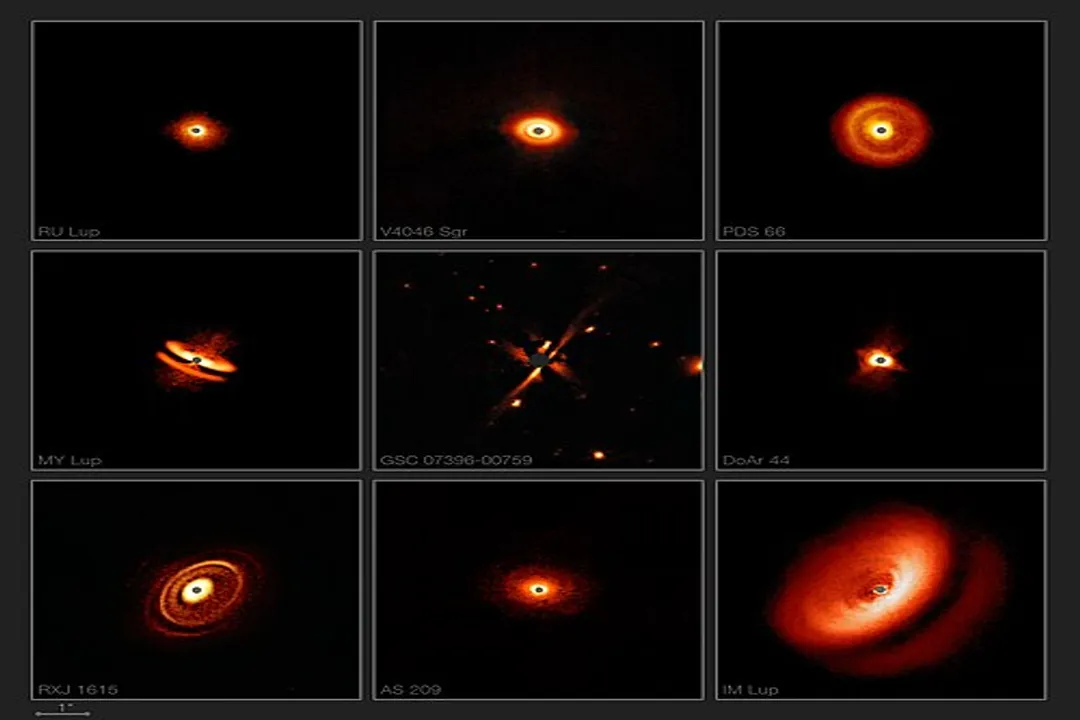
The process of stellar collapse involves a dramatic transformation of energy as the nebula shrinks under the sustained force of gravity. Initially, the stored gravitational potential energy possessed by the mass distributed across the large cloud volume is converted as the material falls inward. This conversion directly yields kinetic energy in the in-falling gas particles. These energized particles then crash into one another, and it is this subsequent collision process that converts the kinetic energy into thermal energy, raising the cloud's temperature and thereby increasing the opposing outward pressure.
Related Questions
What two elements overwhelmingly compose the gas within the nebulae that form stars?What force must overcome internal pressure for a nebula to begin gravitational collapse?What theoretical concept relates to the critical threshold of mass needed to initiate gravitational dominance in a protostellar nebula?Which molecule can radiate radio waves through an opaque cloud to carry thermal energy away, thus aiding contraction?What astrophysical event is cited as a potential external trigger providing initial shock compression to a molecular cloud?What structure forms around a nascent star due to the conservation of angular momentum during gravitational squeeze?In a quiescent state, what form of energy in gas particles exerts outward pressure countering gravity?The material that formed our Solar System is thought to have originated from the remnants of a star that ended in what event?Why did the very first stars in the universe require vastly greater initial masses than modern Sun-like stars?During initial collapse, gravitational potential energy is first converted into what form of energy that heats the gas?