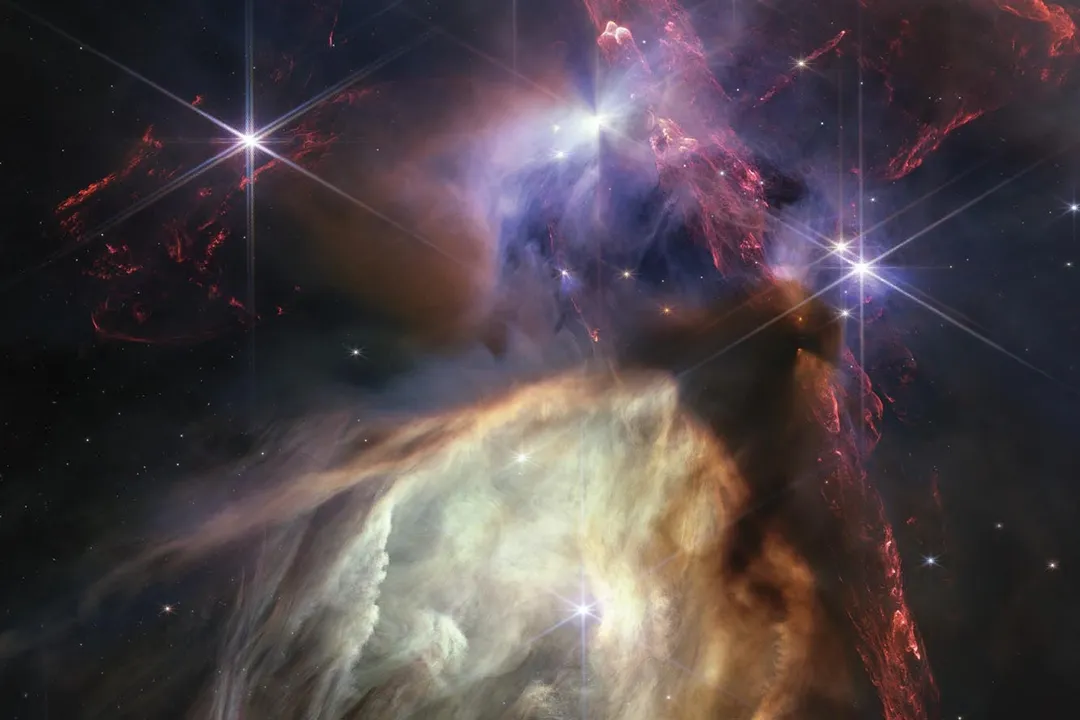
Why is star formation inherently considered a cluster process rather than an isolated event based on cloud fragmentation?
A large collapsing region fragments into numerous smaller, gravitationally bound clumps, each forming a star or small system
When a large region within a Giant Molecular Cloud begins its gravitational collapse, the process is inherently unstable and prone to breaking up. Instead of collapsing smoothly into a single massive object, the large region fragments into many smaller, dense clumps under the influence of gravity and varying density perturbations. Each of these smaller, independently collapsing clumps is destined to form its own star or a small binary or multiple-star system. This fragmentation mechanism means that when astronomers observe stars like the Sun, they are almost always found in association with many other stars that originated simultaneously from the same initial, vast cloud complex, establishing star formation as fundamentally a cluster process.