What physical condition defines the threshold for gravitational dominance and subsequent collapse in a molecular cloud region?
Answer
When a region's mass is greater than its local Jeans mass
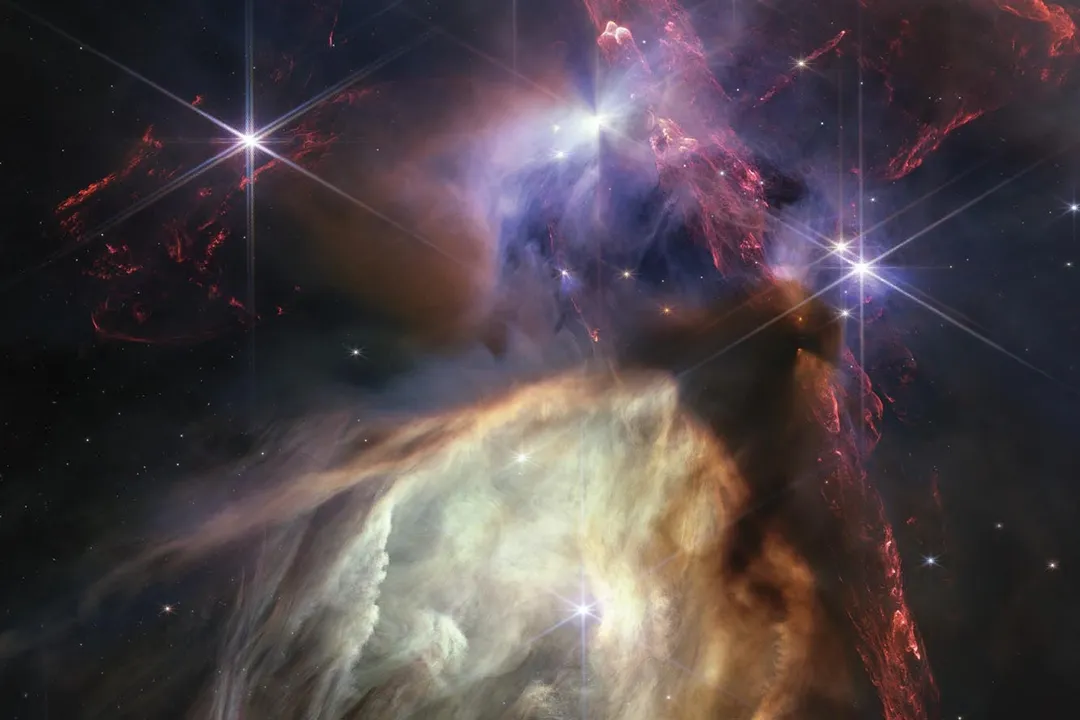
The initial phase of star formation hinges on overcoming the internal forces resisting collapse, such as gas pressure and turbulence. This critical threshold condition is quantitatively defined by the Jeans mass. If a specific region within the molecular cloud possesses a total mass that exceeds its local Jeans mass threshold, the overwhelming force of gravity will inevitably dominate the existing outward pressures. This dominance ensures that the clump begins a rapid contraction, initiating the pathway toward becoming a star. If the mass remains below this critical value, the internal pressure and turbulence are sufficient to keep the gas dispersed.
Related Questions
What is the typical temperature range found in Giant Molecular Clouds (GMCs) that serve as stellar nurseries?What physical condition defines the threshold for gravitational dominance and subsequent collapse in a molecular cloud region?What energy source exclusively powers a dense Protostar before sustained thermonuclear fusion begins in its core?What rotating structure flattens out around a protostar, feeding it mass and simultaneously serving as the birthplace for future planets?What approximate core temperature must a collapsing star reach to initiate sustained thermonuclear fusion, converting hydrogen into helium?What state is achieved when the immense outward pressure generated by core fusion perfectly balances the inward gravitational collapse of a star?Which large-scale observing instrument is specifically engineered to capture the faint millimeter and submillimeter light emitted by cold dust in stellar nurseries?What classification is given to stellar cores that accumulate mass but fail to ignite sustained hydrogen fusion, remaining below 0.08 solar masses?What crucial role do the focused, fast-moving streams perpendicular to the protoplanetary disk, known as bipolar jets, play in stellar birth?Why is star formation inherently considered a cluster process rather than an isolated event based on cloud fragmentation?