Why does Earth's single natural satellite retain the common English noun 'Moon' rather than receiving a formal mythological name?
Answer
It was known and named long before systematic discovery began elsewhere.
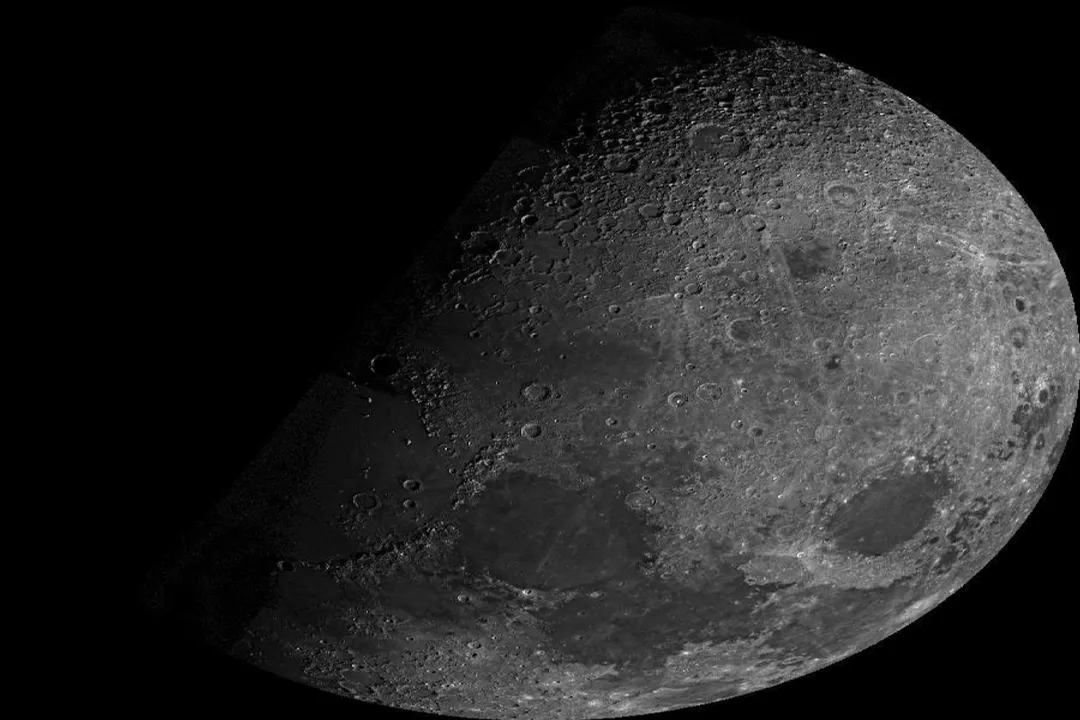
Earth's satellite maintains the simple name 'Moon' because it was known and named by common language usage long before the systematic astronomical discovery and formalized naming procedures began for the outer solar system bodies. This contrasts sharply with the moons of Jupiter or Saturn, whose companions were discovered centuries later under structured observation programs, allowing for the imposition of specific, consistent mythological themes.
Related Questions
What official body maintains the nomenclature for all solar system bodies, ensuring global uniformity in moon naming?What thematic connection links the names Io, Europa, Ganymede, and Callisto of Jupiter's largest moons?What do the names Phobos and Deimos, the two small moons orbiting Mars, specifically signify?What literary source tradition was adopted for naming the satellites orbiting Uranus, contrasting the classical theme?Which individual is credited with discovering Umbriel, the first moon of Uranus, in 1948, thereby setting the literary naming standard?What thematic category characterizes the names of Neptune’s moons, such as Triton, contrasting with Uranus's system?Why does Earth's single natural satellite retain the common English noun 'Moon' rather than receiving a formal mythological name?What is the initial, less evocative identifier given to a newly observed moon before the IAU assigns a formal name?What mythological tradition applies to Saturn's larger moons such as Tethys, Dione, Rhea, and Titan?What specific literary pairing defines the nomenclature theme adopted for the moons of Uranus?