Why do humans perceive cosmic nebulae as shades of gray rather than vivid colors?
The light intensity is usually too low to trigger cone cells.
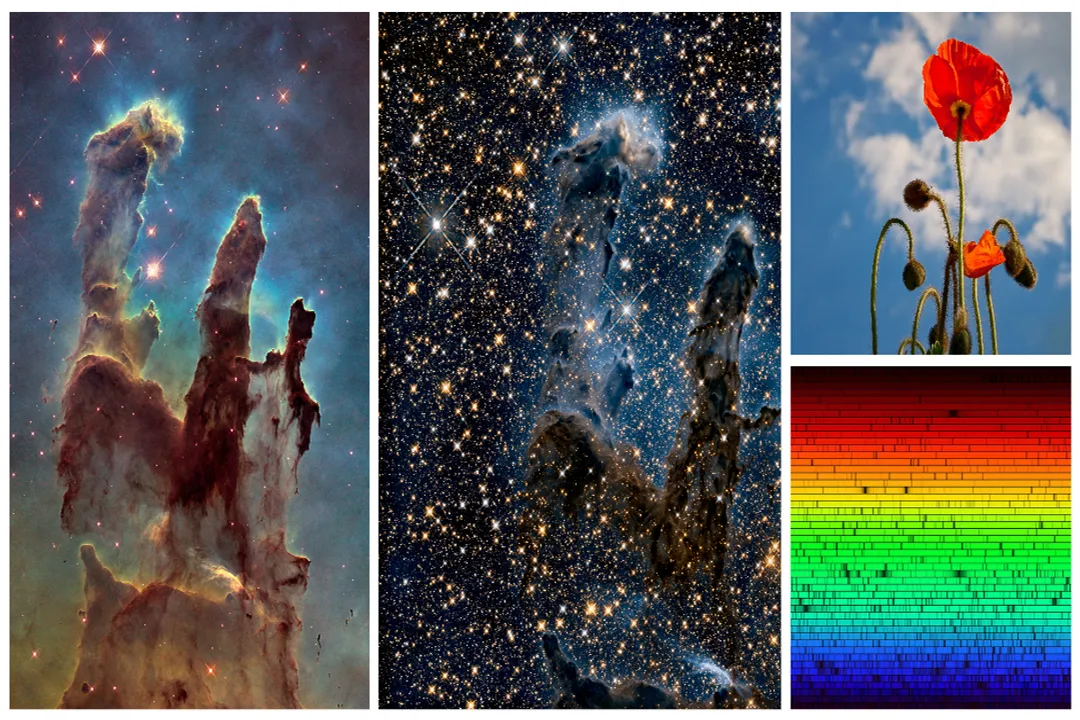
Human vision operates through two primary types of photoreceptors in the retina: rod cells and cone cells. Rod cells are highly sensitive to low levels of light, allowing for vision in dim environments, but they do not distinguish between colors. Cone cells are responsible for color vision but require a higher intensity of light to be activated. Most nebulae, despite their appearance in processed photographs, emit light at intensities that are too faint to reach the threshold required for cone cell activation. Consequently, when observing these objects through an eyepiece, the eye relies almost exclusively on the rods, resulting in a perception of the universe that is predominantly monochrome or muted gray.
#Videos
This Is NOT What A Nebula Looks Like