What would a person actually observe if they were physically floating inside the Orion Nebula?
Answer
Nothing but a dark background with faint, distant stars.
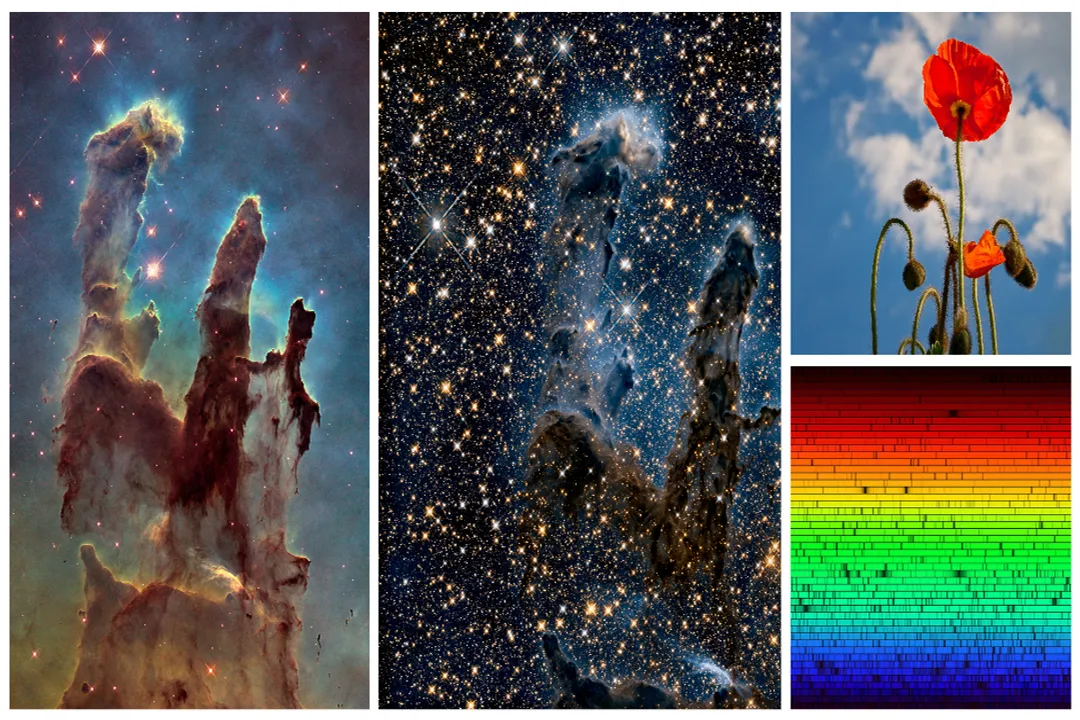
Nebulae are defined by their diffuse, low-density nature, often containing less matter than the most extreme vacuum chambers created on Earth. The perception of nebulae as distinct, solid clouds of color is a perspective effect that only emerges when viewing the structure from a vast distance where the cumulative effect of the gas and dust catches the light of nearby stars. If an observer were to travel inside the nebula, they would not see swirling clouds or vibrant colors; rather, the gas is so diffuse that it would remain largely invisible, appearing as nothing more than a very thin haze through which distant stars would remain visible.
#Videos
This Is NOT What A Nebula Looks Like
Related Questions
Why do humans perceive cosmic nebulae as shades of gray rather than vivid colors?What technique do astrophotographers use to reveal structures like gas filaments and dust lanes?What would a person actually observe if they were physically floating inside the Orion Nebula?What is the primary scientific purpose of false color mapping in space imagery?Why is dark adaptation a requirement for effective astronomical observation?How does the technique of averted vision improve the visibility of faint astronomical objects?What distinguishes the light-gathering capacity of a telescope from that of the human eye?Why do many amateur astronomers experience disappointment during their first look through a telescope?What role do filters like OIII or UHC play in improving the view of a nebula?How should a deep-space photograph be classified regarding its accuracy to reality?