Why are fragments of Theia not easily found on the surface of the Earth today?
Answer
Intense mixing during the collision erased distinct signatures
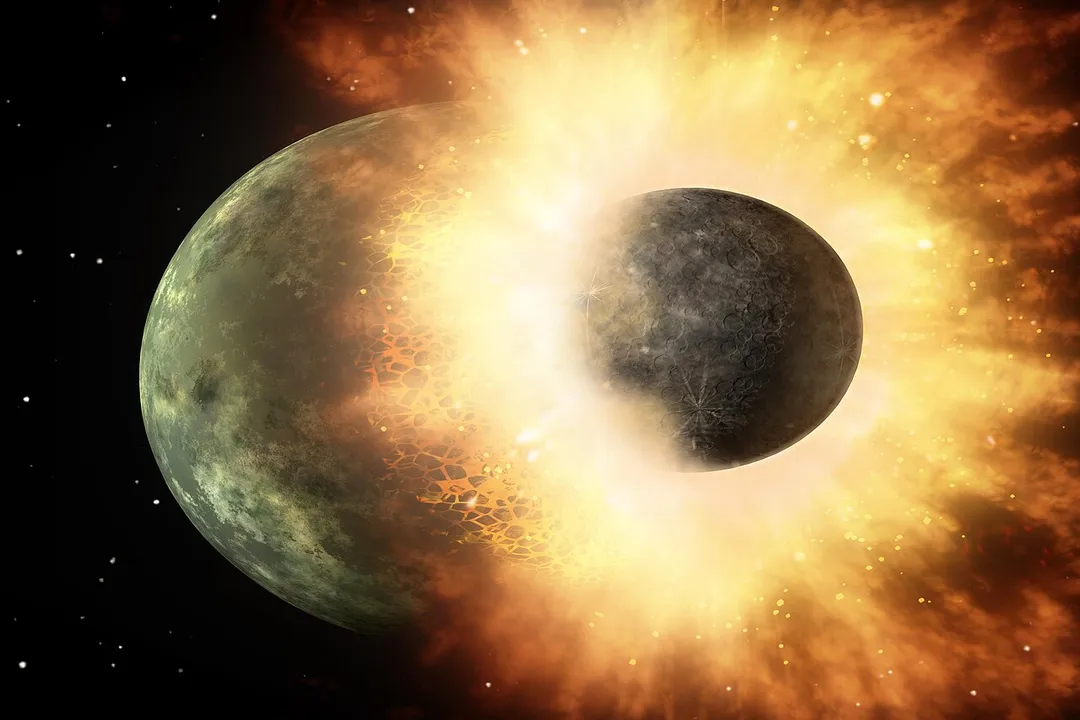
While researchers often look for distinct chemical evidence of the impactor, finding discrete fragments of Theia on Earth has proven difficult. The sheer violence and thermal intensity of the collision resulted in the thorough mixing of the impactor's material with Earth's mantle. This homogenization erased the unique chemical or isotopic signatures that might have otherwise allowed scientists to distinguish Theia's material from Earth's native rocks, making them indistinguishable after billions of years of geological processing.
Related Questions
What is the primary scientific name for the theory explaining the origin of the Moon?Approximately how large was the protoplanet Theia that collided with Earth?Which elements serve as isotopic evidence for the shared heritage of the Earth and the Moon?Why is the Co-accretion theory generally considered insufficient to explain the Moon?Approximately how long ago did the impact involving Theia occur?What do recent computer simulations suggest about the speed of the Moons formation?Why does the Moon lack water and other volatile compounds compared to the Earth?What became of the remnants of the protoplanet Theia after the collision?What does the angular momentum of the Earth-Moon system reveal about the impact?Why are fragments of Theia not easily found on the surface of the Earth today?