What specific physical state allows a massive KBO to earn the classification of a dwarf planet?
Answer
The object must exert enough gravity to pull itself into a nearly round shape due to hydrostatic equilibrium.
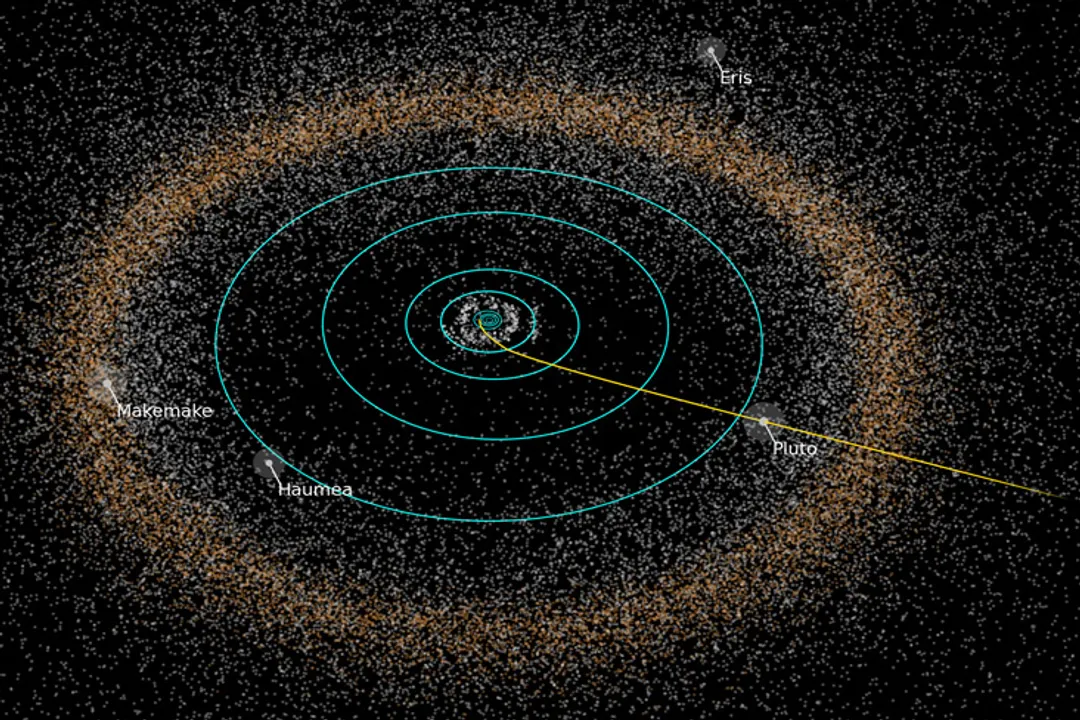
The distinction between smaller debris scattered throughout the Kuiper Belt and the larger worlds is based on mass and gravitational influence. Specifically, objects qualifying as dwarf planets are massive enough that their own gravity dominates their structure, forcing them into a state of hydrostatic equilibrium. This process results in the body assuming a nearly round or spherical shape, a clear visual indicator separating them from the smaller, irregularly shaped minor bodies populating the rest of the belt.
Related Questions
What is the general outward extension range of the Kuiper Belt from the Sun?What key compositional element differentiates KBOs from the rockier objects in the Asteroid Belt?How does Pluto function as the anchor point for understanding the overall population of KBOs?What specific physical state allows a massive KBO to earn the classification of a dwarf planet?What makes the dwarf planet Haumea a bizarre object among the major Kuiper Belt worlds?Which type of comet is considered to originate from the Kuiper Belt reservoir through gravitational perturbations?What critical information about accretion processes did the New Horizons flyby of Arrokoth provide?What measurement generally defines the starting distance of the Kuiper Belt from the Sun?What does the mass disparity between the closer Pluto and the more distant, heavier Eris imply?How is a Kuiper Belt Object (KBO) fundamentally defined by its orbital path?