What is the typical surface temperature range for a red supergiant on the H-R diagram?
Answer
3,500 K to 4,500 K.
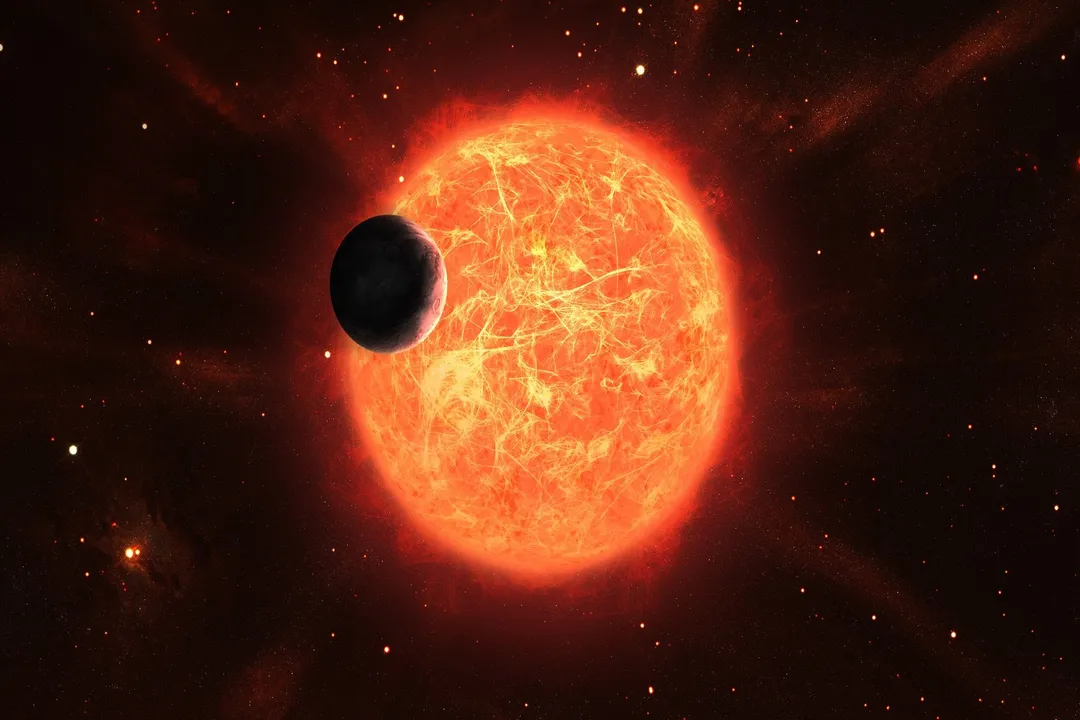
Red supergiants occupy a specific, low-temperature zone on the Hertzsprung-Russell diagram, despite their extreme luminosity. This combination of very high total energy output (luminosity) and relatively cool surface temperatures is what defines them. The precise range given for these stellar behemoths falls between 3,500 Kelvin and 4,500 Kelvin. This relatively cool exterior temperature dictates their observed visual color, distinguishing them from hotter, bluer stellar classes.
Related Questions
What initial mass range ($M_{\odot}$) qualifies a star to become a Red Supergiant?What fusion event triggers the expansion phase away from the main sequence for massive stars?What causes the surface cooling responsible for imparting the 'red' color to a red supergiant?What is the typical surface temperature range for a red supergiant on the H-R diagram?How long does the transient existence of a red supergiant phase typically last relative to its main sequence lifetime?Which elements are fused in the successive, nested shells surrounding the core of a very massive red supergiant?What final element forms in the core that causes the star to instantly lose its primary energy source?If a progenitor star was among the most massive (exceeding 20 to 25 solar masses), what remnant forms after the supernova explosion?What is the primary difference between a star evolving into a Red Giant versus a Red Supergiant?How does the energy output from shell hydrogen fusion compare to the star's previous core fusion rate?